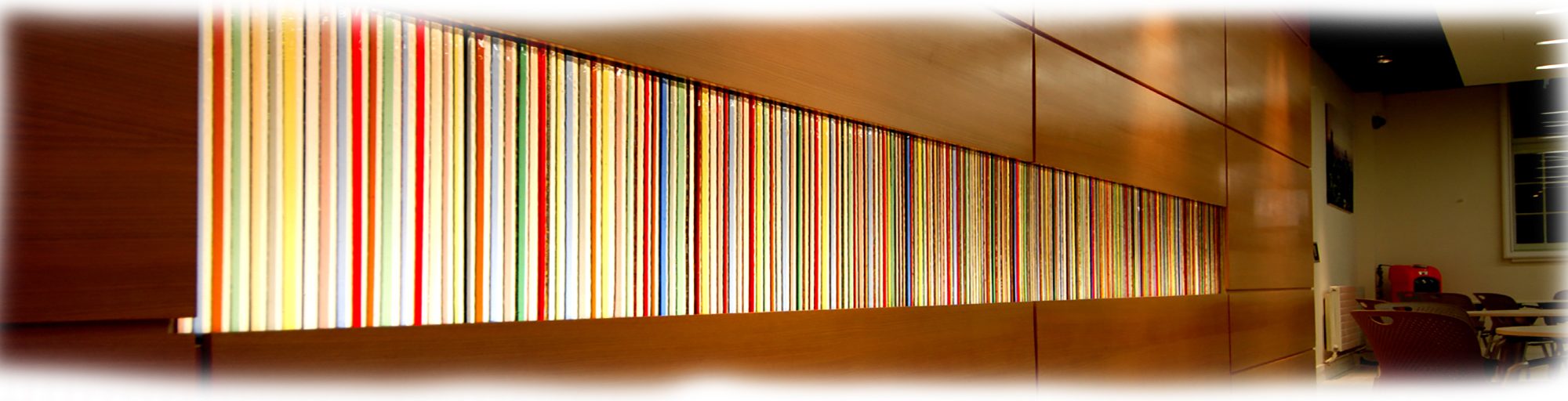
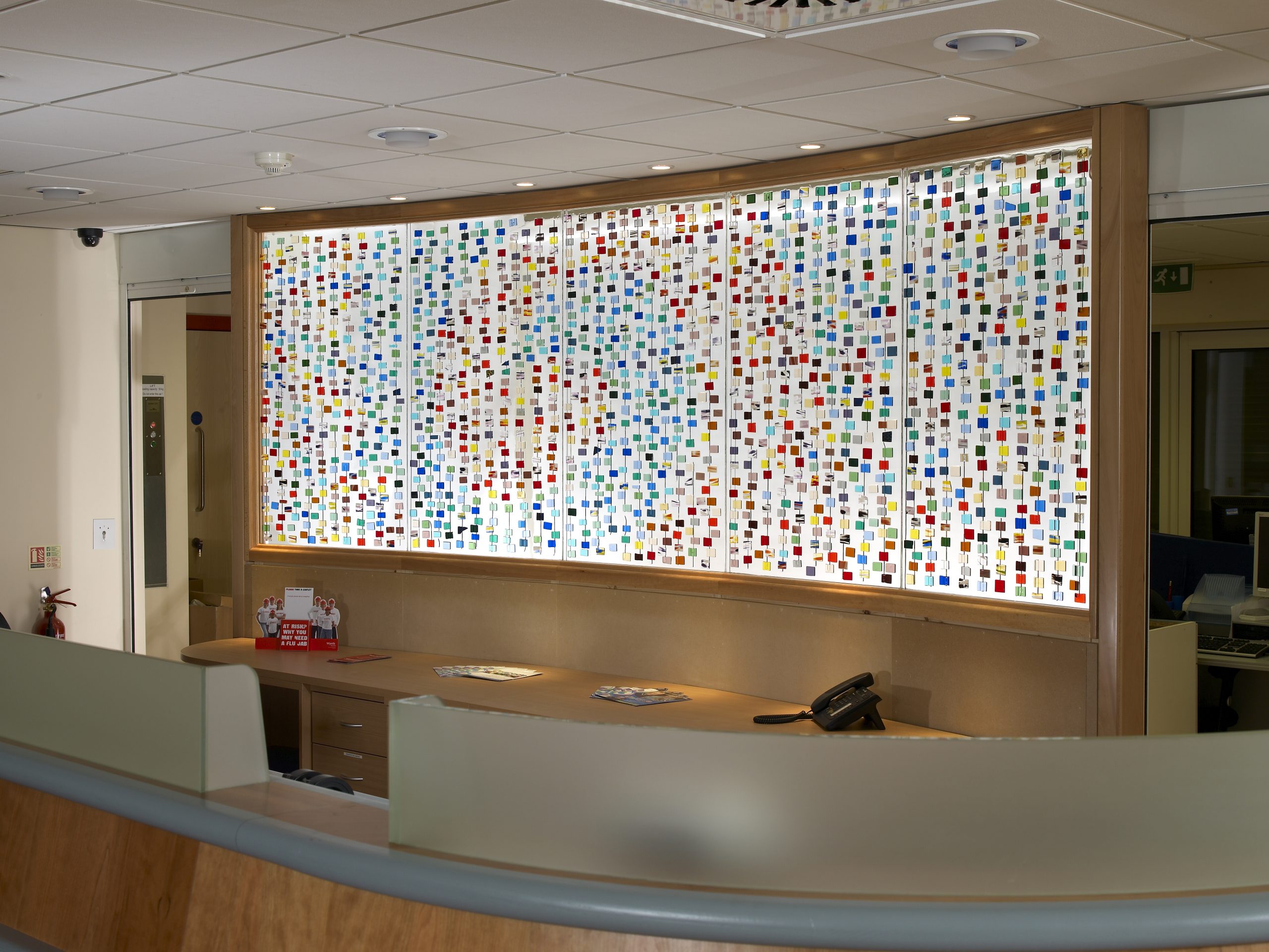
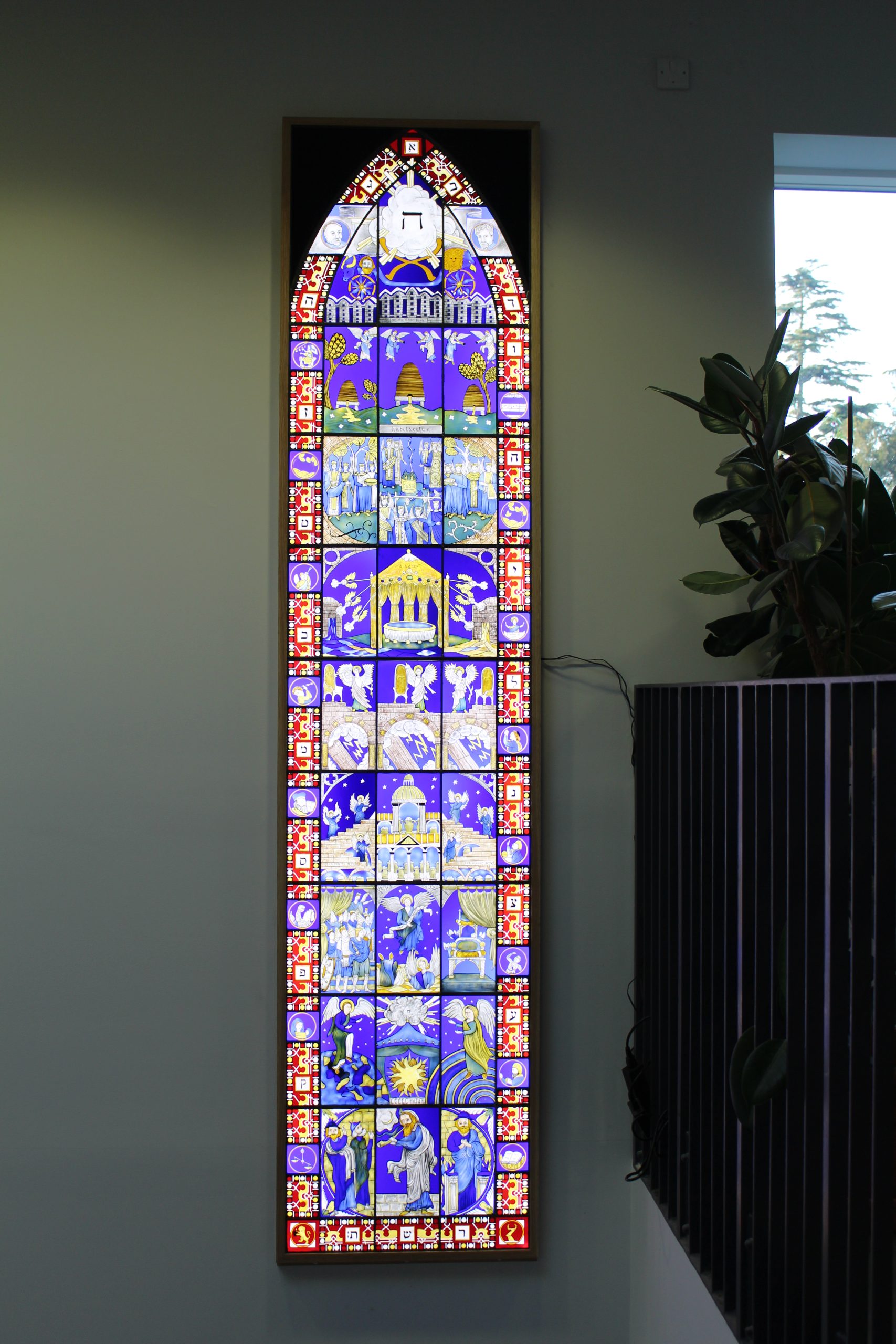
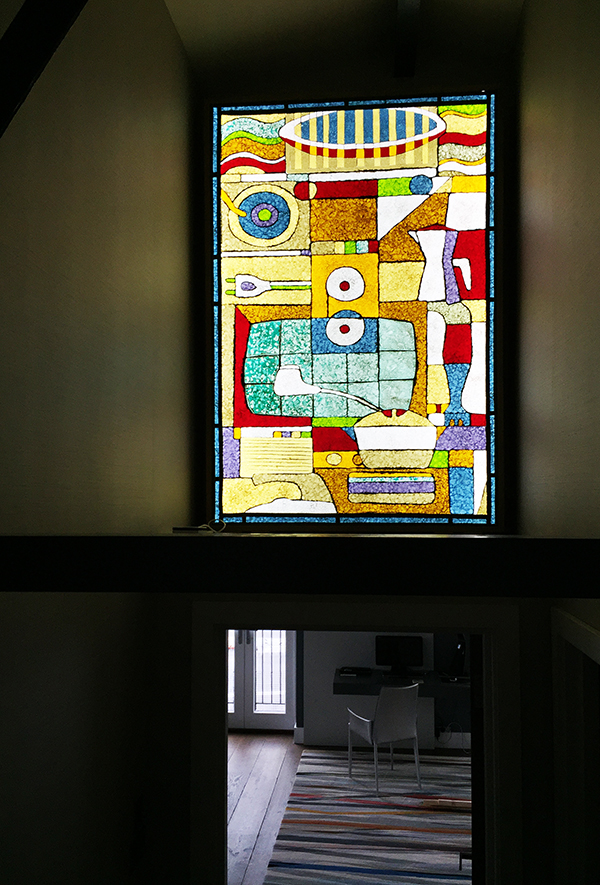
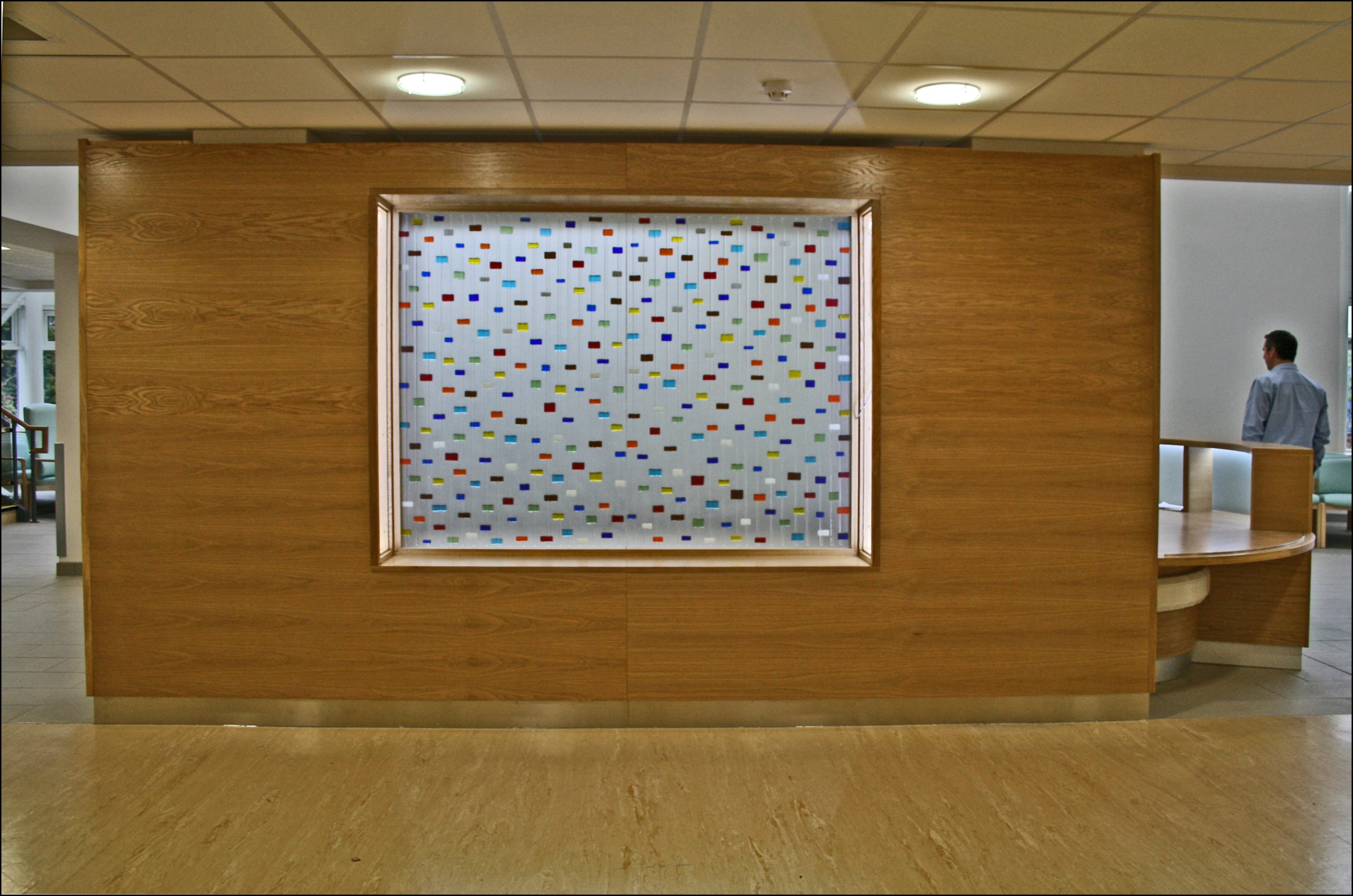
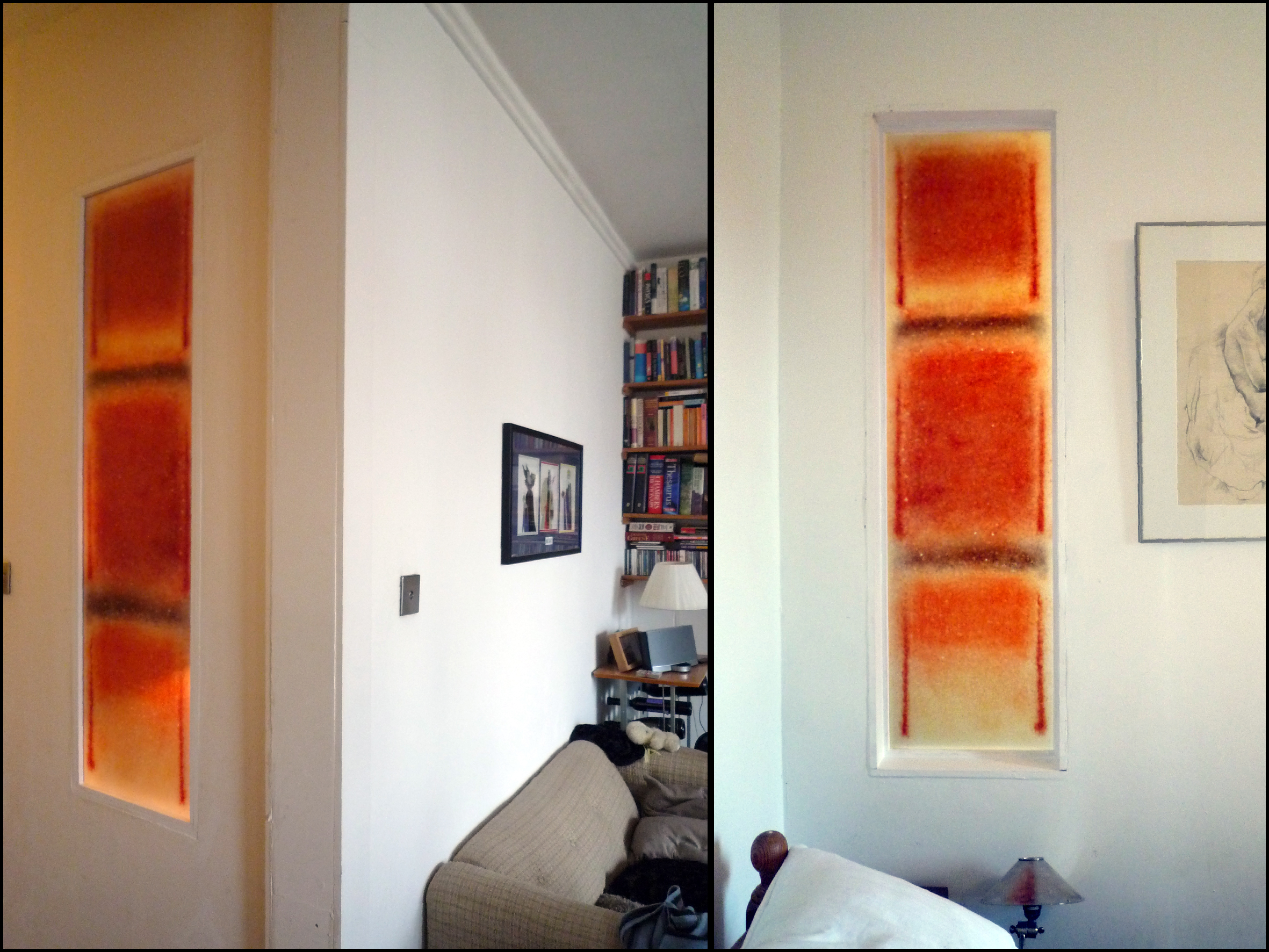
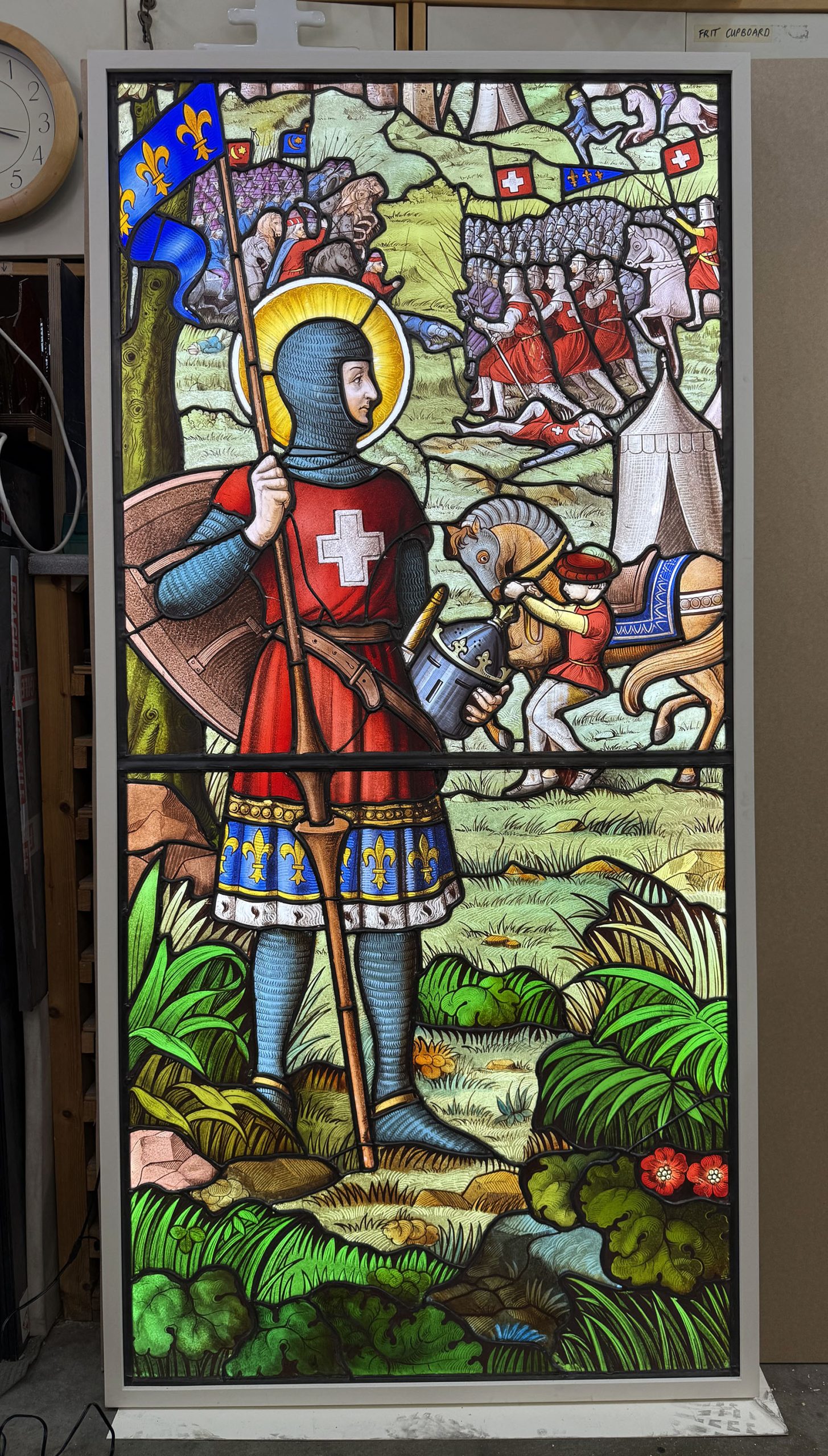
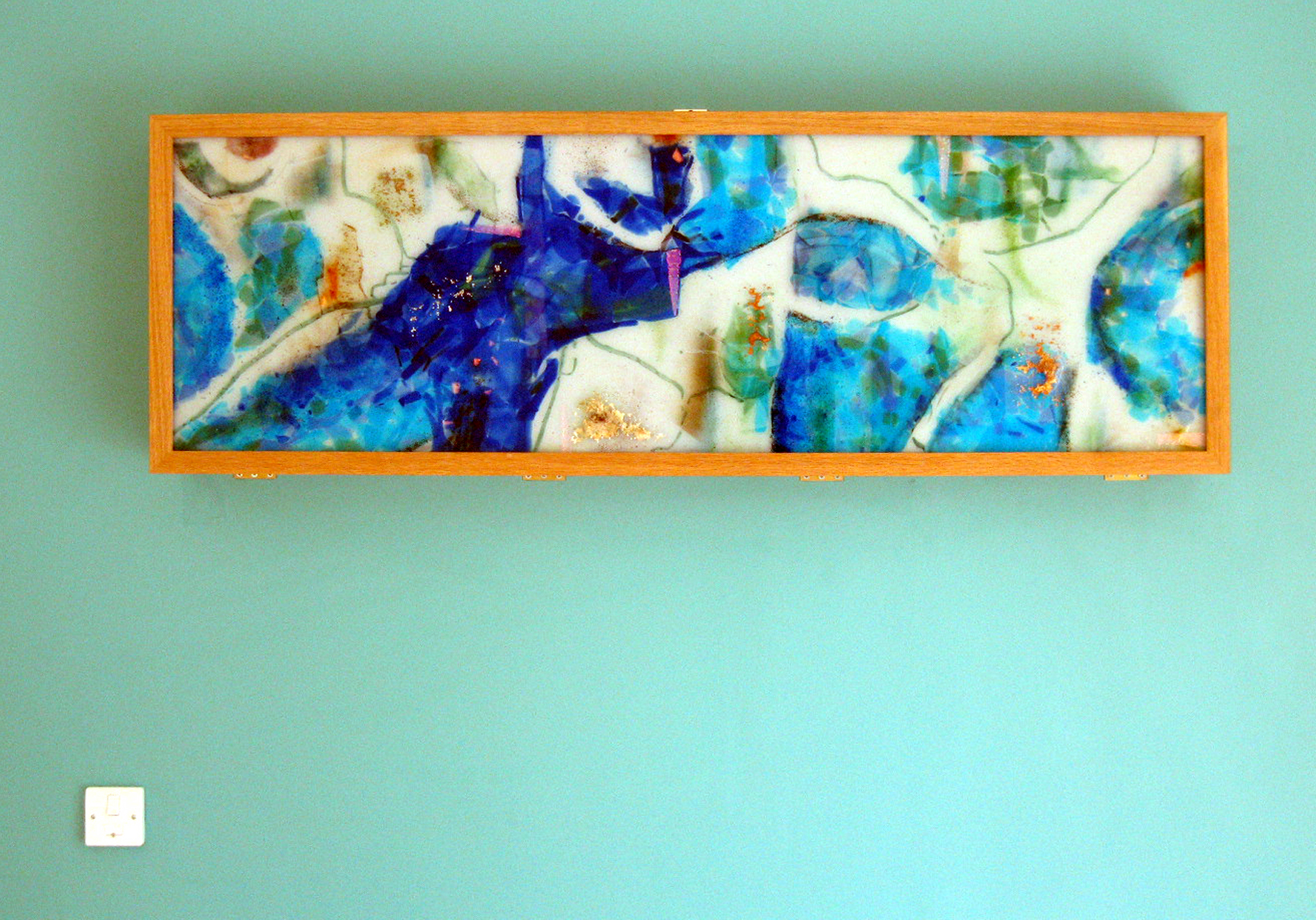
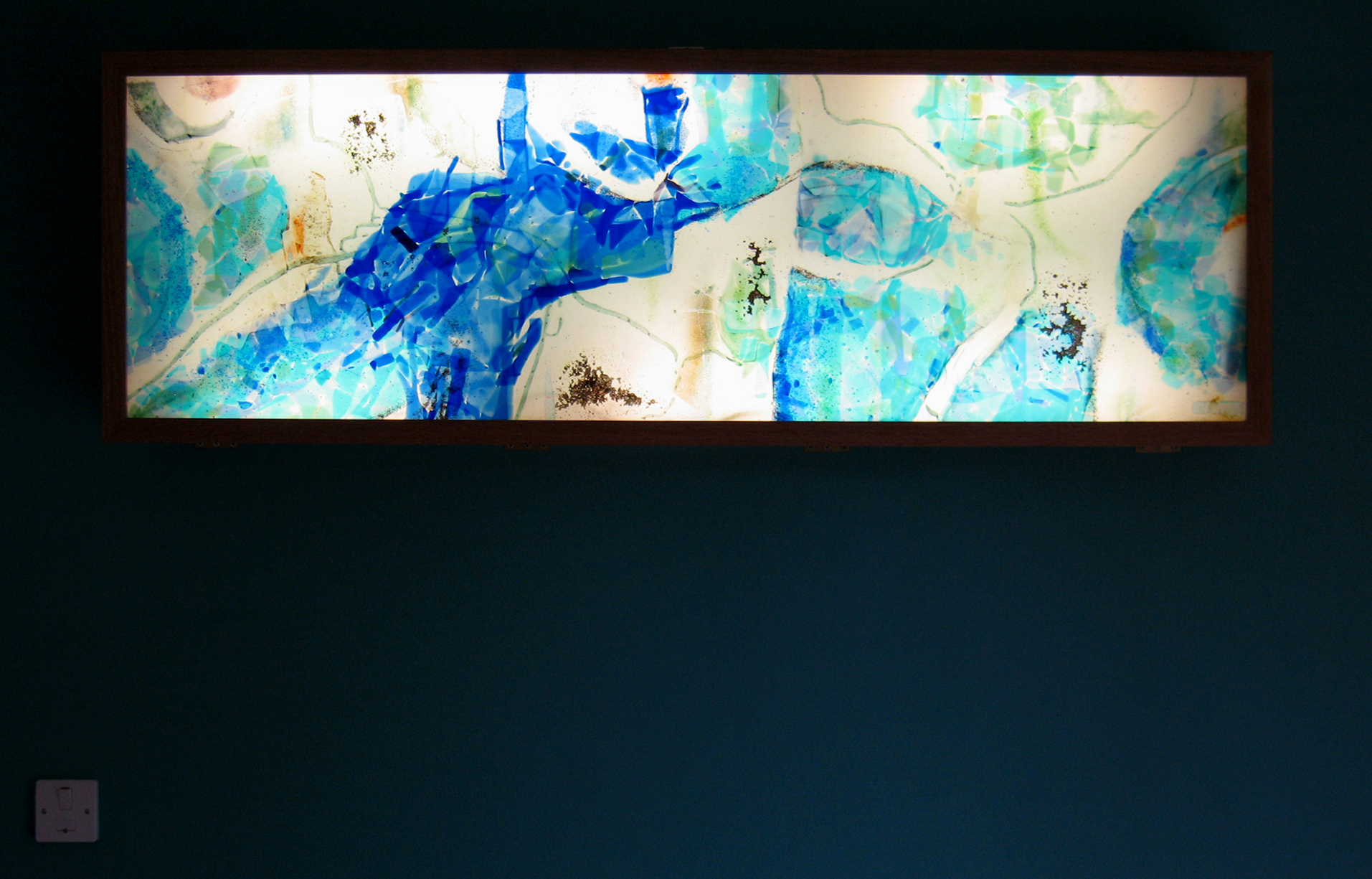
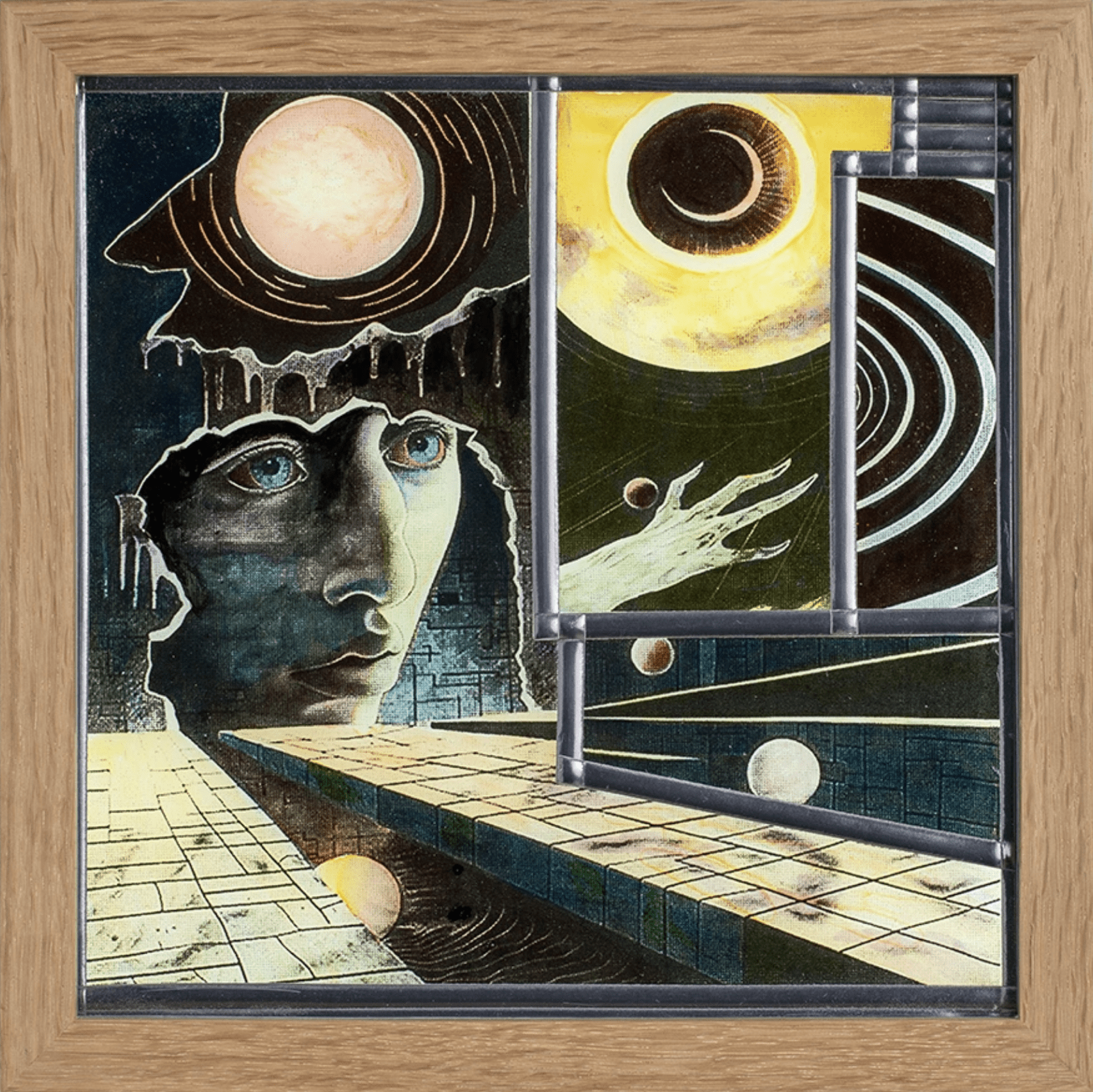
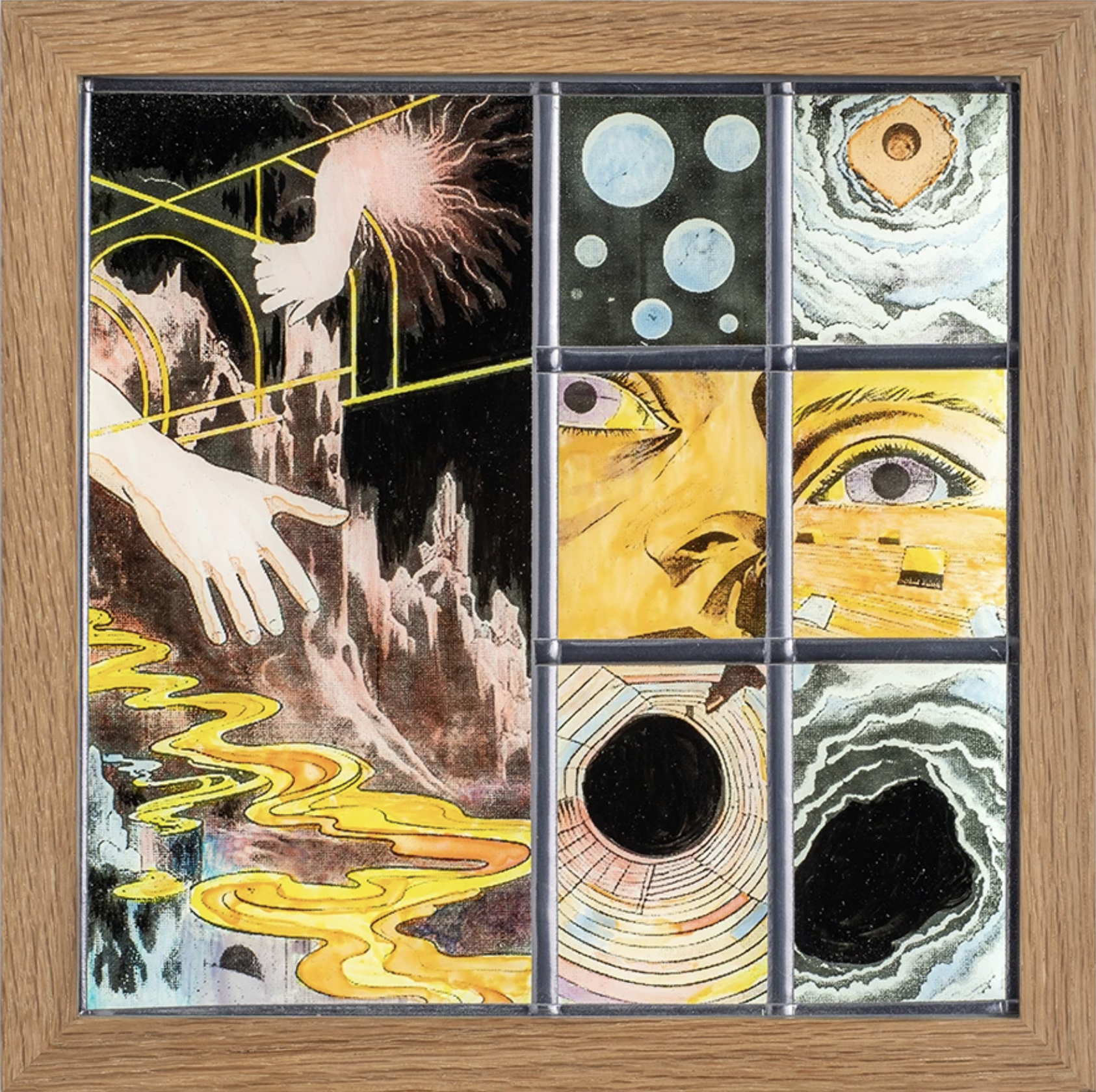
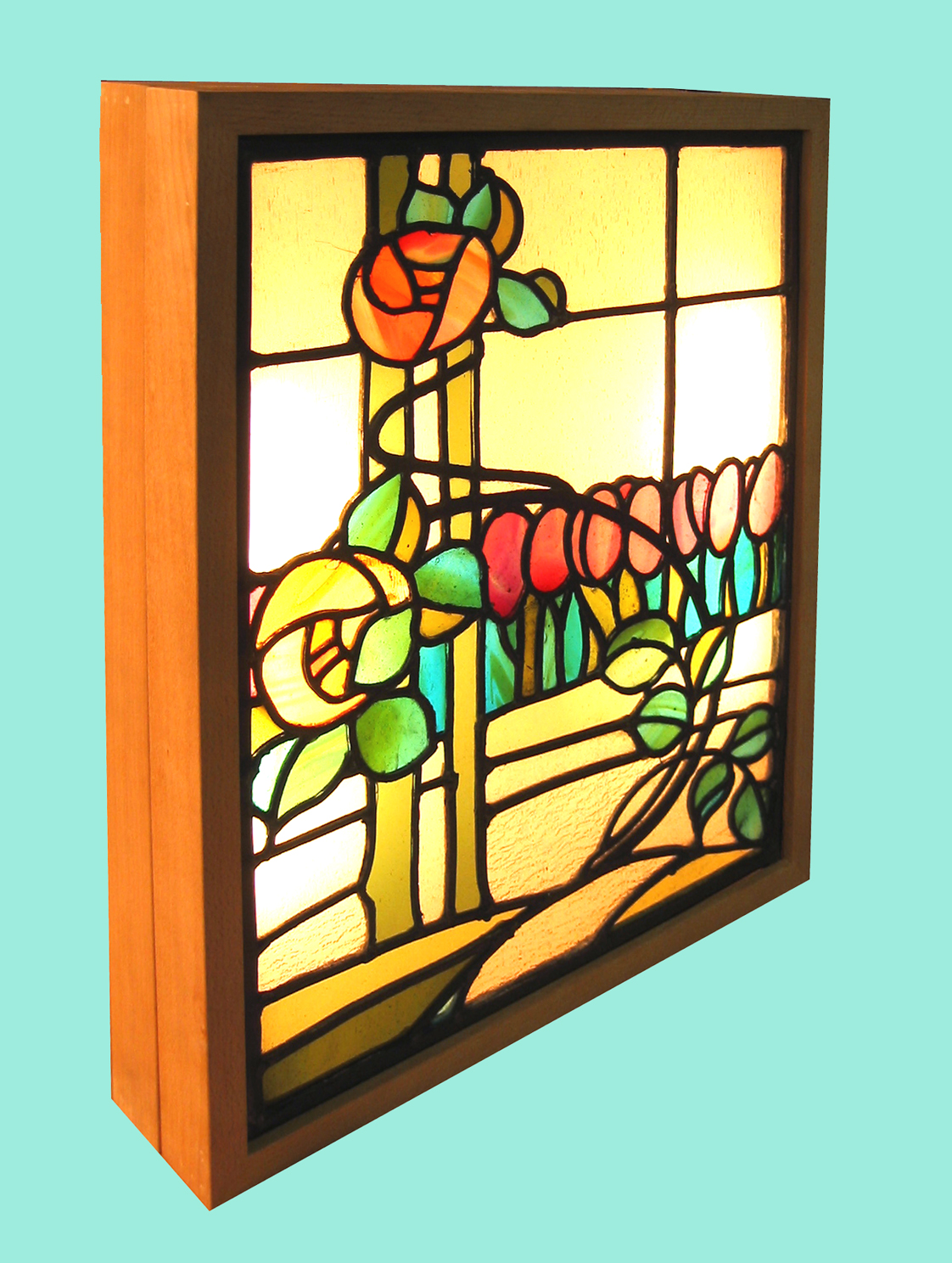
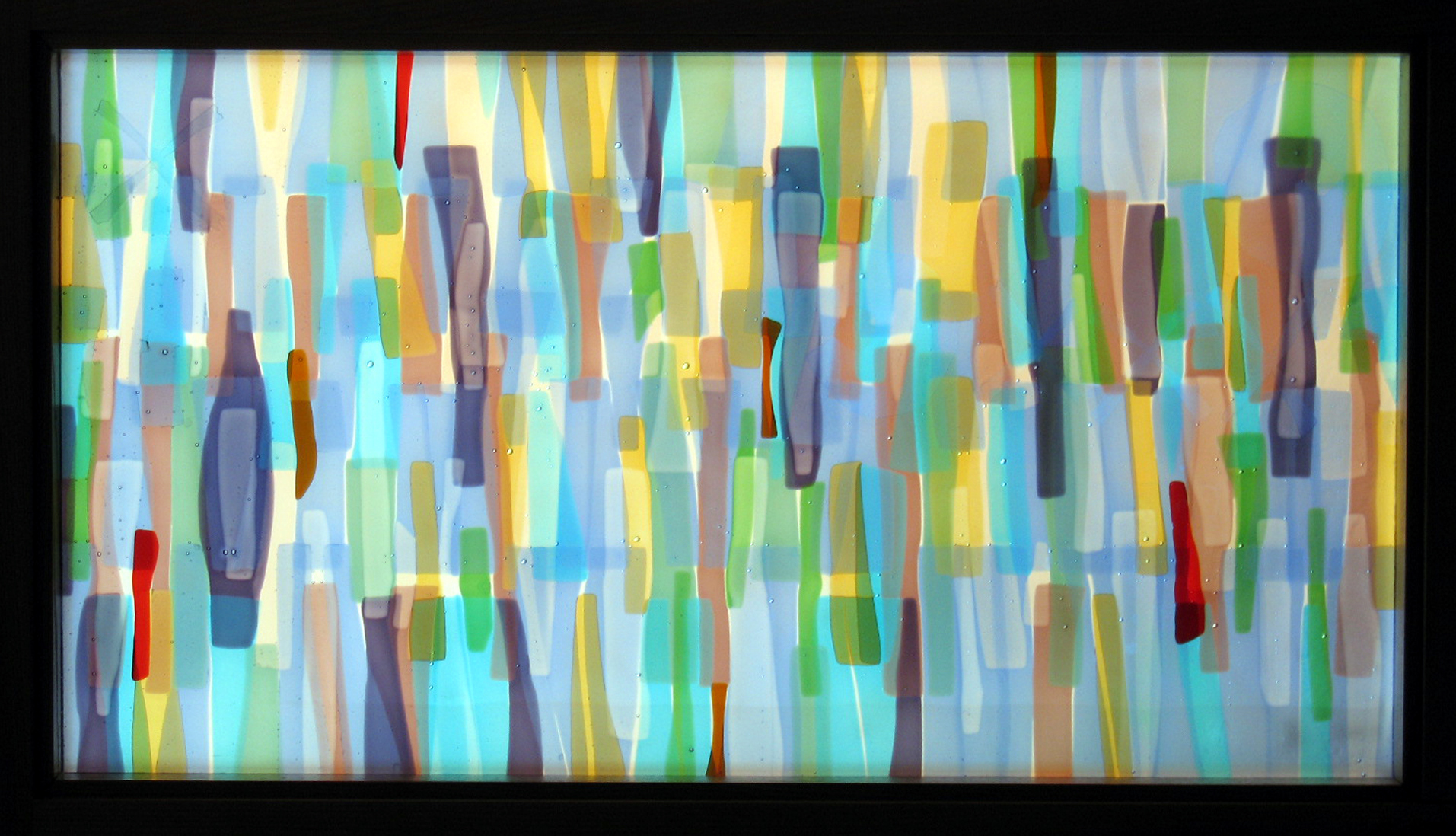
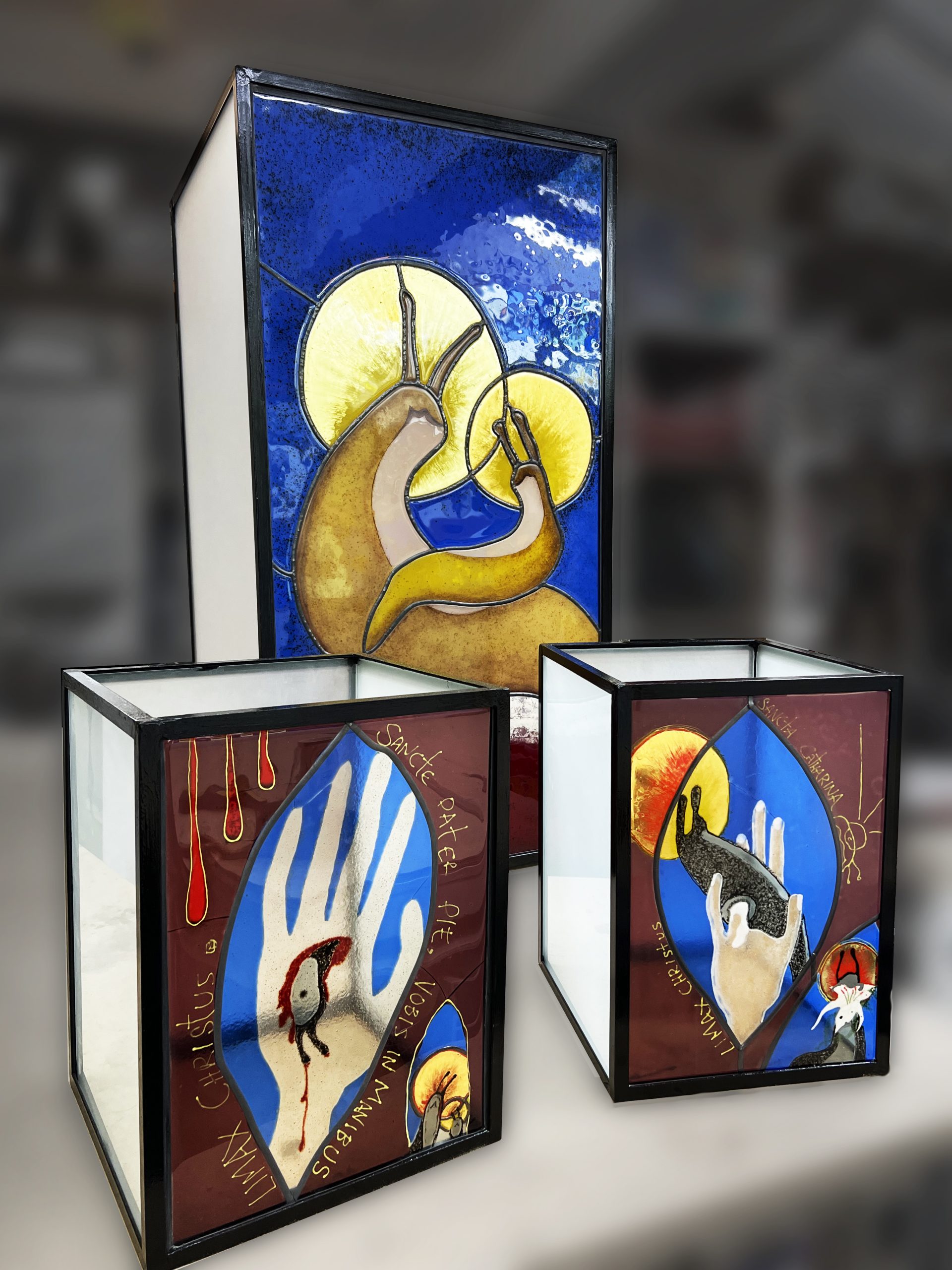
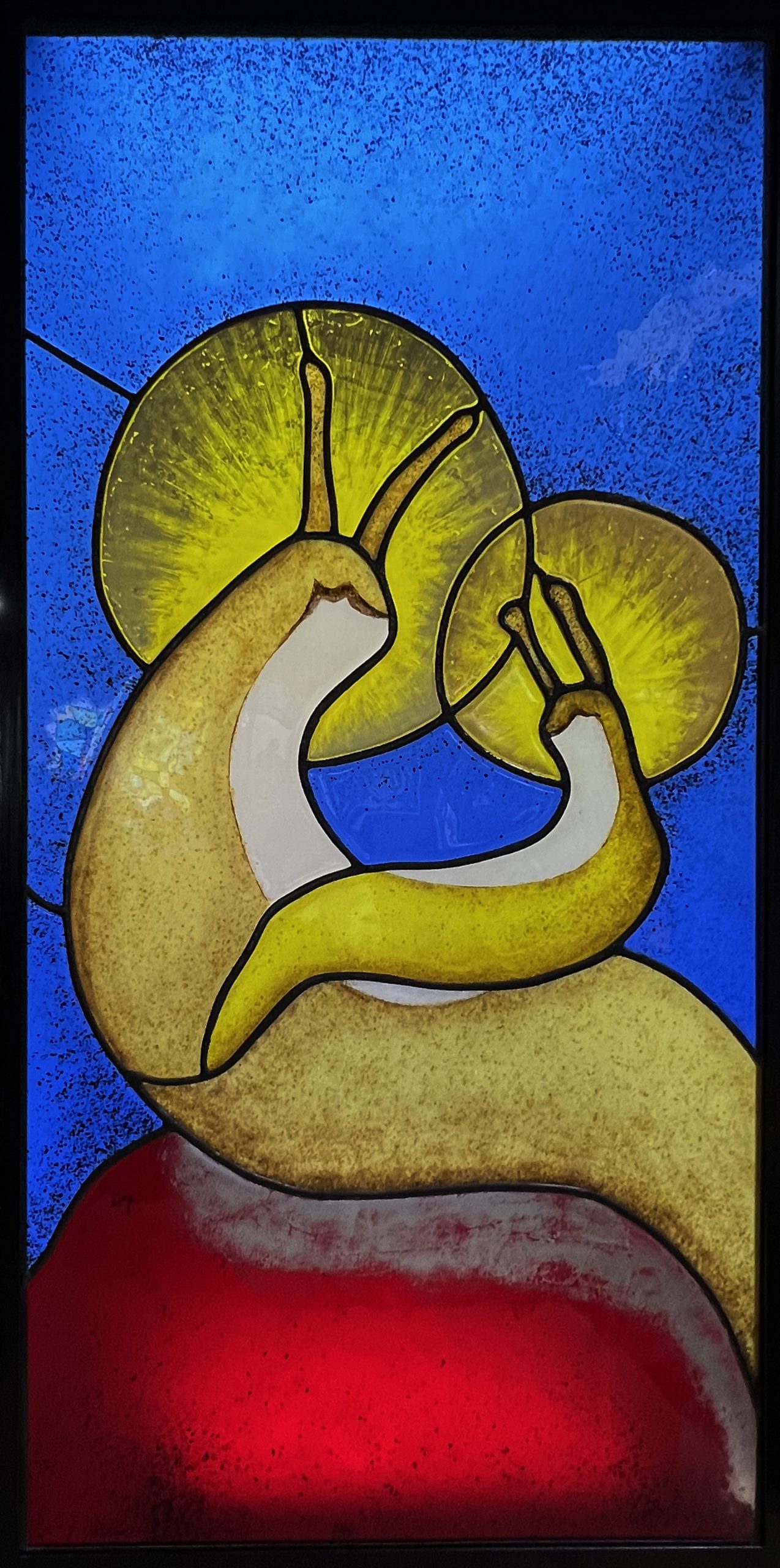
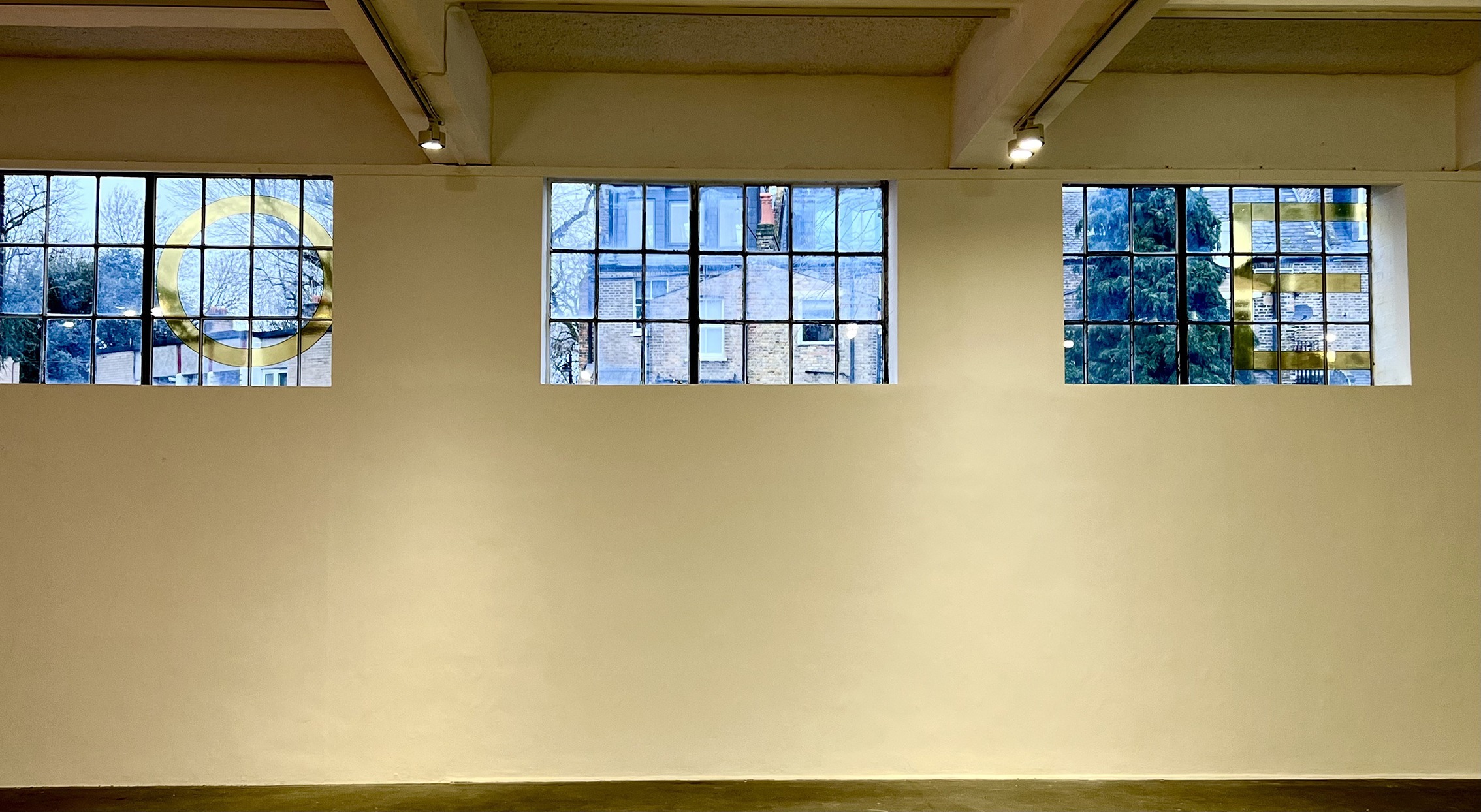
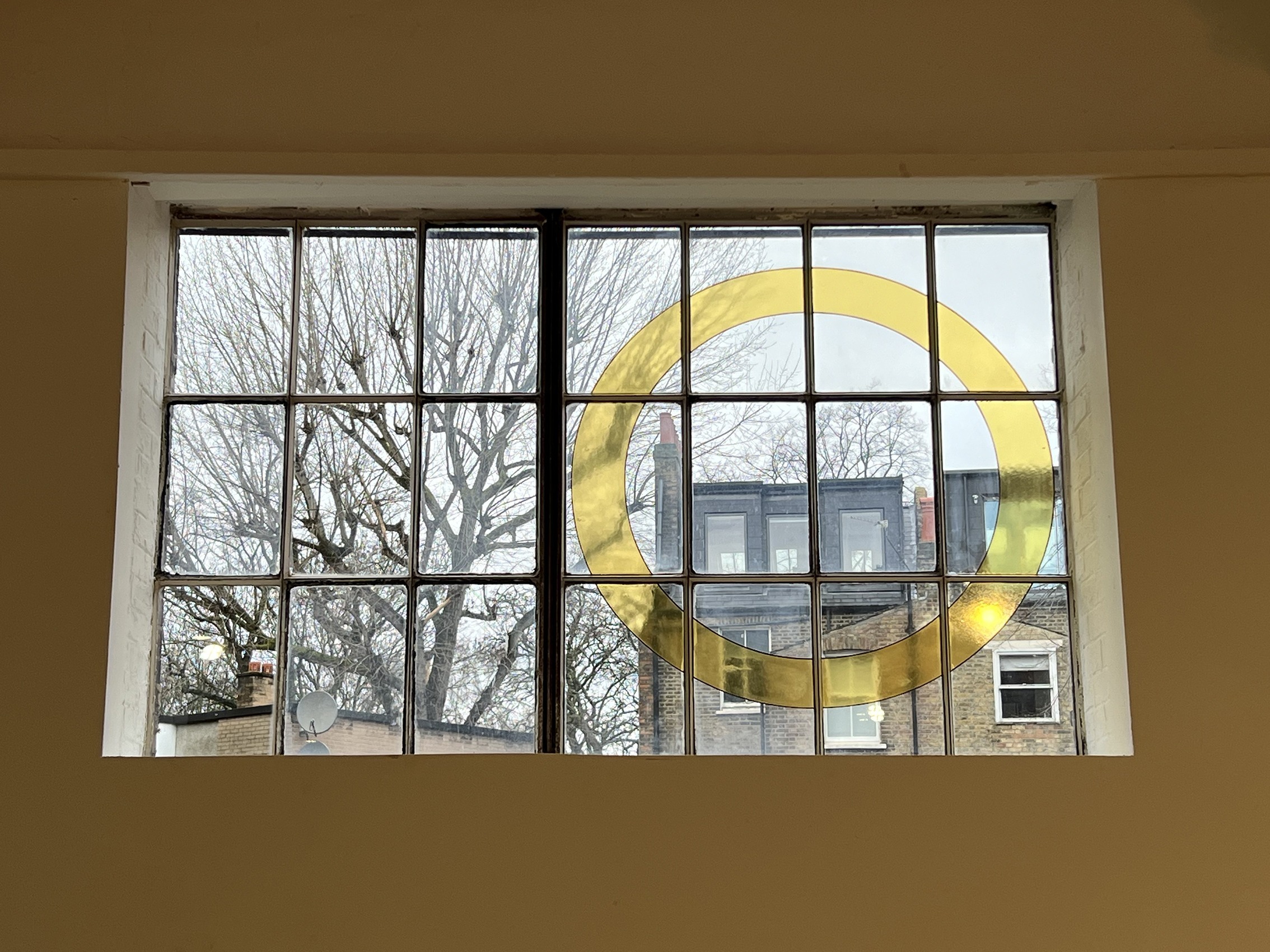
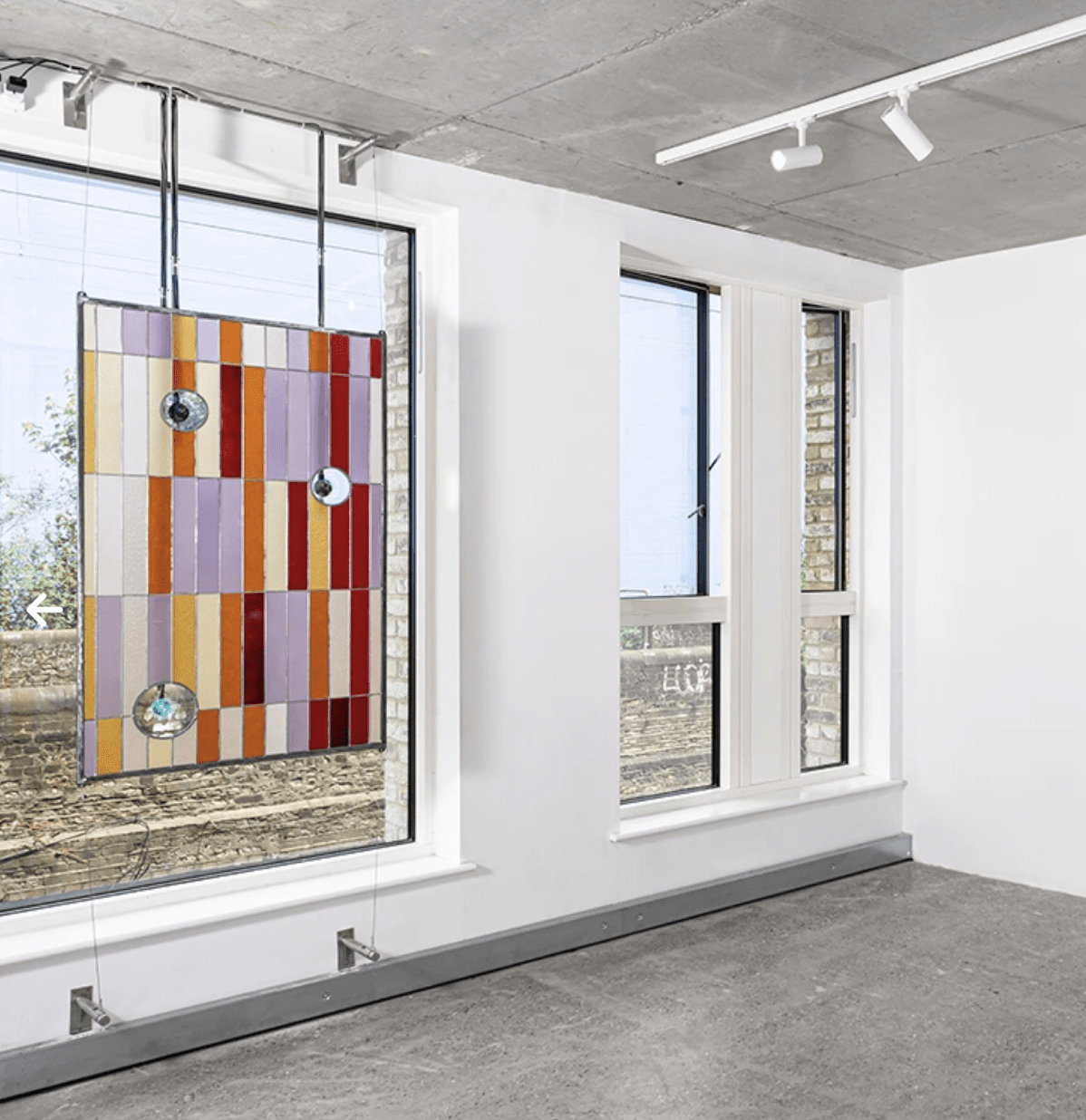
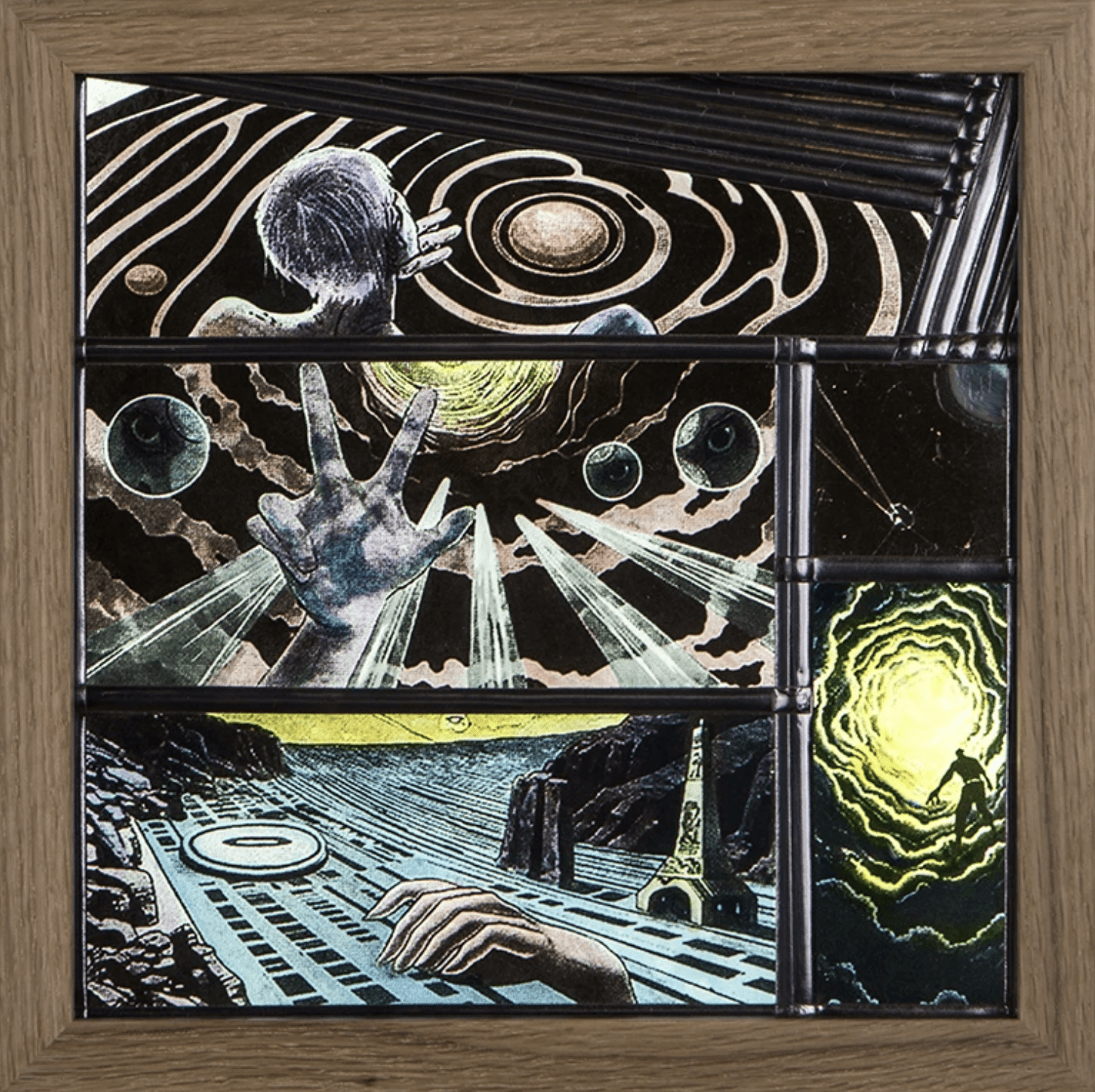
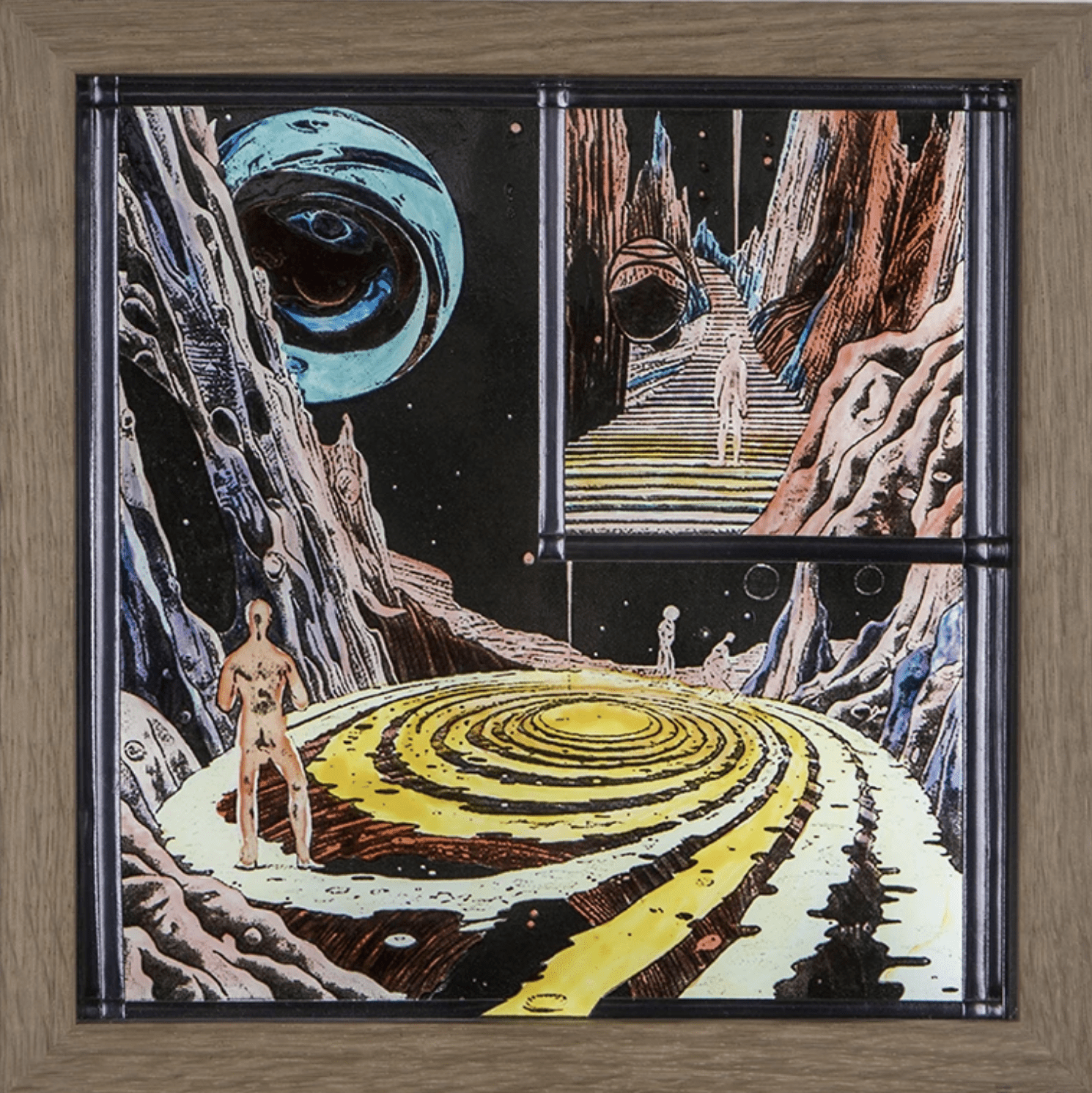
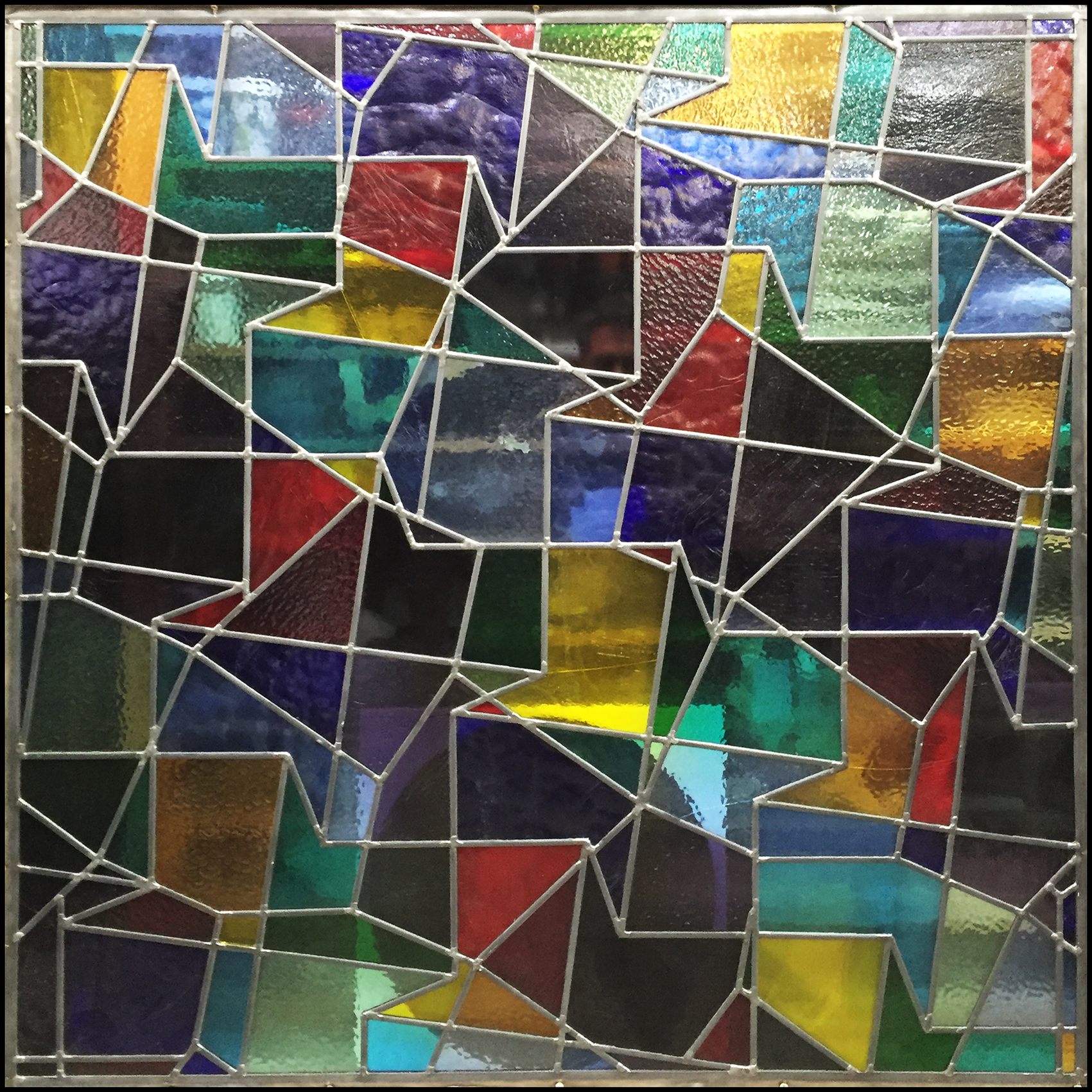
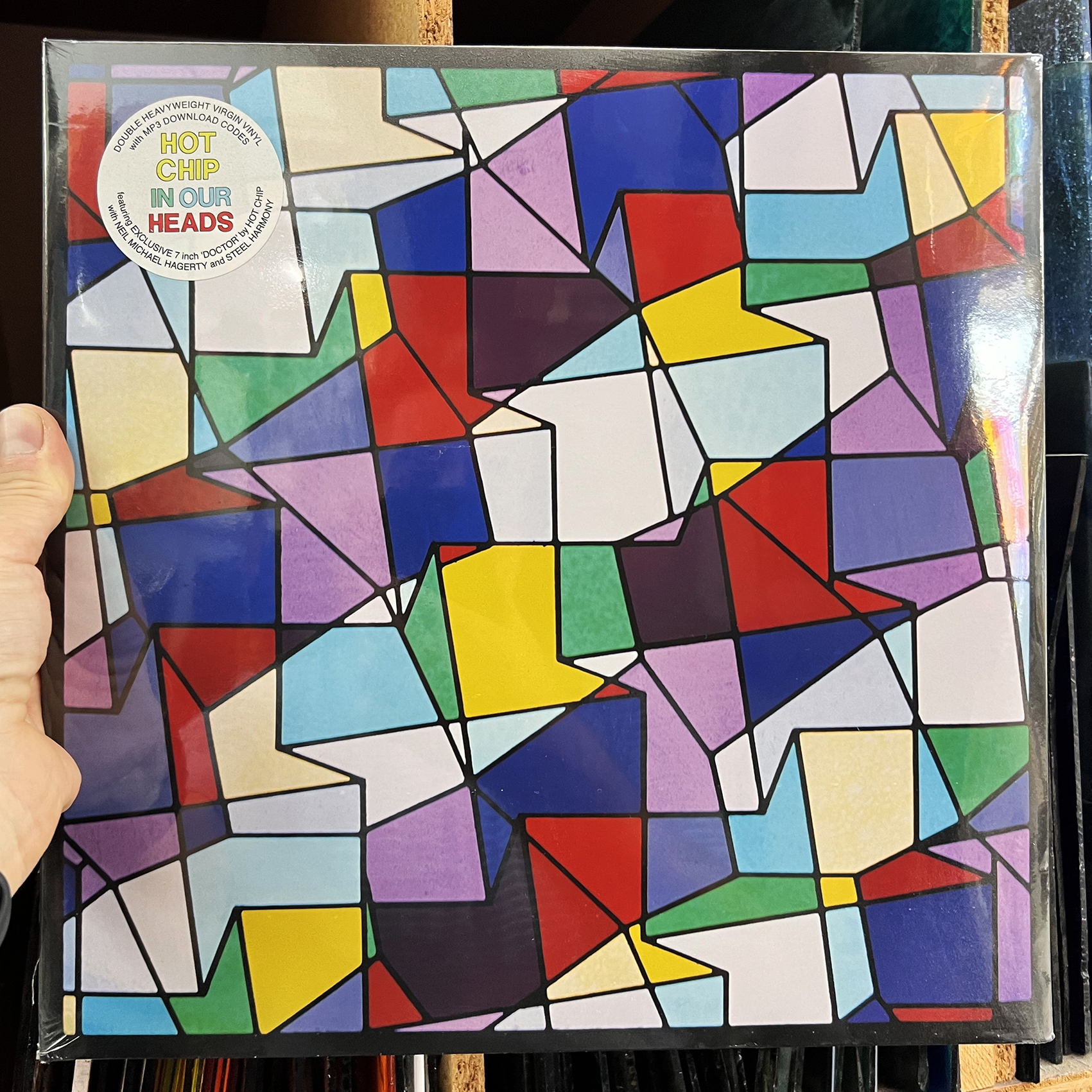
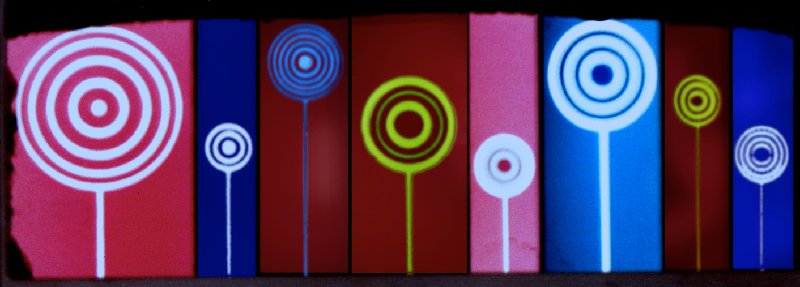
We get asked a lot to make light boxes to display stained glass. It’s a great way to show stained glass and has the advantage of doubling up as a light source in the evenings. We can make wooden and steel framed light boxes to accommodate the stained glass,the LED light sheet (which is very thin these days, ) is fitted in behind the glass. Here is a gallery of work that we have done over the years to give customers an idea of what is possible.
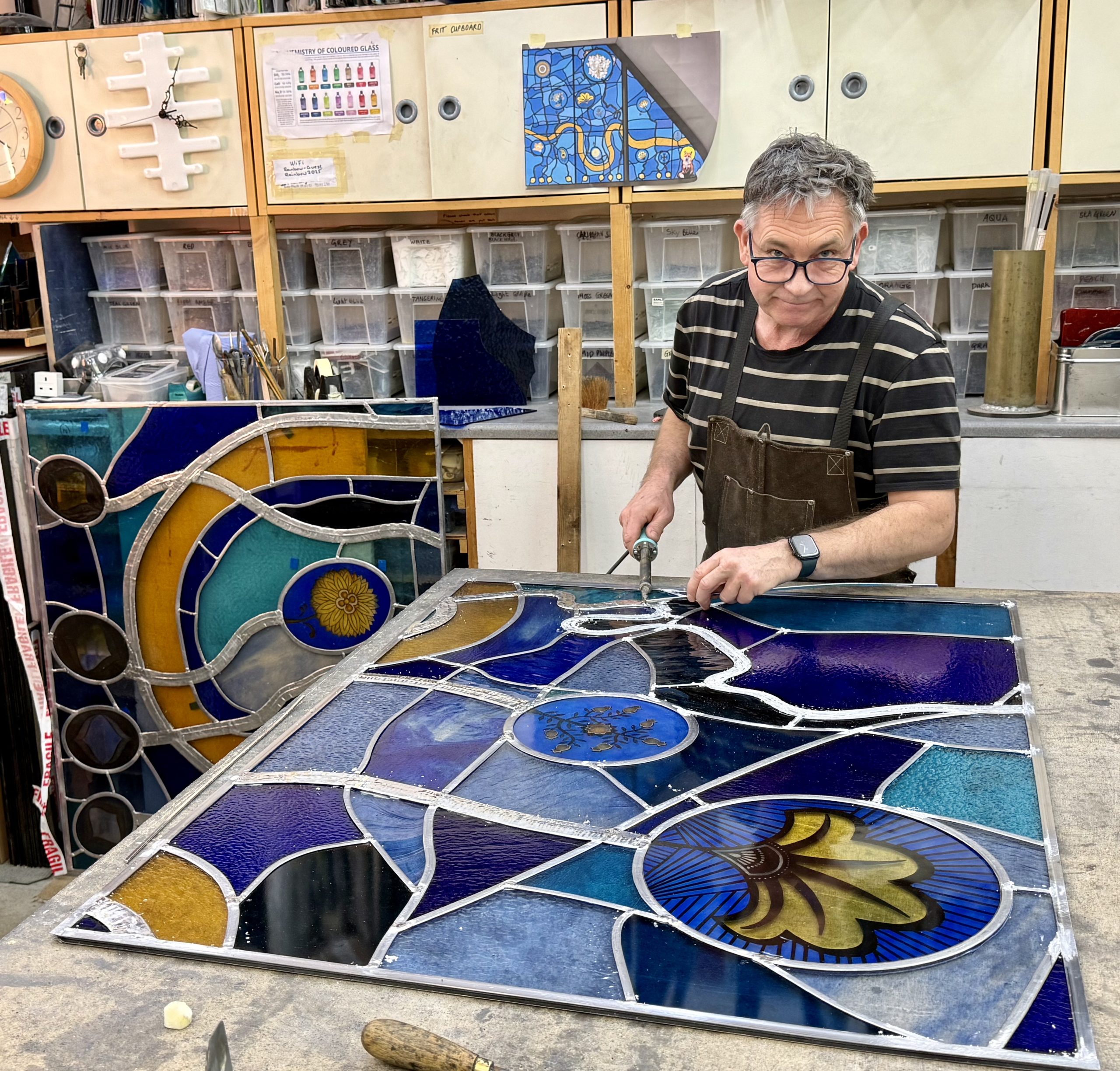
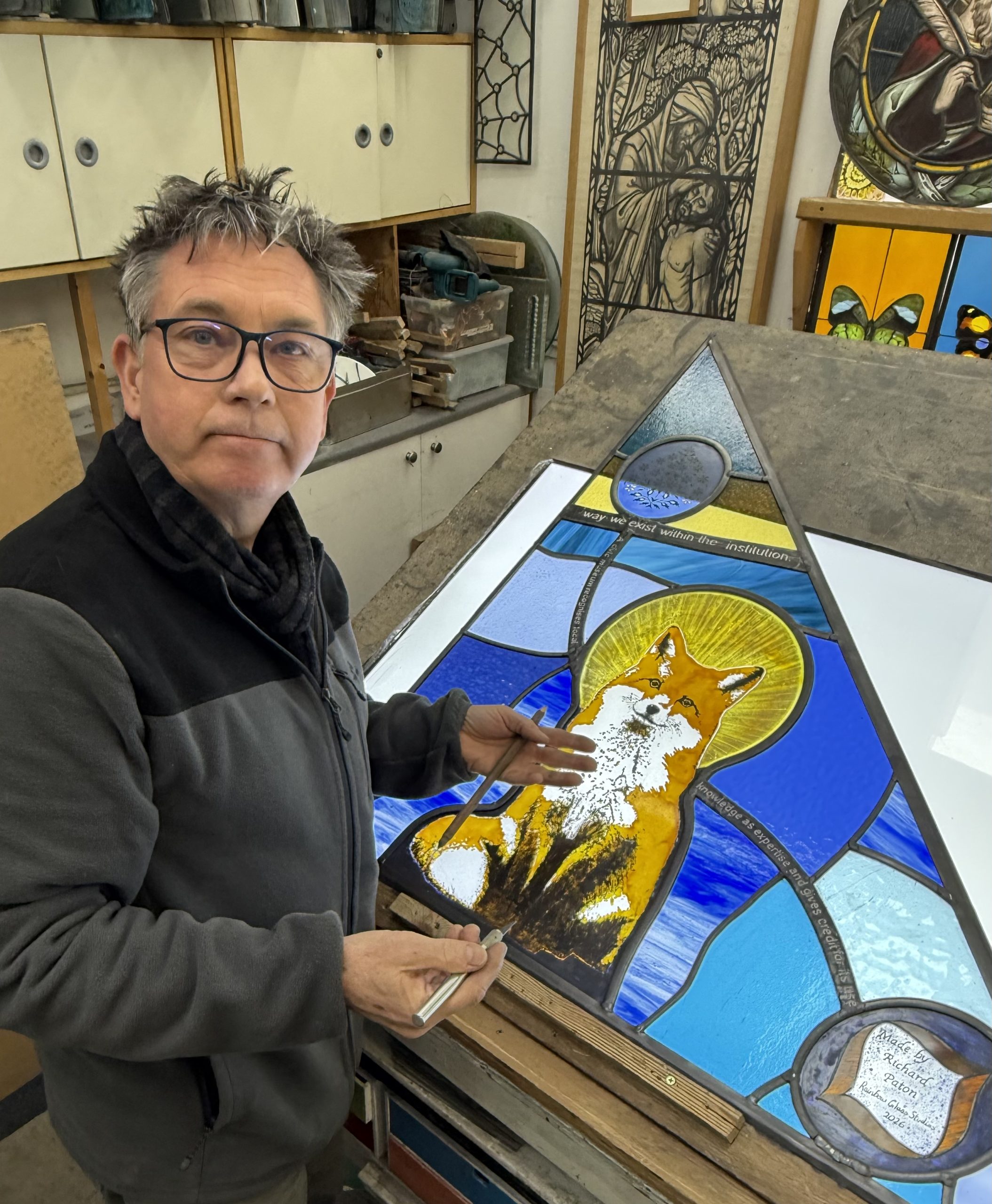
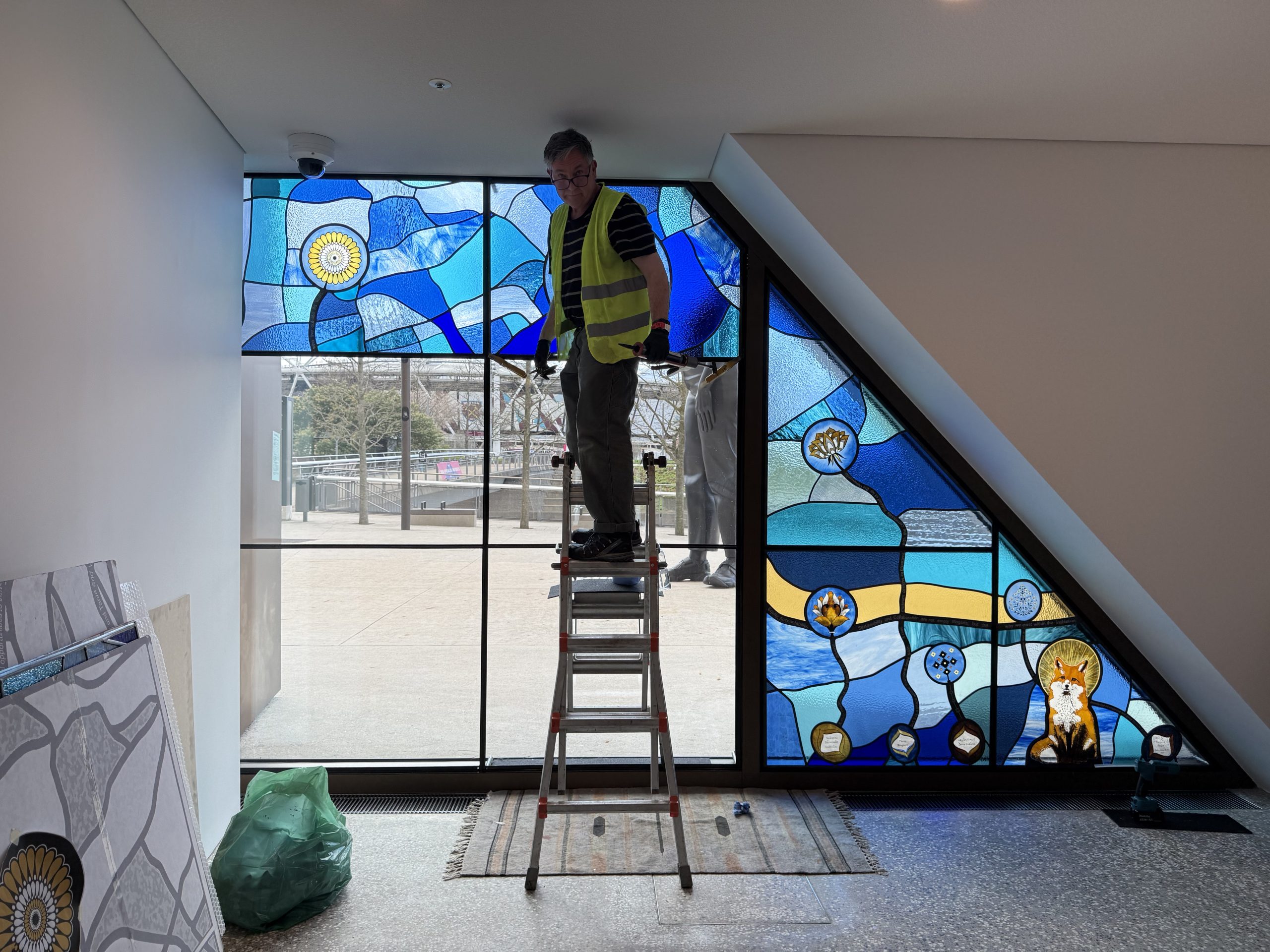
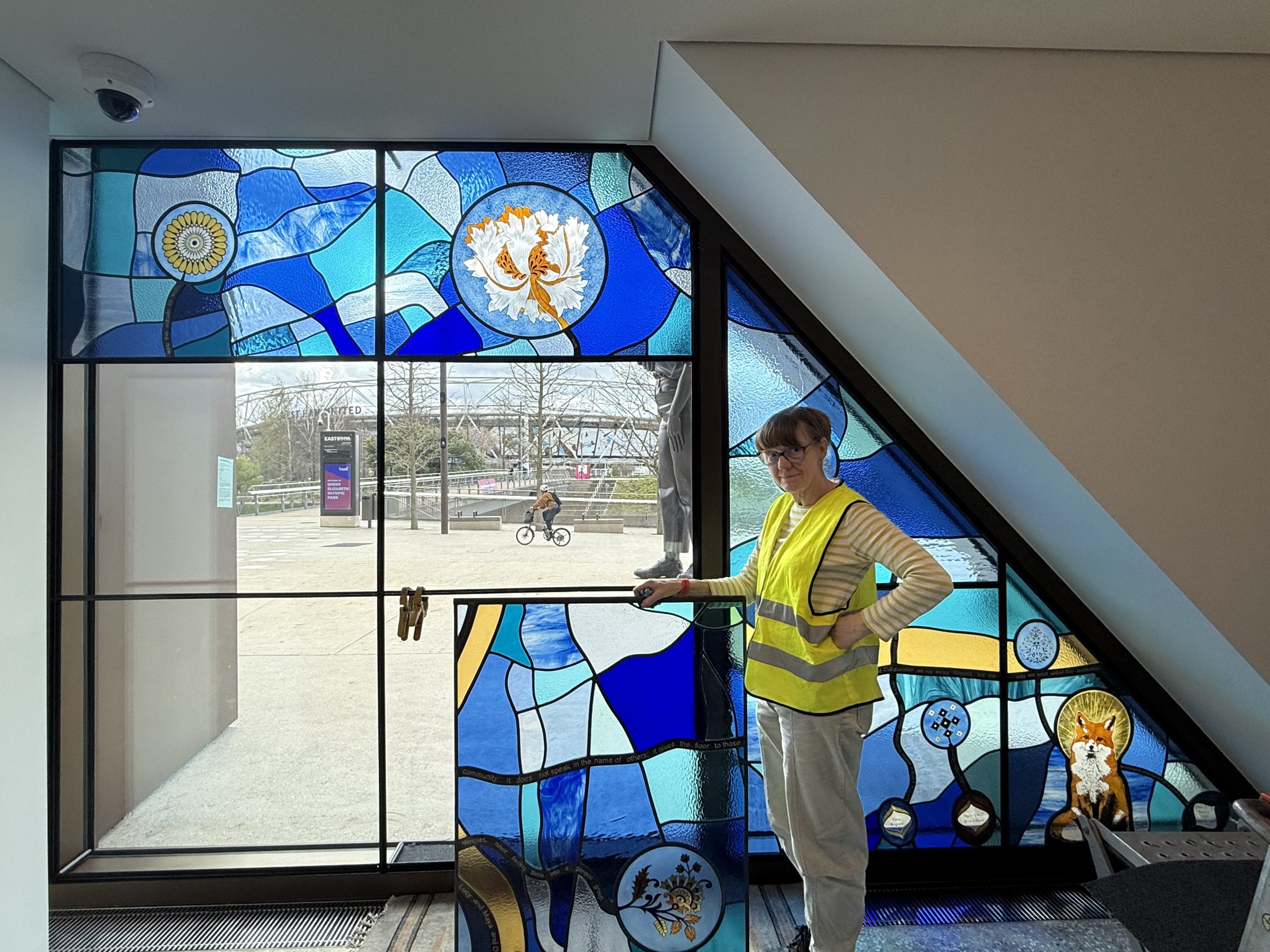
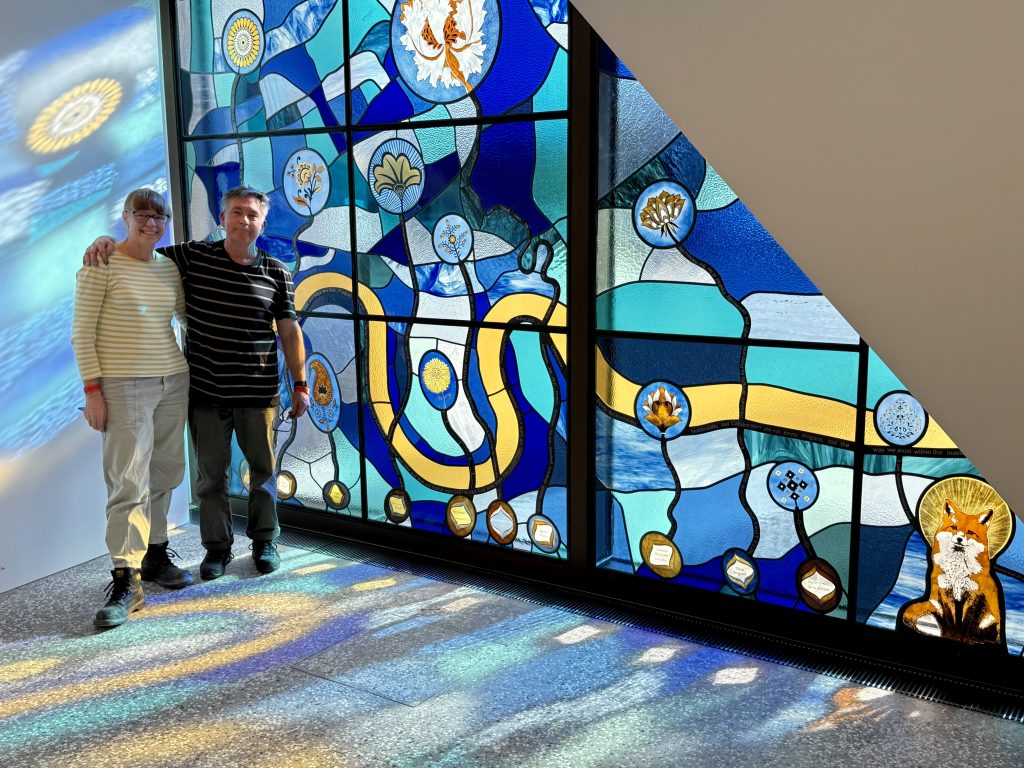
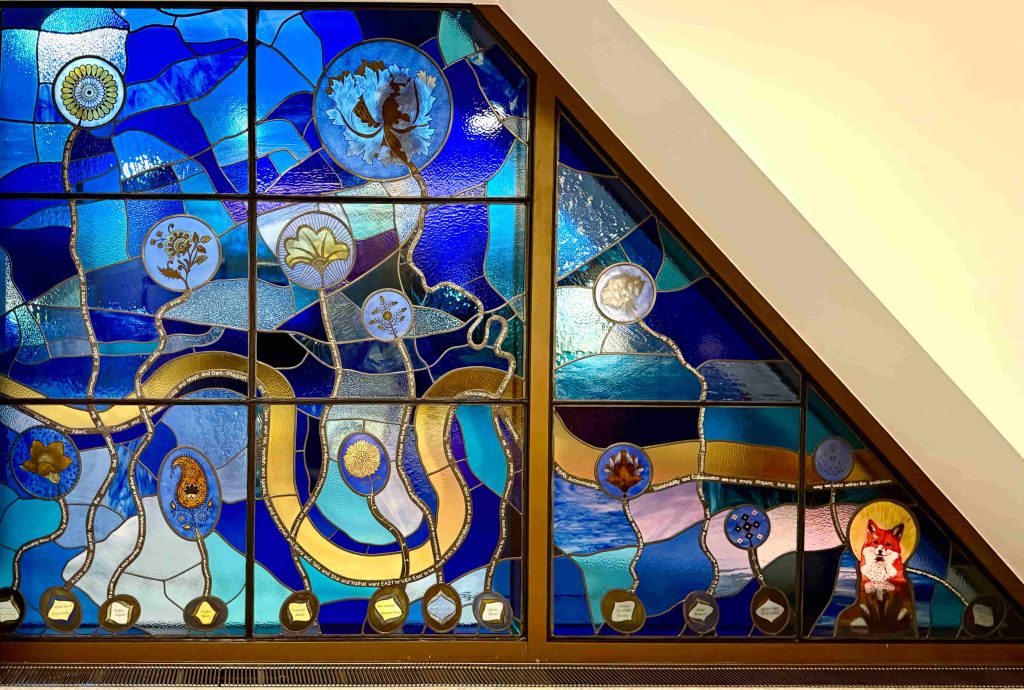
This project “Towards A Civic Museum” was a collaborative project initiated by Ruben Salgado from the curatorial team at the new V&A East museum. Ruben invited the Cuban artist Tania Bruguera to collaborate with an East London Youth group to generate ideas for a new stained glass window for the museum. Rainbow Glass Studios were then invited to help make it happen. Using Tania’s concept ideas, drawn from a series of workshops with the youth group Richard Paton then designed the stained glass version of the window in January 2026 which was then approved by the V&A and the fabrication of the whole window commenced over the following 8 weeks. Click on the images to enlarge. The story continues below…
Therefore the following 2 months for Richard at Rainbow Glass Studios were both intense and technical – a total of 650 hours were invested into many techniques. Here is a short summary of the steps in the process of making this window.
Measurements and templates were made of the V&A space.
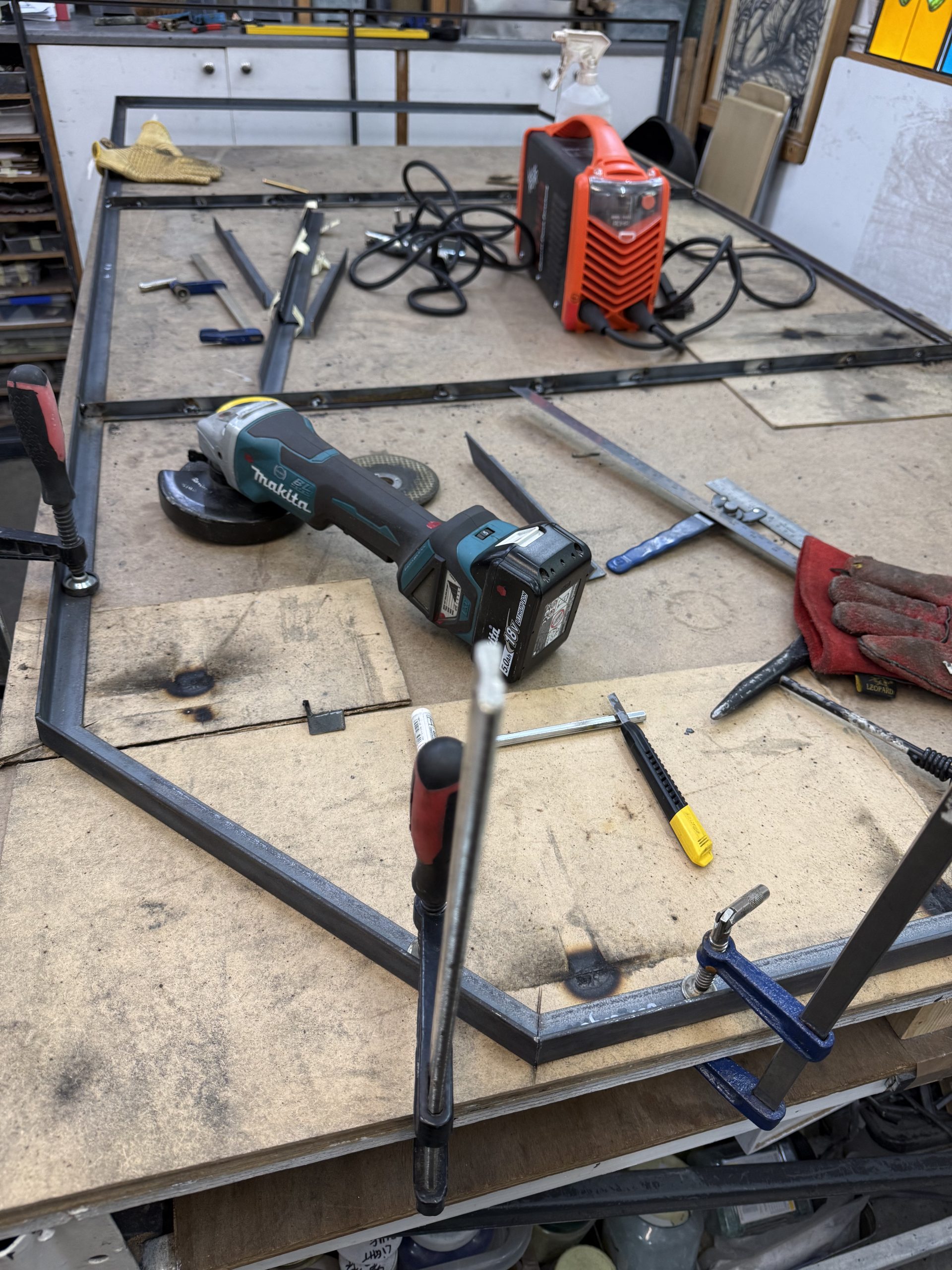
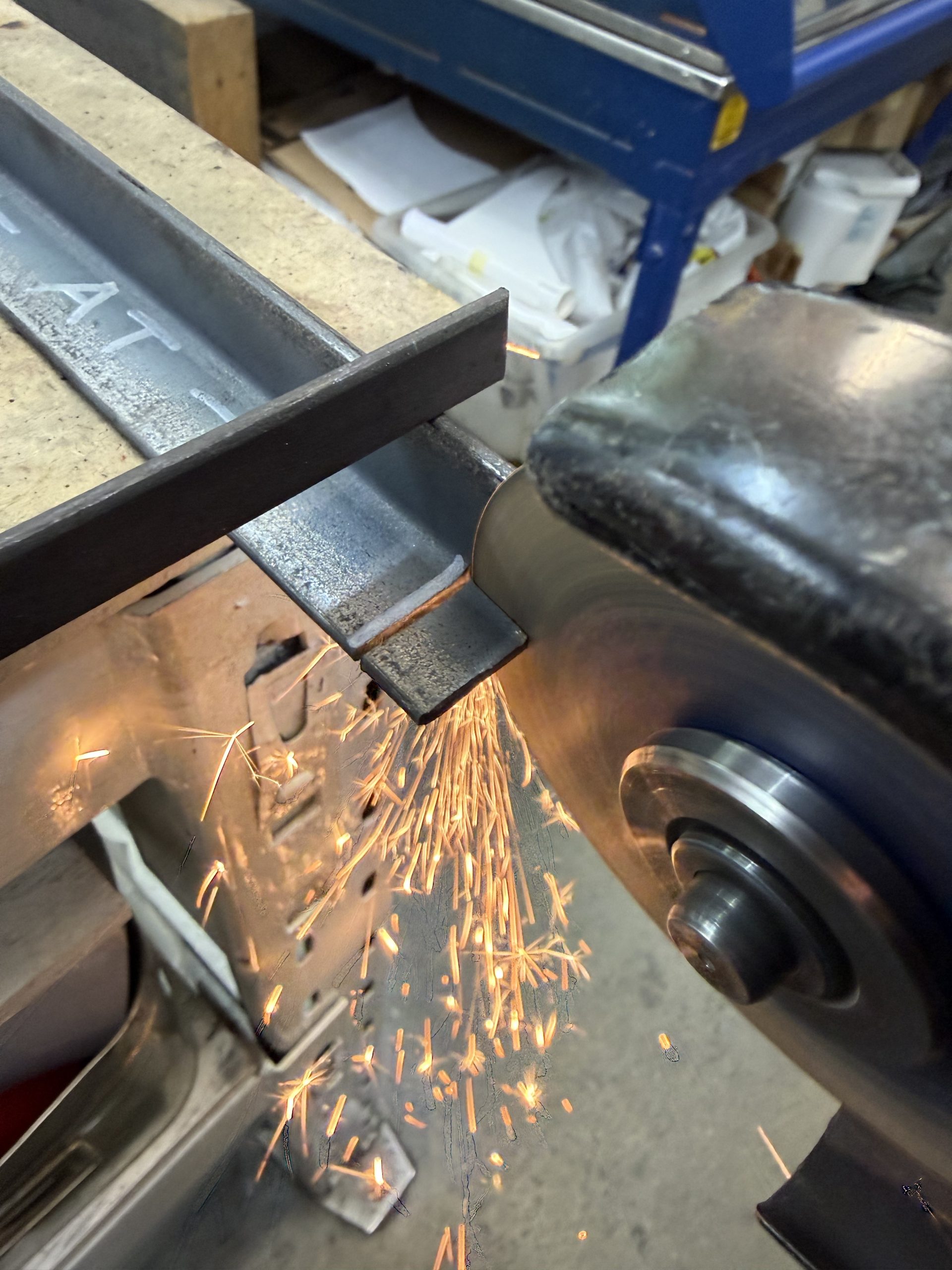
Three steel sub-frames were welded and painted as the space had to be divided into manageable stained glass panel sizes – nine in total
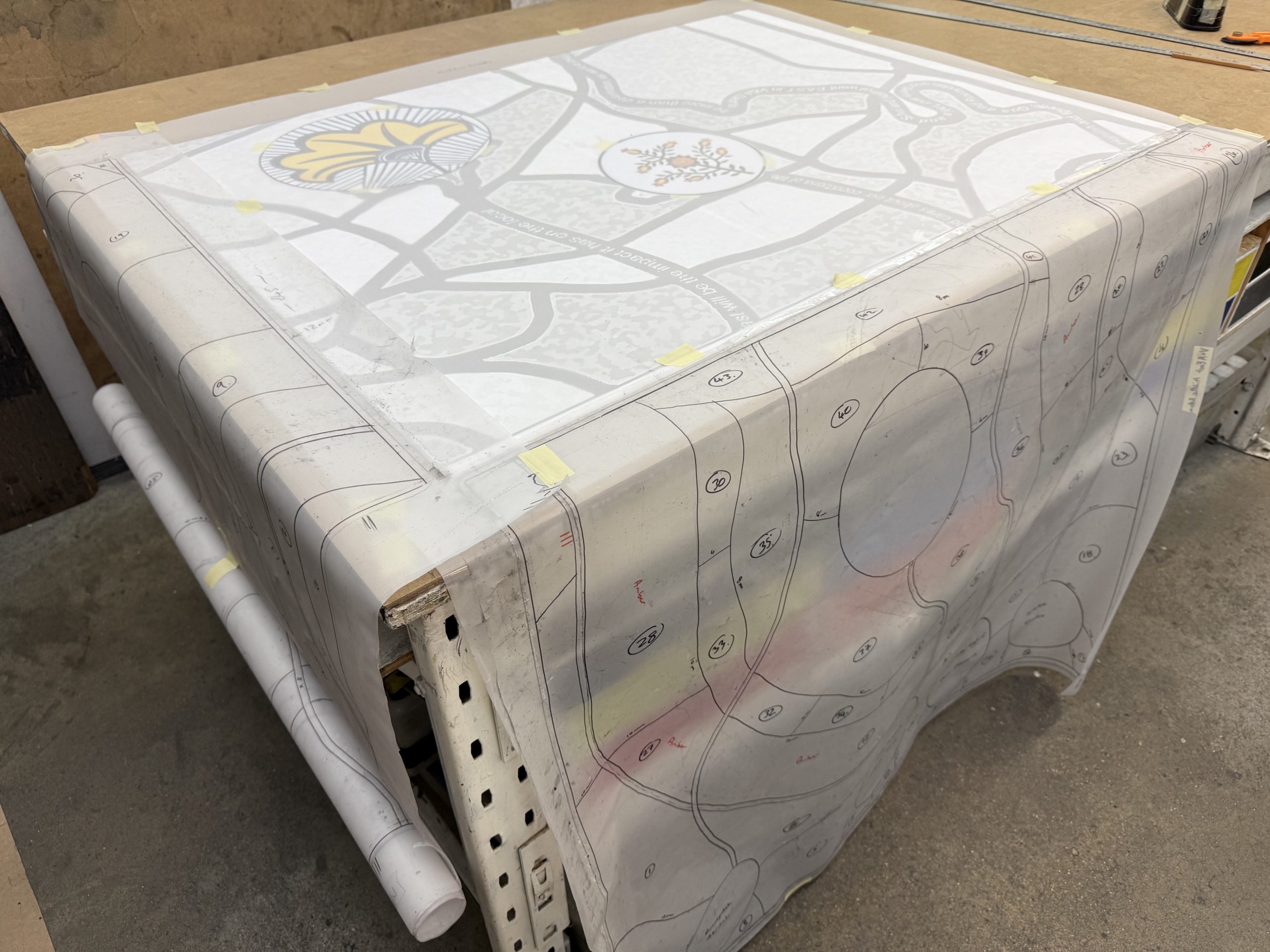
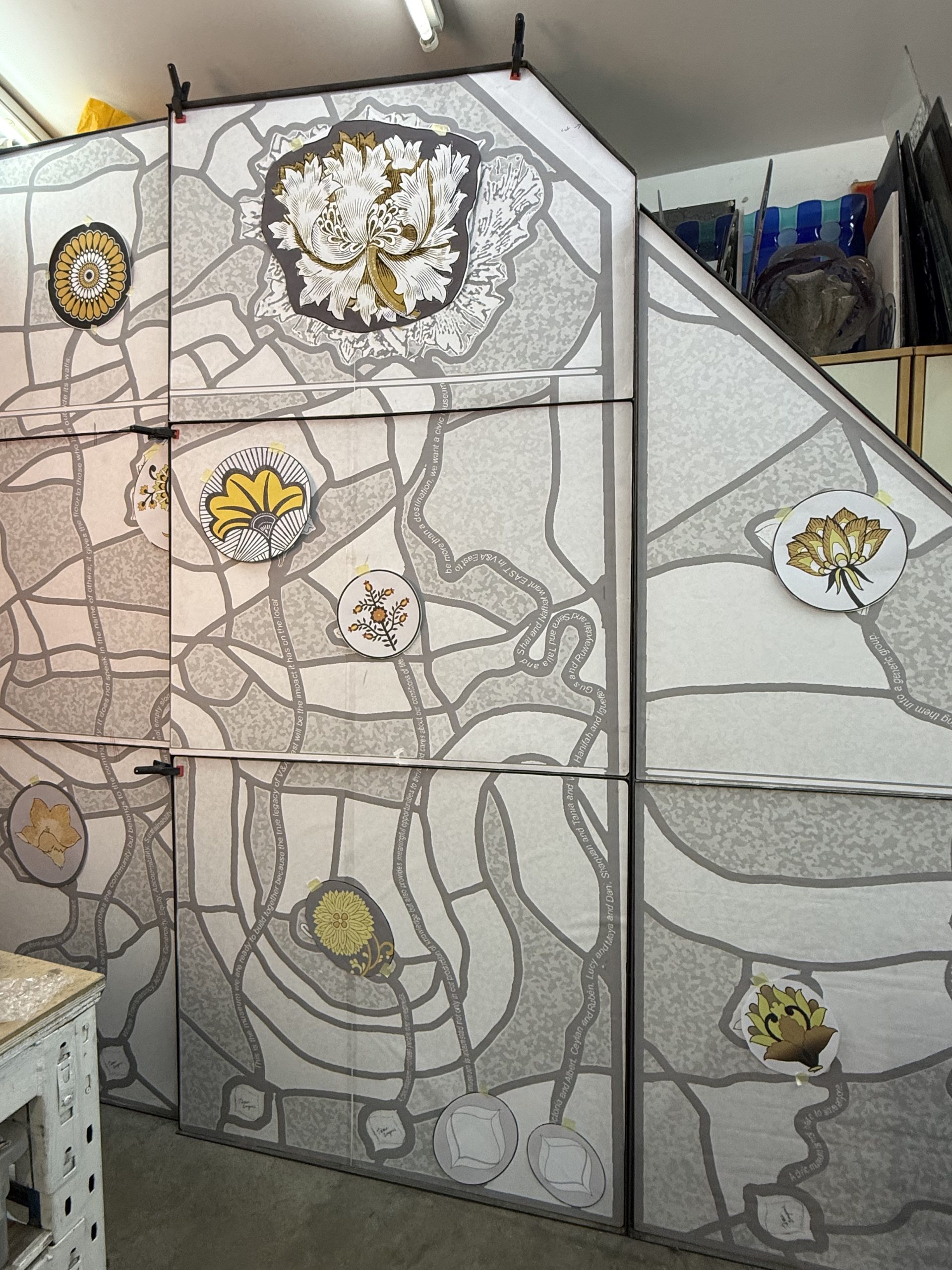
The design was then scaled up and glued onto MDF wooden boards cut to fit the apertures
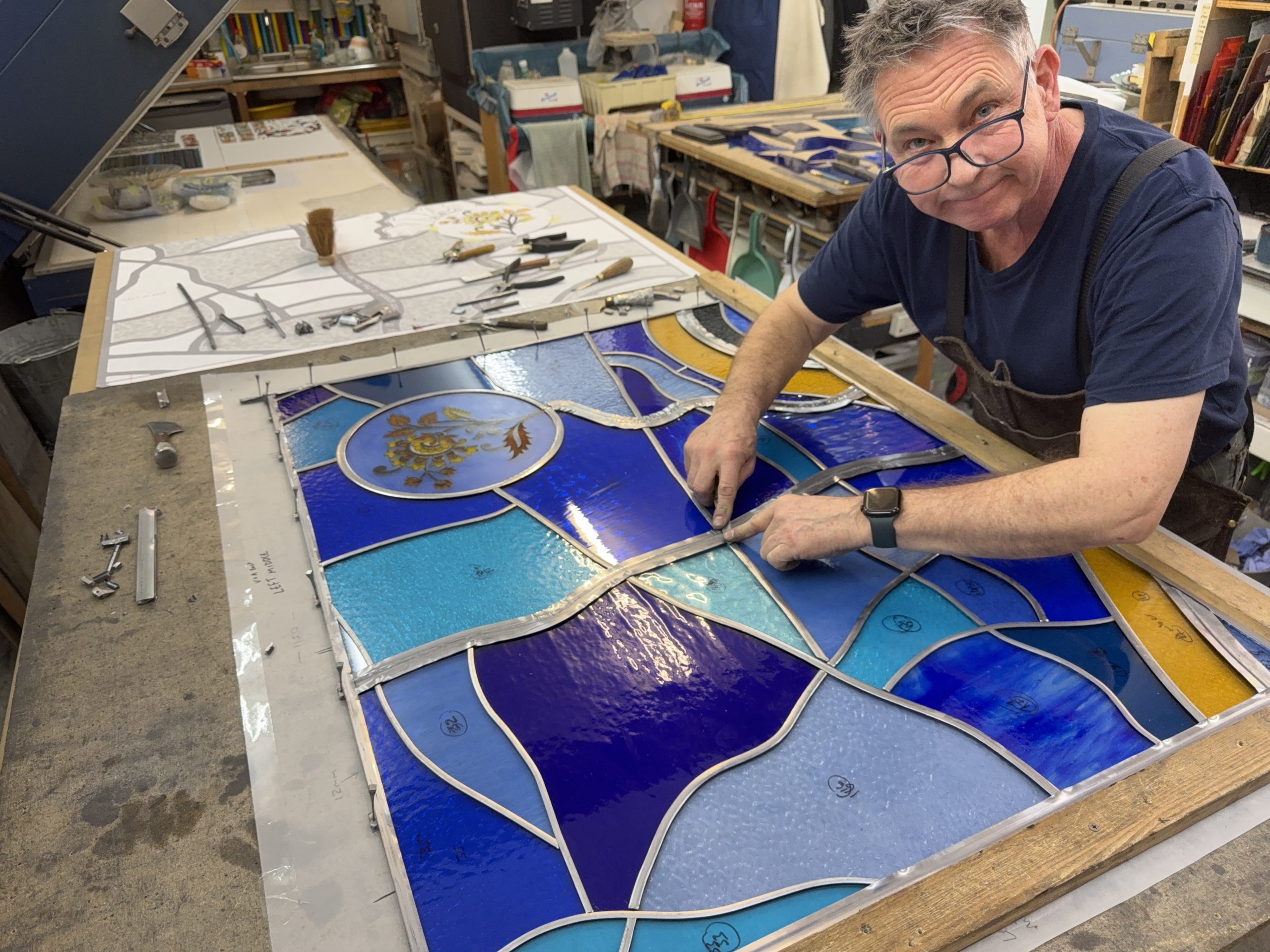
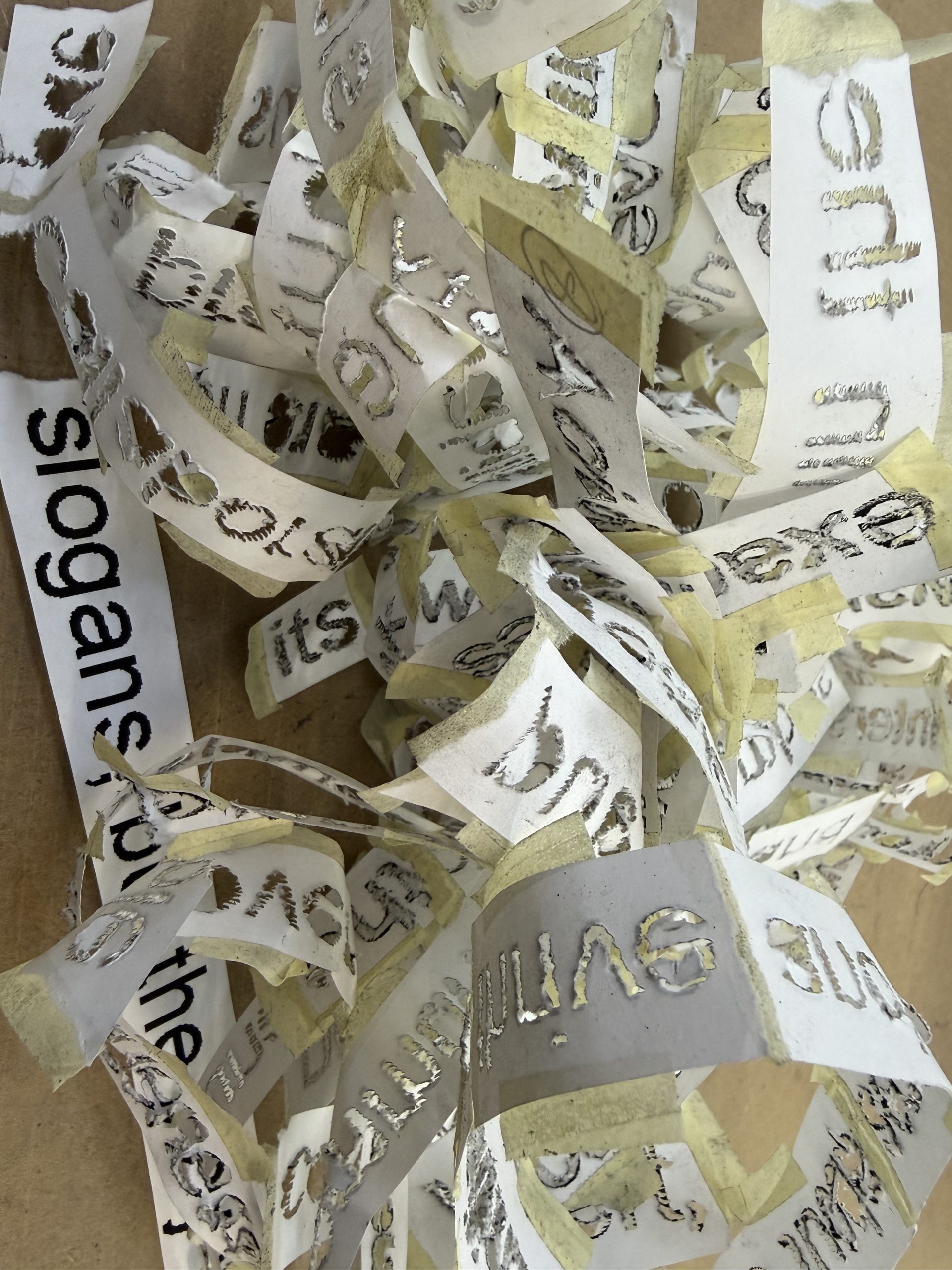
The design was then re-drawn onto 9 pieces of tracing paper which were then used to cut the glass to fit each shape within each drawing.
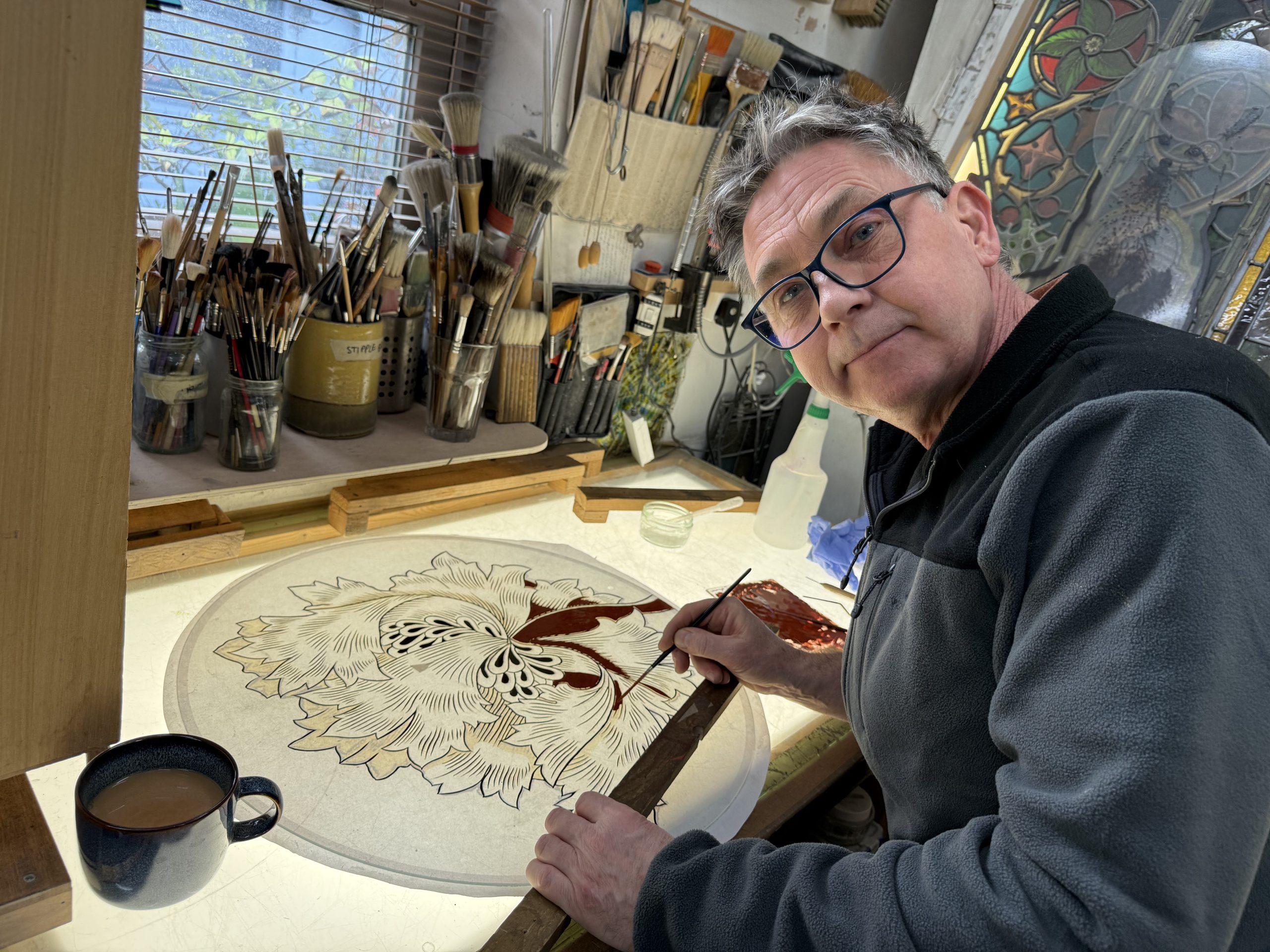
The glass pieces which needed painting were cut first.
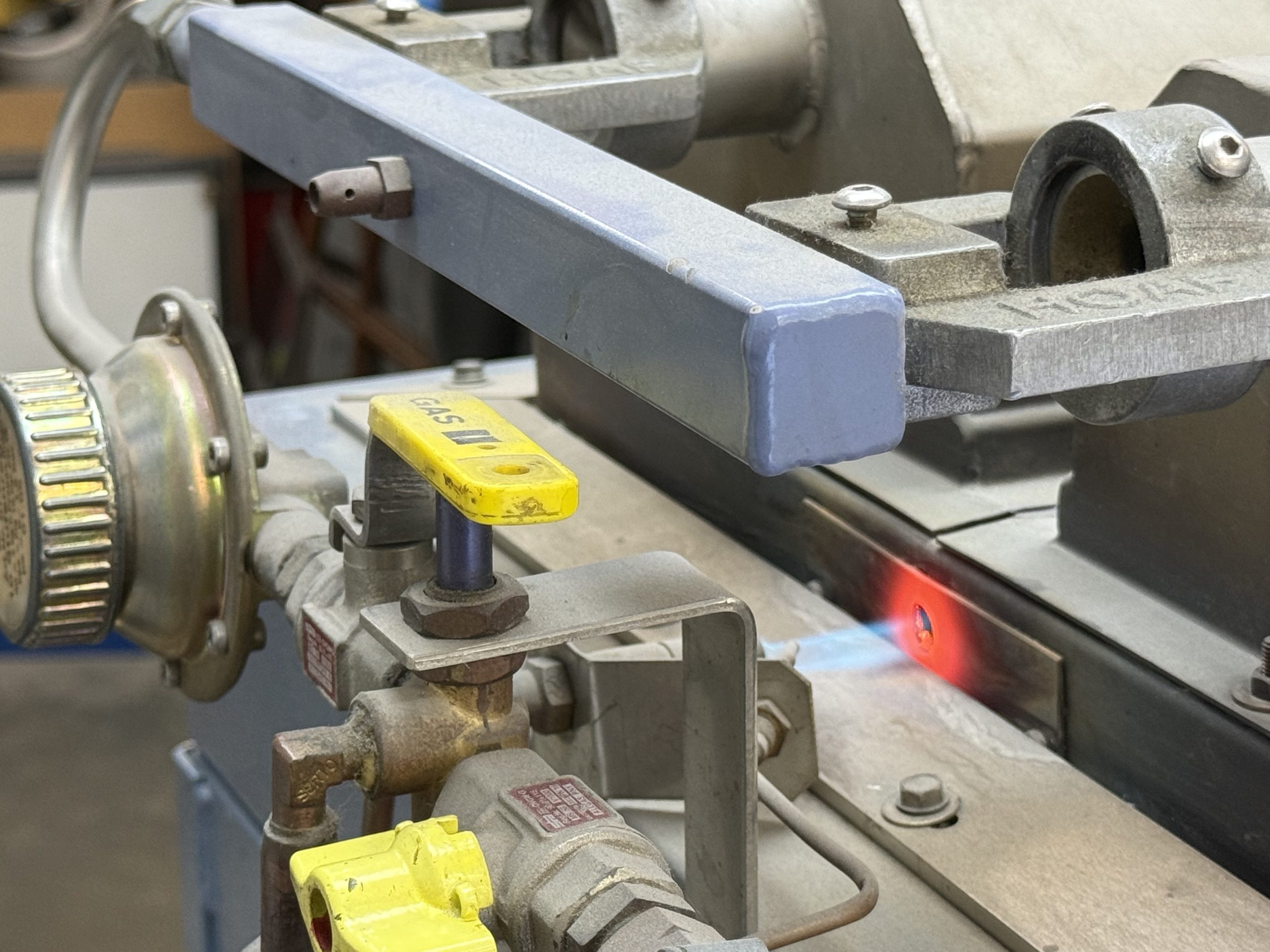
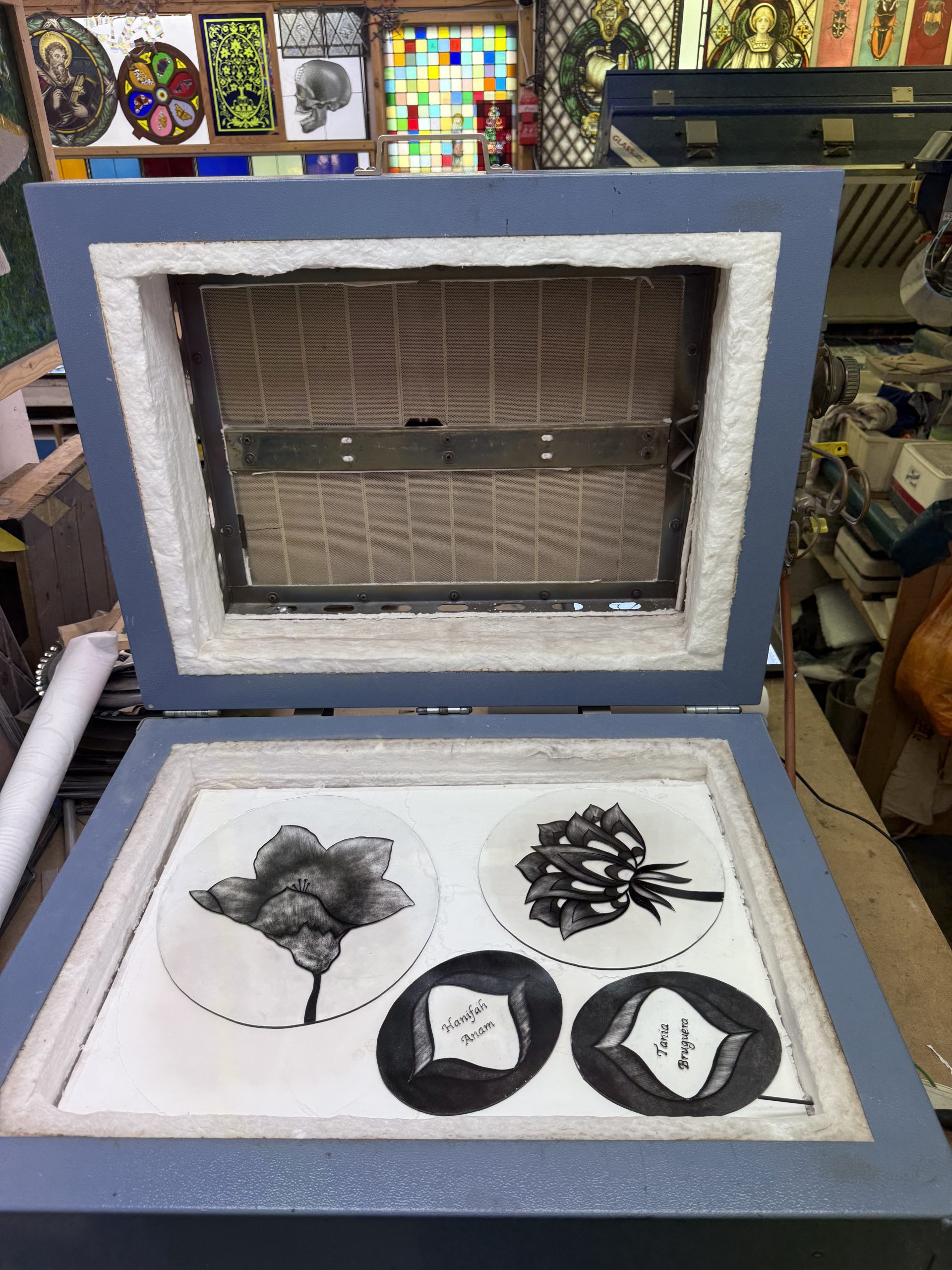
Each piece was painted and fired three times in a gas kiln. Different enamel paints and silver stains have different firing temperatures.
Then, from a range of 30 types of stained glass from around the world, the individual pieces of blue glass were cut to size.
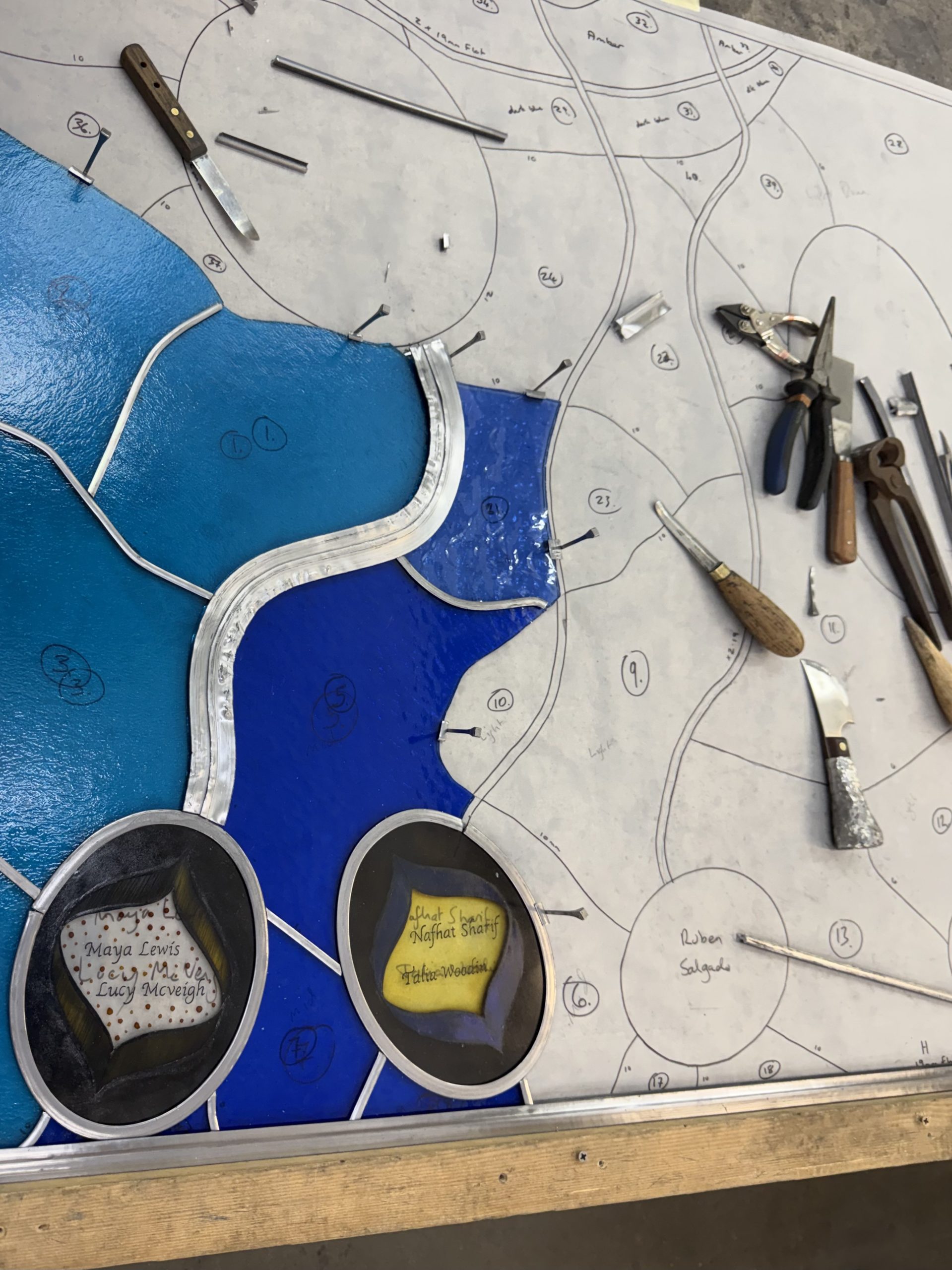
Each panel was ‘leaded’ together with various widths of lead ‘came’ – ‘H’ shaped lengths of lead – which were cut and then soldered together on both sides of each panel. Some lead was doubled to make a wider width for the stems and river for the engraved text.
Each panel was then ‘cemented’ – a black putty based mixture – which is thumbed into the lead to seal the glass into the lead.
Then the panels were polished using a black grate polish and then the glass is cleaned.
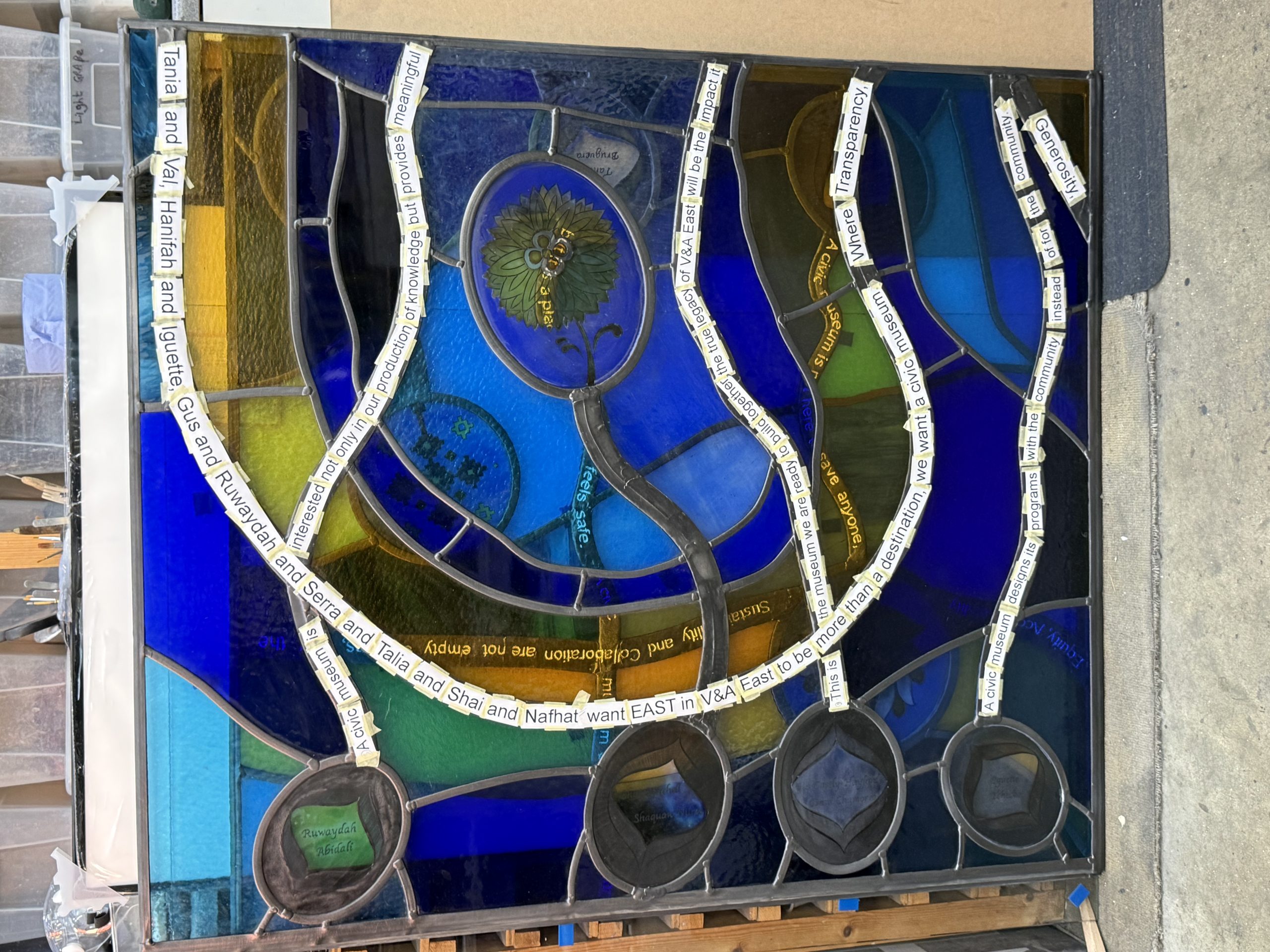
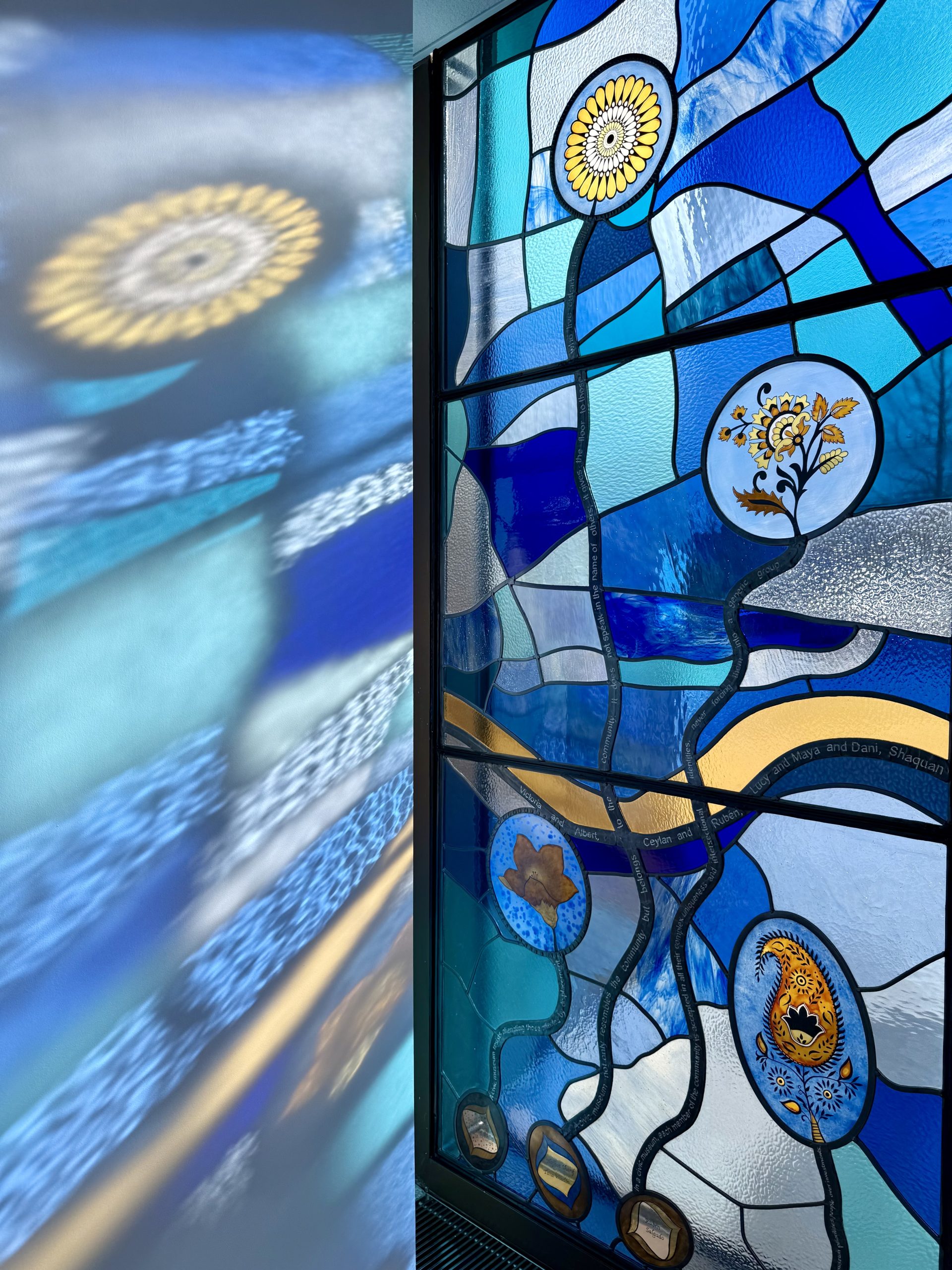
The text (V&A’s pledge / contract with it’s future users) was then engraved onto the wide lead of the flower stems using a heavy duty engraving drill, similar to that used by dentists. Both sides of each panel were engraved so it could be read from inside and out.
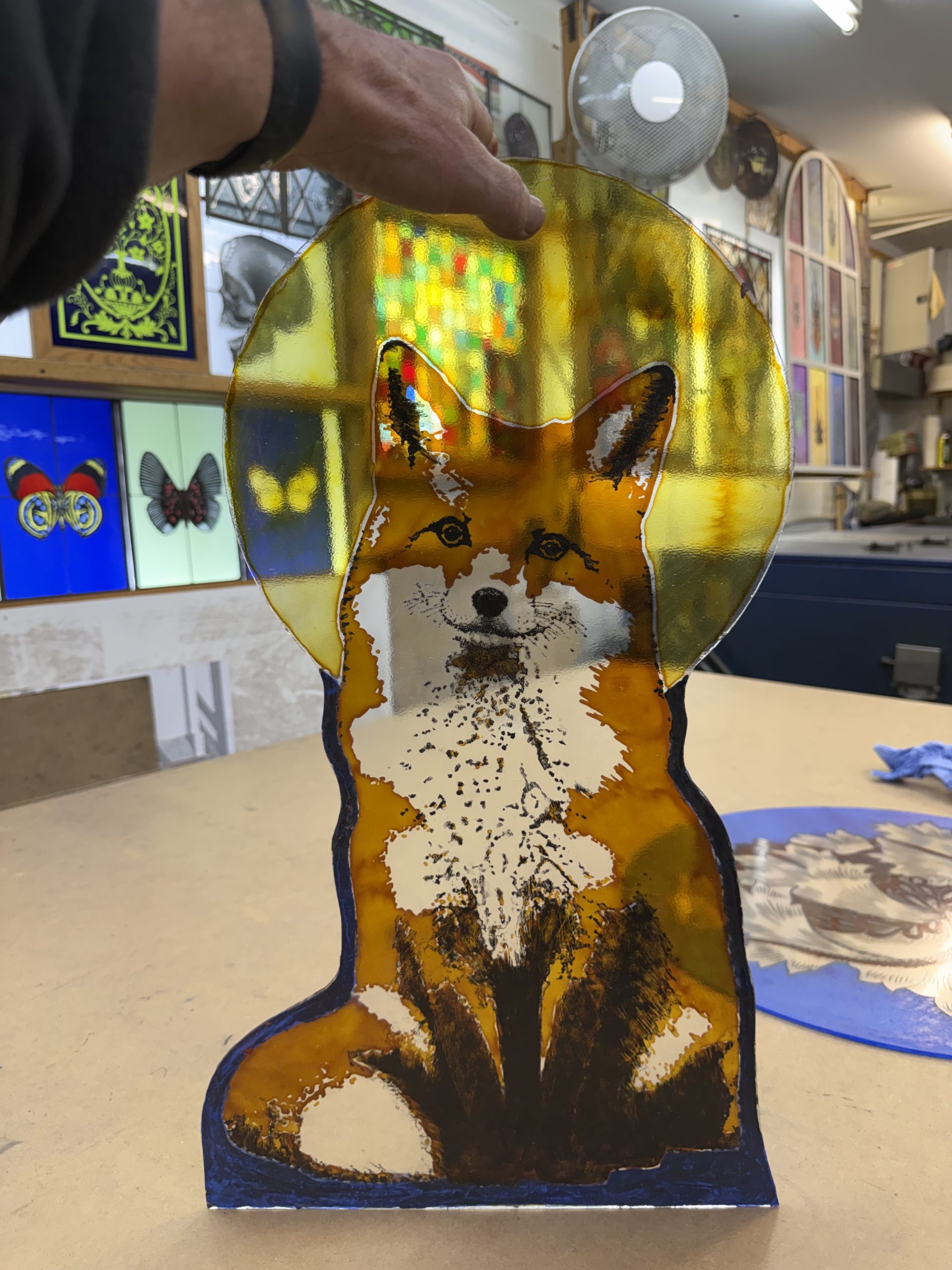
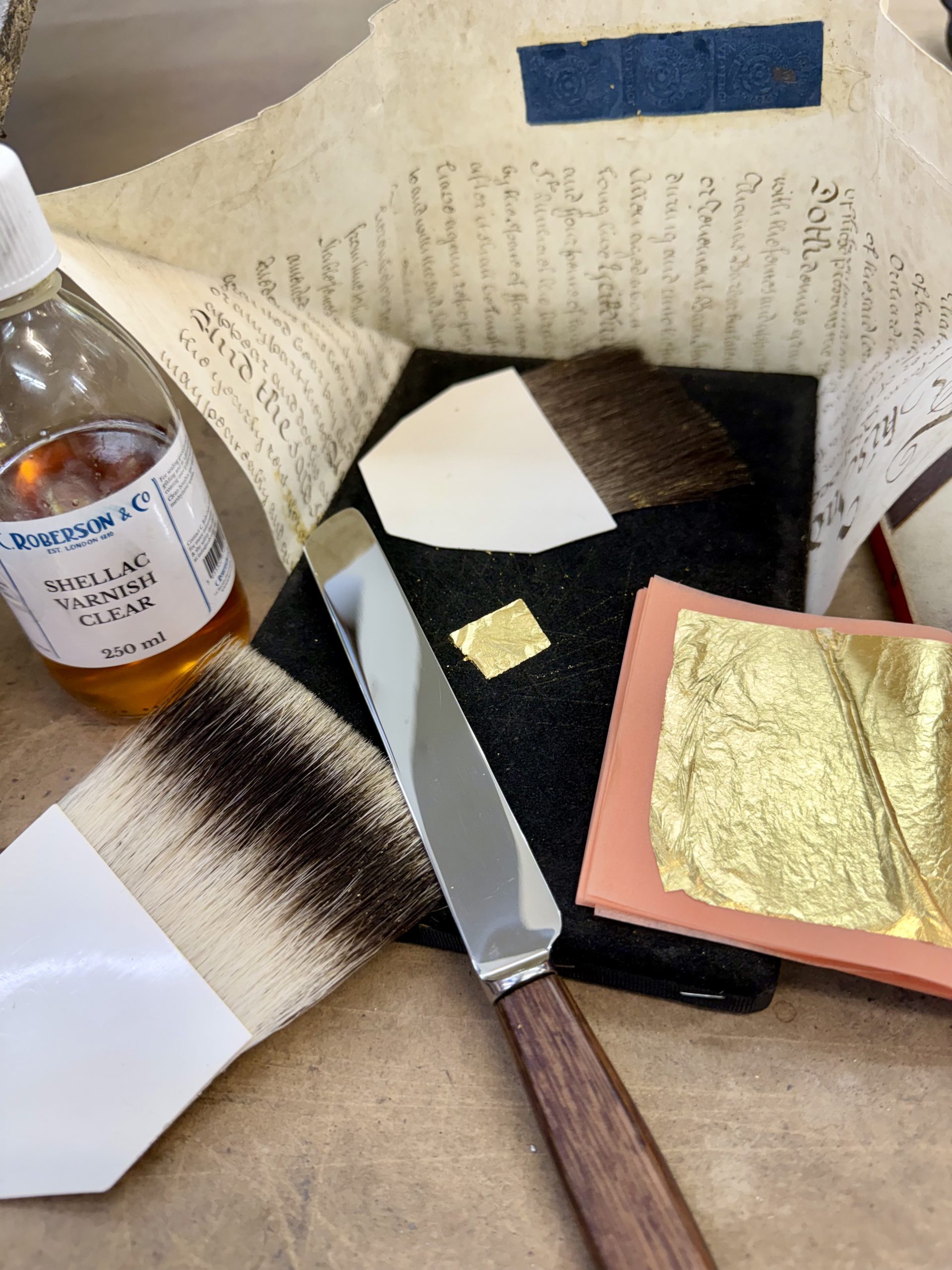
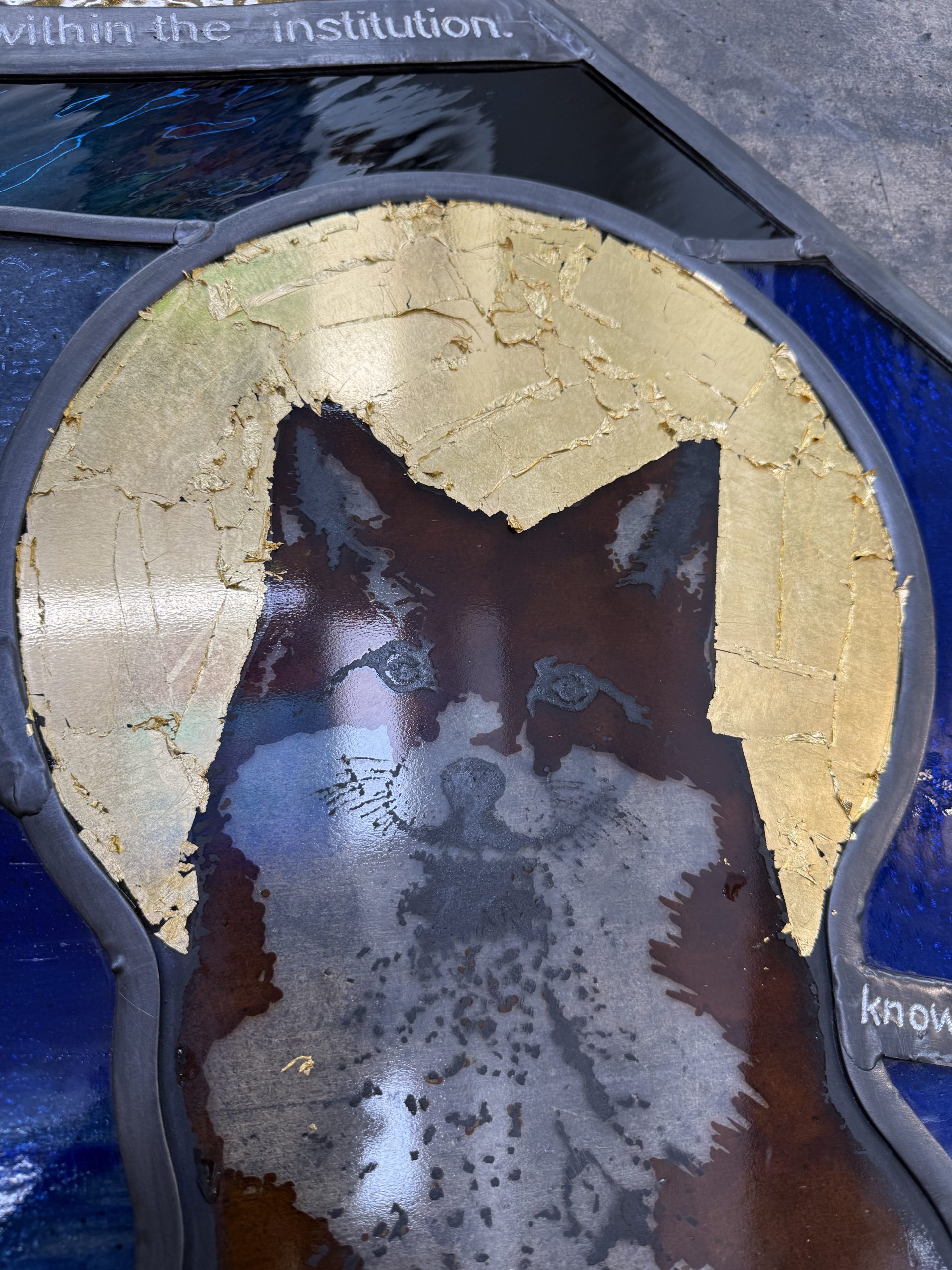
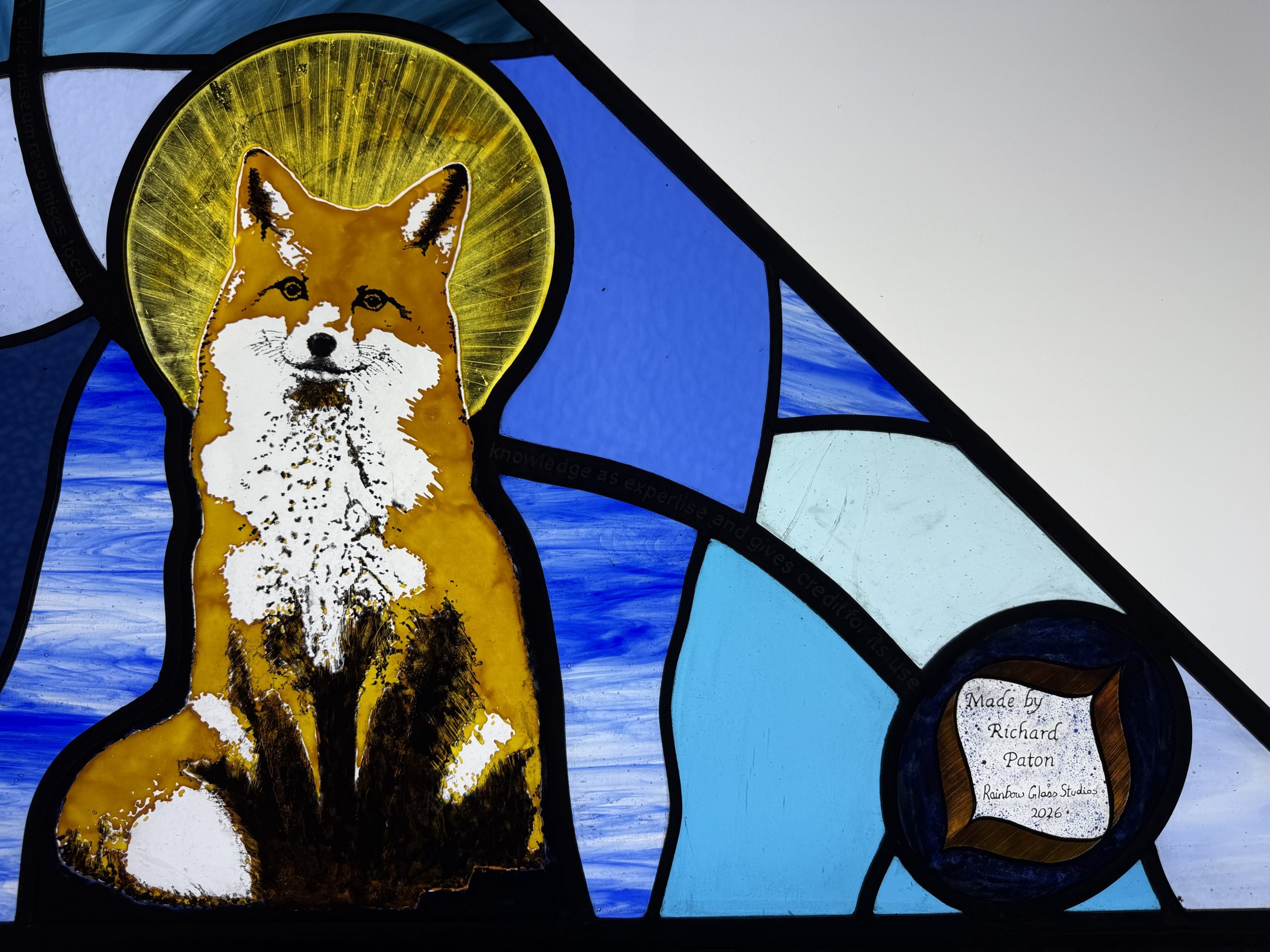
The fox’s halo was silver stained and then gilded gold, known as verre eglomise.
The metal sub-frames were fitted into the existing building framework. Then the nine stained glass panels were fitted into the metal sub-frames.
Tania’s idea was to take flower motifs from various textiles from around the world, such as Japan, Europe, South America, Africa. The twelve seeds along the bottom have the names of those involved in the project. The map of London features the east end of London with the River Thames running through it in yellow. The divisions of lead are mainly roads, the stems of flowers are sometimes roads, river or just made up to make the concept cohesive. The largest flower is taken from a William Morris fabric and is sited geographically at the V&A East Museum. The fox is open to interpretation and was a ‘must have’ request from the youth group. The engraved text (on both sides) is a pledge, a contract, a statement of intent, which sets out a number promises that the V&A wishes to make to its users.
The V&A East museum is free and open to the public from the 18th April 2026, the window is next to the main entrance (facing South West) so please go and have a look.
V&A East Stained Glass Window made by Rainbow Glass Studios, London
This was the text engraved in the lead on both sides of the window:
Victoria and Albert, Ceylan and Rubén, Lucy and Maya and Dani, Shaquan and Tania and Val, Hanifah and Iguette, Gus and Ruwaydah and Serra and Talia and Shai and Nafhat want EAST in V&A East to be more than a destination, we want a civic museum.
Where Transparency, Advocacy, Generosity, Equity, Accountability, Sustainability and Collaboration are not empty slogans, but the way we exist within the institution.
A civic museum not only resembles the community but belongs to the community. It does not speak in the name of others; it gives the floor to those who live outside its walls.
A civic museum recognises local knowledge as expertise and gives credit for its use.
A civic museum is interested not only in our production of knowledge but also provides meaningful opportunities to thrive and cares about our conditions of life.
A civic museum resists alienating those affected by urban displacement.
A civic museum prioritizes people over investments.
In a civic museum, each member of the community is accepted in all their complex uniqueness and intersectional identities, never forcing them into a generic group.
A civic museum designs its programs with the community instead of for the community.
A civic museum re-examines itself, questions its own goals, and remains accountable over time.
A civic museum is not here to save anyone, but it is a place where everyone feels safe.
This is the museum we are ready to build together because the true legacy of V&A East will be the impact it has on the local community.
These are names of those written in the seeds at the bottom of the window and who were involved in the project: Rubén Salgado, Tania Bruguera, Ruwaydah Abidali, Hanifah Anam, Gus Casely-Hayford, Dani Chamorro, Valentina Hernández Castrillón, Ceylan Ismail, Maya Lewis, Serra Luthena, Lucy Mcveigh, Shai Mitchell, Shaquan Nurse , Nafhat Sharif, Iguette Tchecko, Talia Woodin and myself, Richard Paton.
Here’s a review of the museum by the director in the Guardian:
This project was designed and made by Rainbow Glass Studios over the course of a whole year, 5 people working full time to produce 300 butterfly panels set into a conservatory roof and 3 large double doors. Each of the butterflies are identifiable species from around the world and non are repeated, in fact I made a book which is used to identify each of them. Because this was made for a private client (who will remain anonymous) it is sadly not able to be seen by the public. This was certainly the most technical and logistically challenging projects I’ve delivered but in the end it was a great success.
Over the years I’ve had the privilege of working with a lot of artists who wanted to realise their ideas in glass. This has enabled me to develop ways of making glass that have a unique and unusual appearance, it has been very interesting and fruitful in terms of cross pollinating different techniques. Here are a few examples from our portfolio, featuring artists are Tania Bruguera, Damian Hirst, Matt Collishaw, Luis Enrique Zela-Koort, Craige Aitchison, Abi Palmer, Henry Shelton, Nick Robinson, Christian Newby, Raphael Loewe, Joseph Leon, Richard Paton.
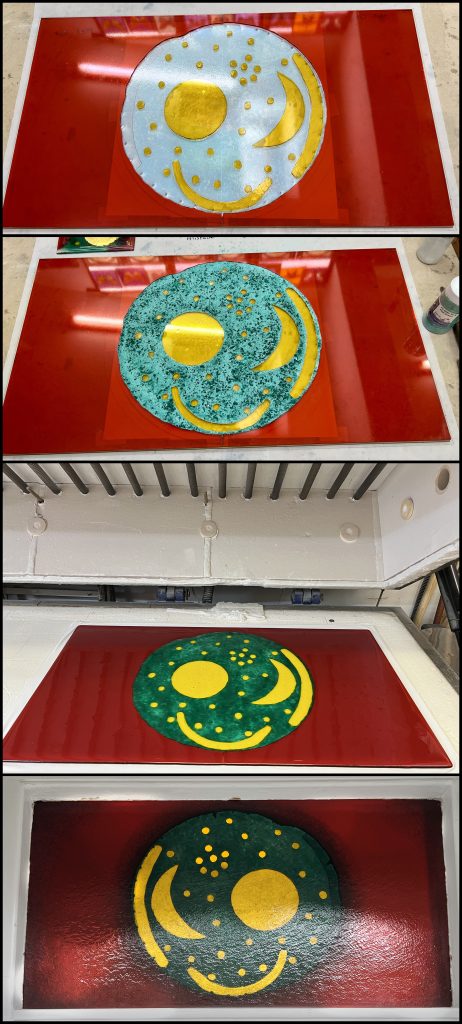
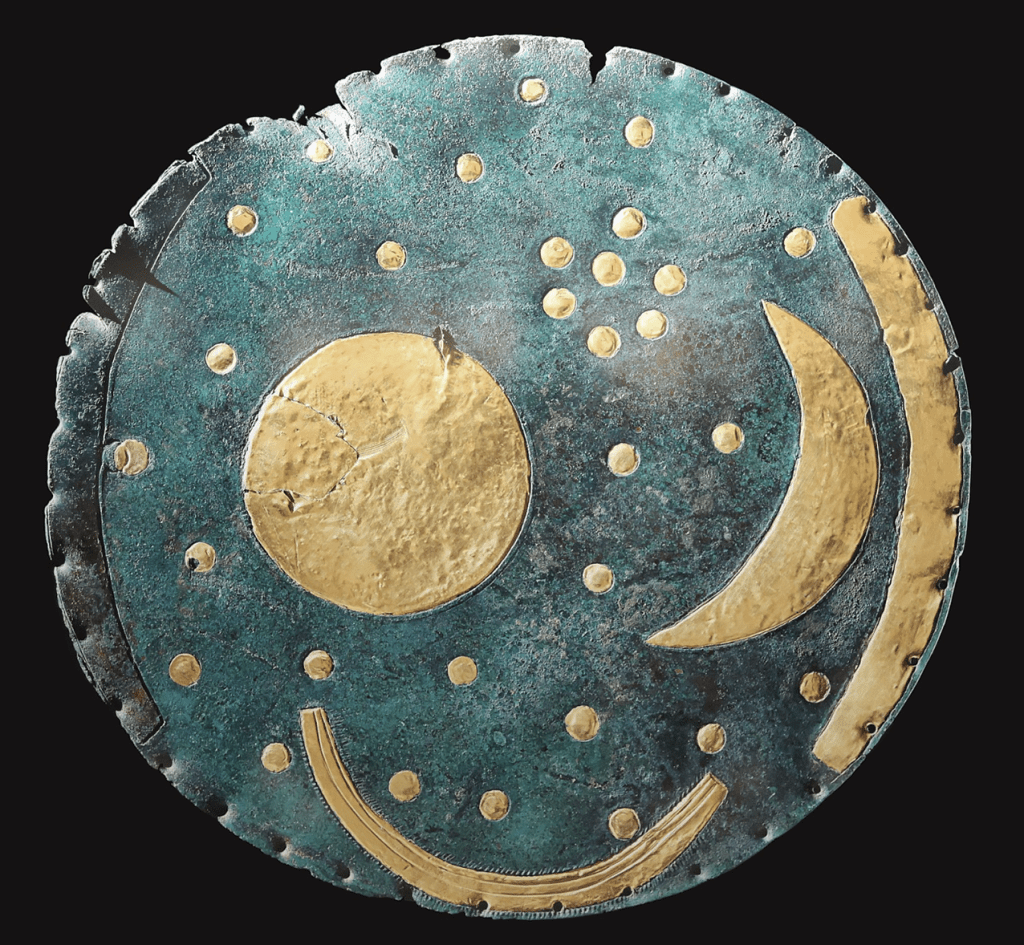
The original Nebra Sky Disc, 30cm in diameter and made of bronze and gold, features the oldest concrete depiction of astronomical phenomena known from anywhere in the world, dated c. 1800–1600 BC. It has been described by UNESCO as “one of the most important archaeological finds of the twentieth century.”
We were commissioned to make a copy of the artefact in glass, the result used a combination of fused glass and verré eglomisé using 24ct gold. The glass panel was installed above a front door known as a transom panel and works well as an abstract design with an interesting story.
See wikipedia for more info about the original Nebra Sky Disc.
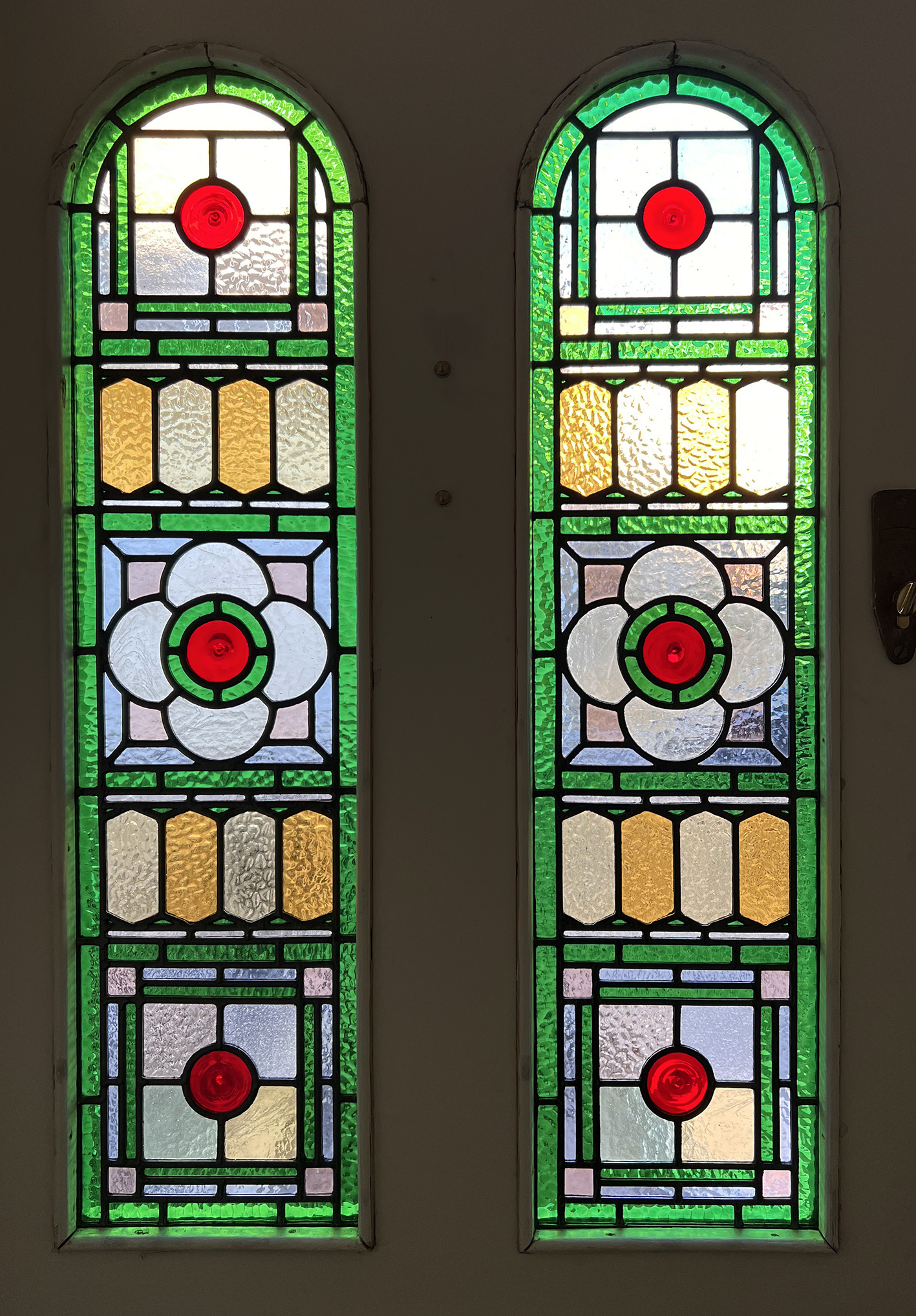
This is a sort introduction to the Transom panel, the piece of glass above a door. Some doors are solid so the only way to get natural light into a space is through the transom. Here is a selected gallery of transom panels we have made at Rainbow Glass over the last 20 years or so showing a variety of styles.
In this post I want to look at the rich history of stained glass in front doors. We are all familiar with what was once a common sight down every leafy suburb across the country, however, the slow demise of stained glass being used for front doors has continued for the last hundred years. Nowadays we can walk down a street and find that the stained glass has been replaced with cheaper sheets of safety glass with no artistic merit, we have lost over 95% of original stained glass in front doors since its hay-day in Victorian times. The main reason is the cost to have stained glass replaced when it breaks, which is inevitable if the door doesn’t have a sheet of toughened glass fitted to the exterior side to stop it bowing as the door hits the door frame. Walking down a street in a town or city today we see a mixed bag of styles of glass, if the door & frame have been replaced with PVC then the glass will be awful, if wood is retained then it may have stained glass, etched glass or sometimes fused glass. Arguably this is more interesting than a street of stained glass which all looks the same but it remains true that the use of stained glass is still declining as fewer studios manage to survive the costs involved in keeping a small glass studio going. The craft is in trouble and a walk down our streets is testimony to its demise.
Here are a few examples of front doors from our portfolio in an attempt of buck the trend.
At the end of June 2023 we installed a printed glass memorial commissioned by Lord Paul. After some discussion with Lord Paul, who has been a very generous supporter of London Zoo for decades, we were asked to replicate a photograph of the late Lady Paul (1936-2022) using the latest technique of printing permanent ceramic inks onto toughened glass.
Lord Paul, now 93 years old, made his money by building a steel industry from India which is now a global entity, he donated to many good causes as his success grew. His connection to London Zoo is a sad story, his daughter died at the age of 6 from an incurable disease, she spent many hours visiting the animals at the zoo which left a lasting impression on Lord Paul. Named after his daughter, the Ambika foundation has donated to the zoo over the years and his wife Lady Paul is remembered here as a longstanding supporter. Her memorial is in close proximity to the memorial fountain dedicated to her daughter – Ambika.
M Restaurant in Canary Wharf. A new restaurant we were asked to supply kiln cast glass for in 2022. Designer Rene Dekker has done a great job with this huge restaurant which over looks the Thames. The processes involved were kiln casting over the top of heat resistant matt, the glass then melts to the forms cut out at a temperature of 900’C. When the glass has cooled it was then masked with vinyl and sandblasted to create the matt surface, leaving the river clear. It was fitted in front of a long mirror making the river shine.
A renovation of this interesting 1950’s Church in Oxford led to the commissioning of some painted glass in the Choir Loft at the back of the Church. Illustrator Robert Eyles approached me in early 2022 to talk about the project which involved a number of improvements to the church. The new glass was to give figurative presence to Saint Margaret and Saint Alphonsus, there was also to be an illustration of the “Pelican in her Piety” an ancient Christian symbol of self sacrifice.
The size of the individual pieces of painted glass are what make this interesting as lead ‘came’ is usually used to separate smaller pieces of painted glass. With modern glass paints we are now able to paint more colours onto glass than was possible in the past so we can now use ‘float glass’ as a base instead of coloured glass in projects such as this one.
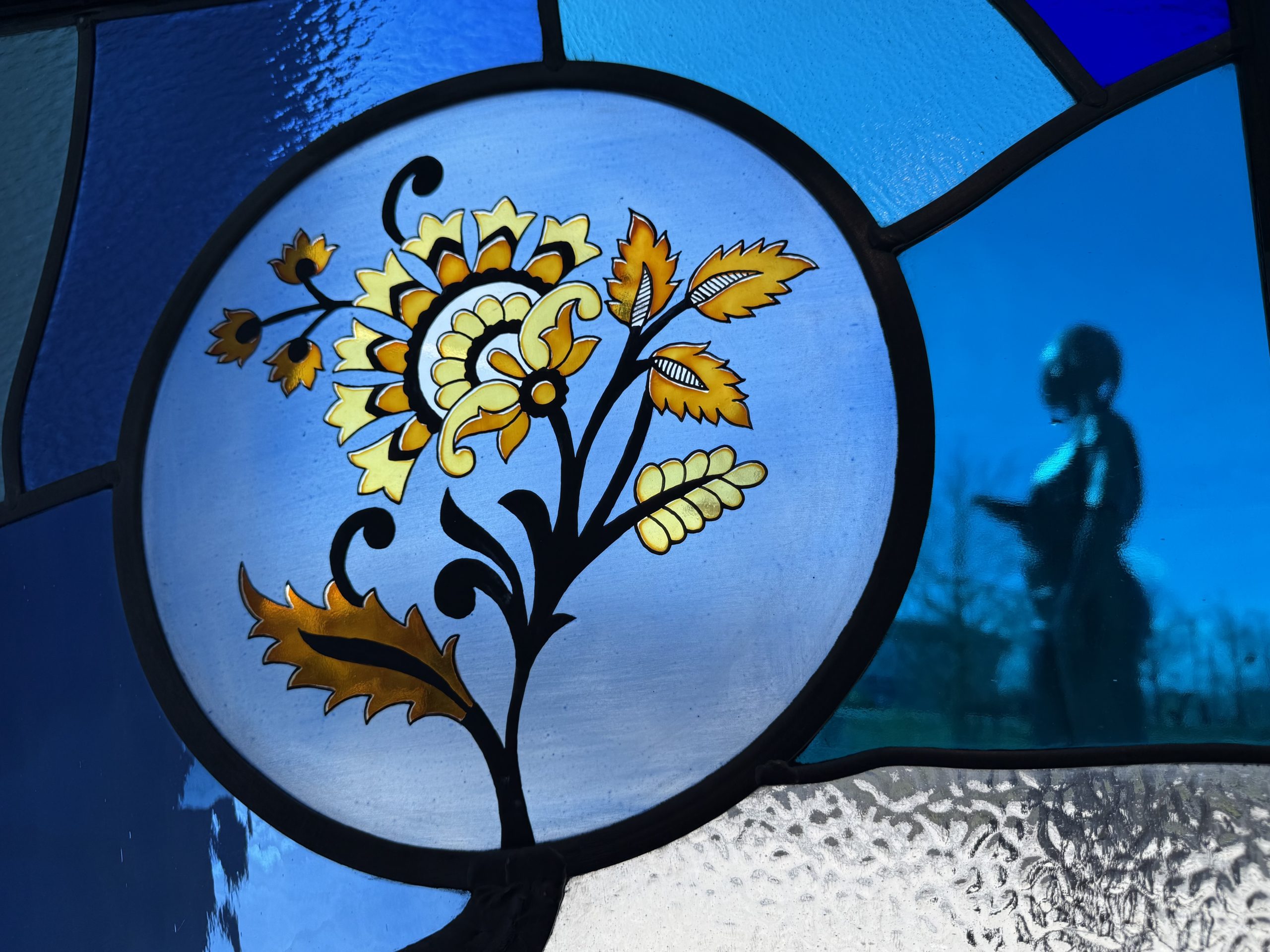
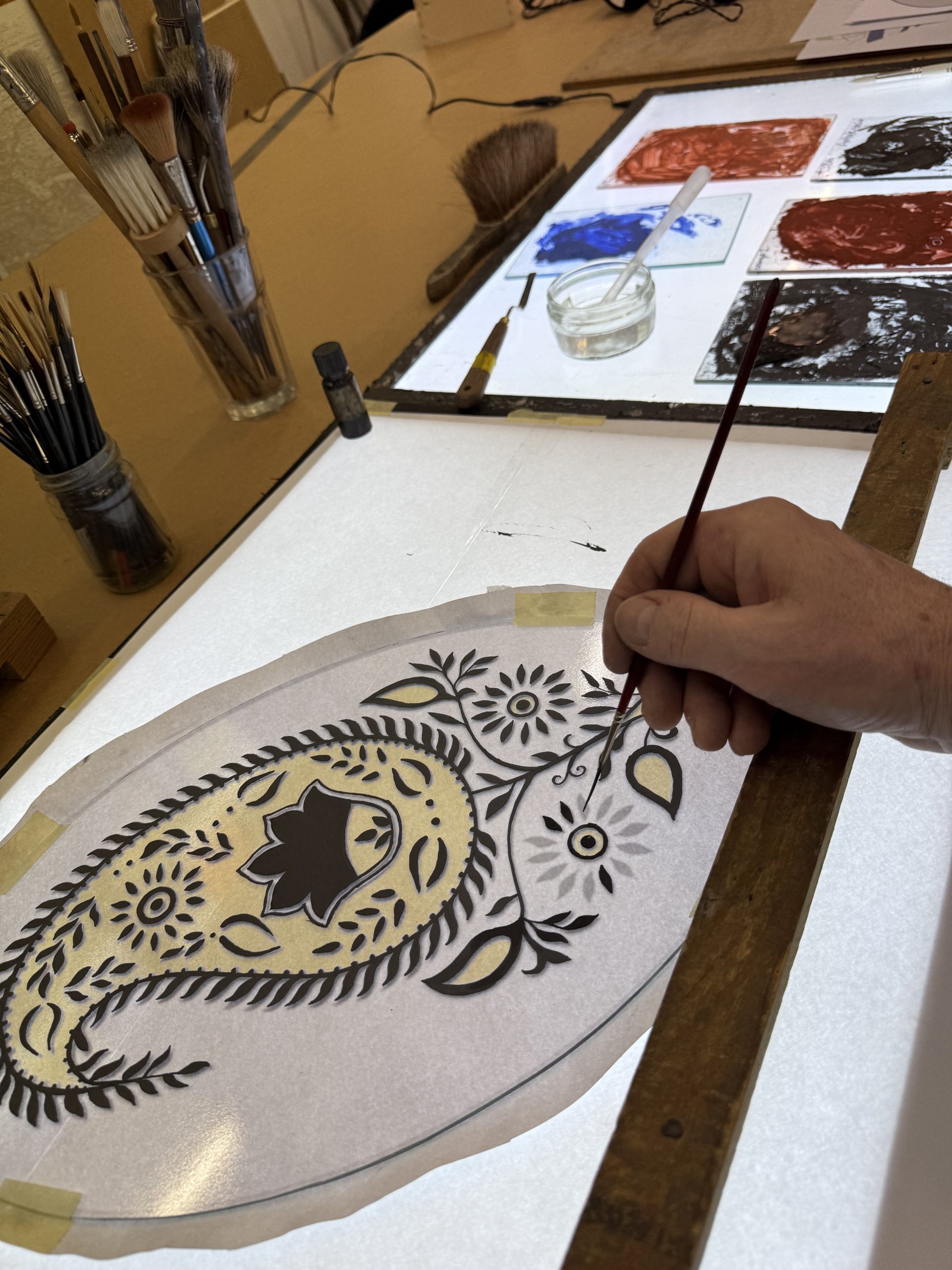
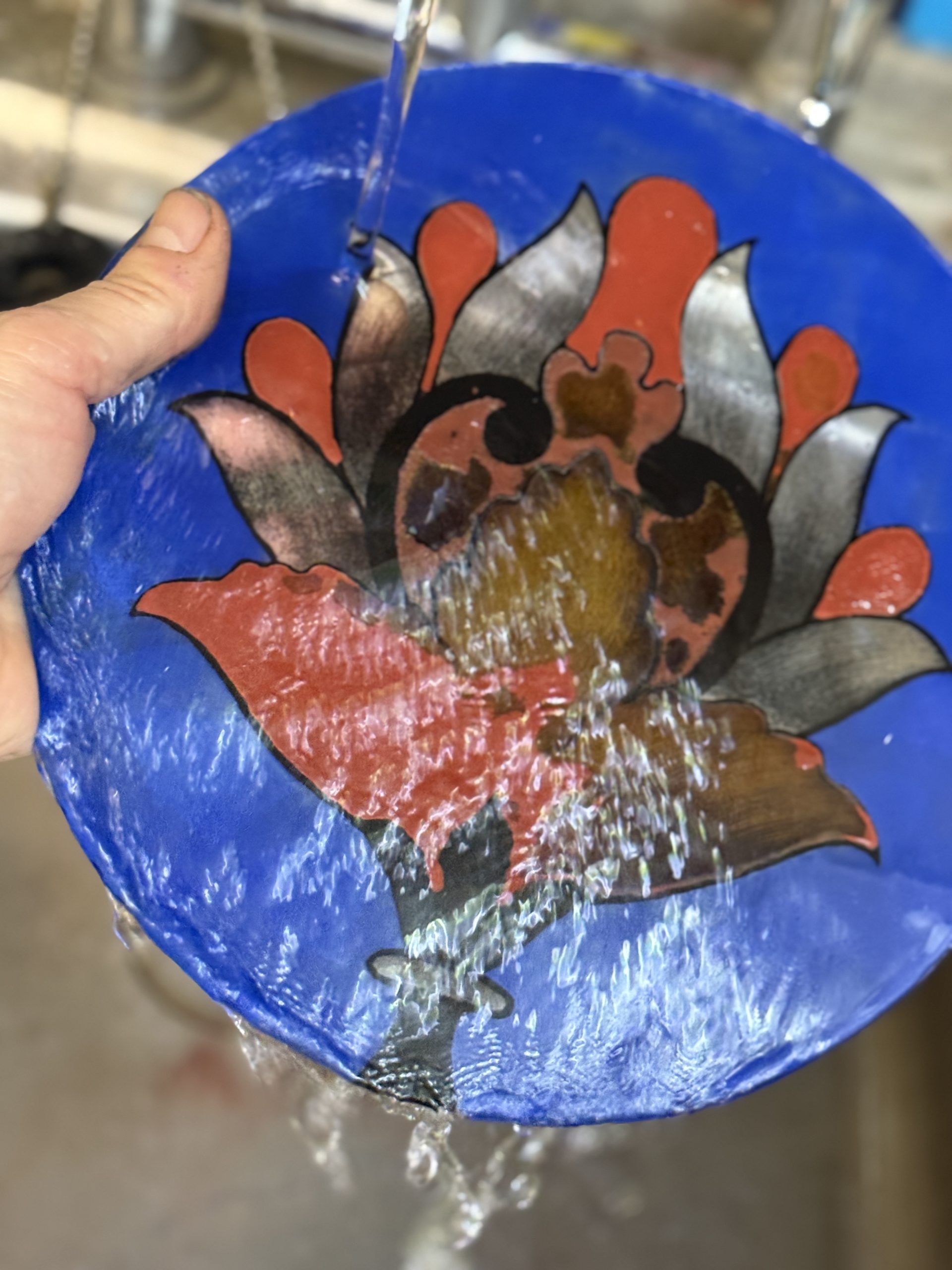
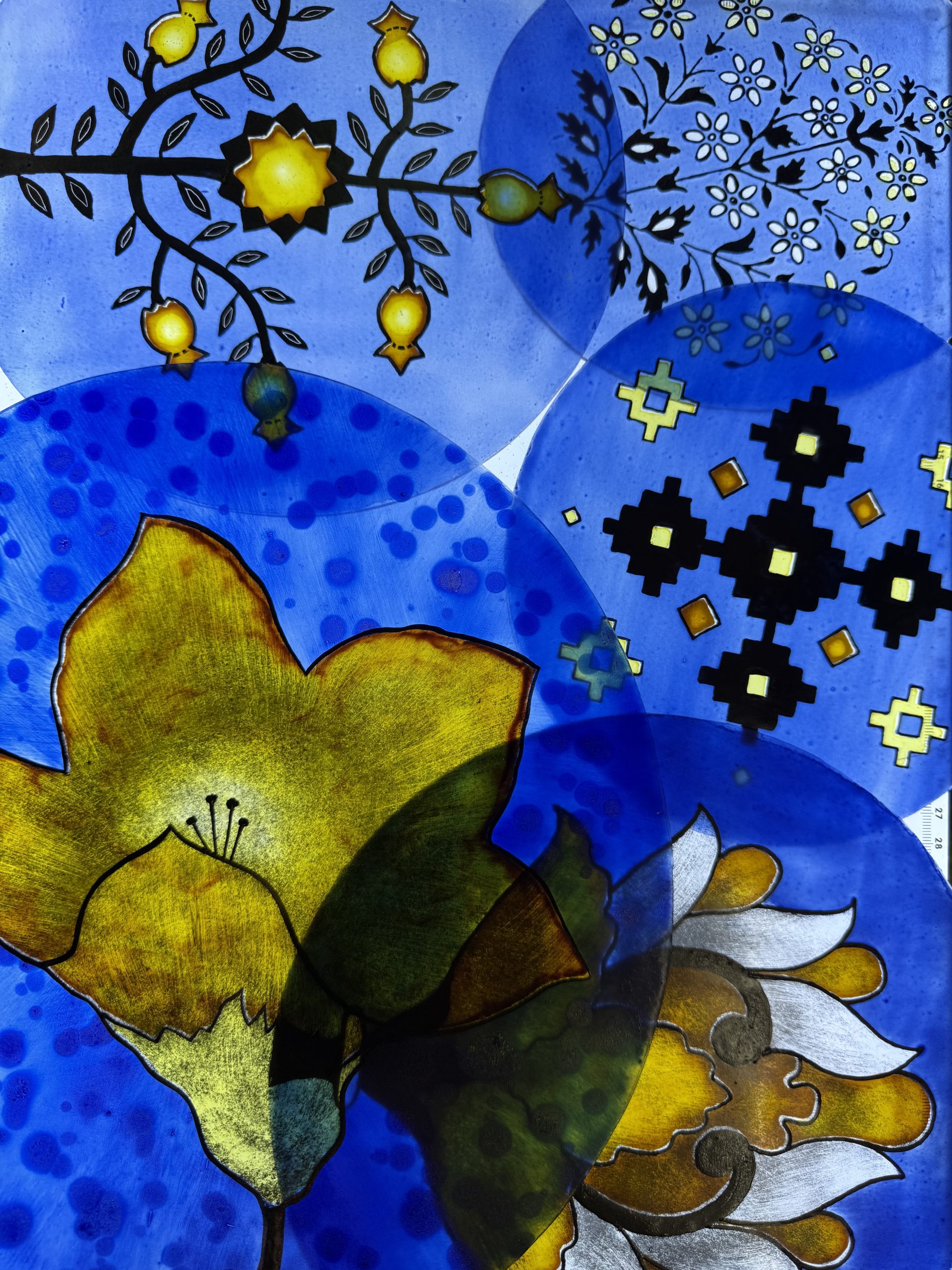
An interesting fact worth noting is that the term ‘Stained Glass’, which is now used ubiquitously to cover almost any decorative glass technique, derives from just one technique : ‘silver staining’. The single technique of applying silver nitrate in the form of powder mixed with water and painted onto the glass, turns the glass yellow after firing in the kiln at 630’C. The technique travelled from the east and arrived in Europe when leaded windows were becoming popular in churches in the 14th century and the term Stained Glass stuck. You can see the technique being used in these pictures, the opaque orange is actually a medium in which the silver nitrate compound is suspended, the medium is wiped off the surface of the glass after firing, the silver ions having been absorbed into the glass permanently, changing it to a transparent yellow.
Another interesting addition to this glass design was the use of Verré Eglomisé, a French technique of applying gold or silver leaf to glass, often to make mirrors but in this case to create halo’s. 24ct Gold leaf was also used in other areas of the church so the new windows work well in this sensitively renovated space.