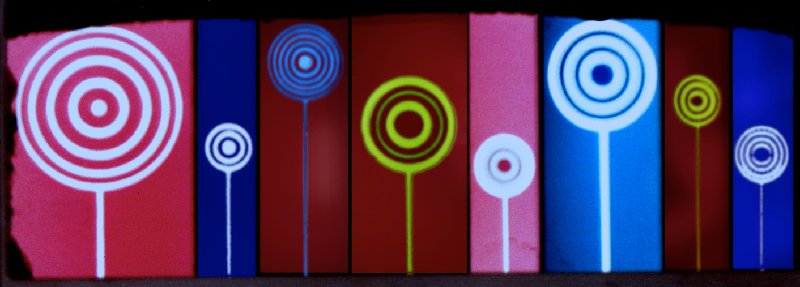
This project “Towards A Civic Museum” was a collaborative project initiated by Ruben Salgado from the curatorial team at the new V&A East museum. Ruben invited the Cuban artist Tania Bruguera to collaborate with an East London Youth group to generate ideas for a new stained glass window for the museum. Rainbow Glass Studios were then invited to help make it happen. Using Tania’s concept ideas, drawn from a series of workshops with the youth group Richard Paton then designed the stained glass version of the window in January 2026 which was then approved by the V&A and the fabrication of the whole window commenced over the following 8 weeks. Click on the images to enlarge. The story continues below…
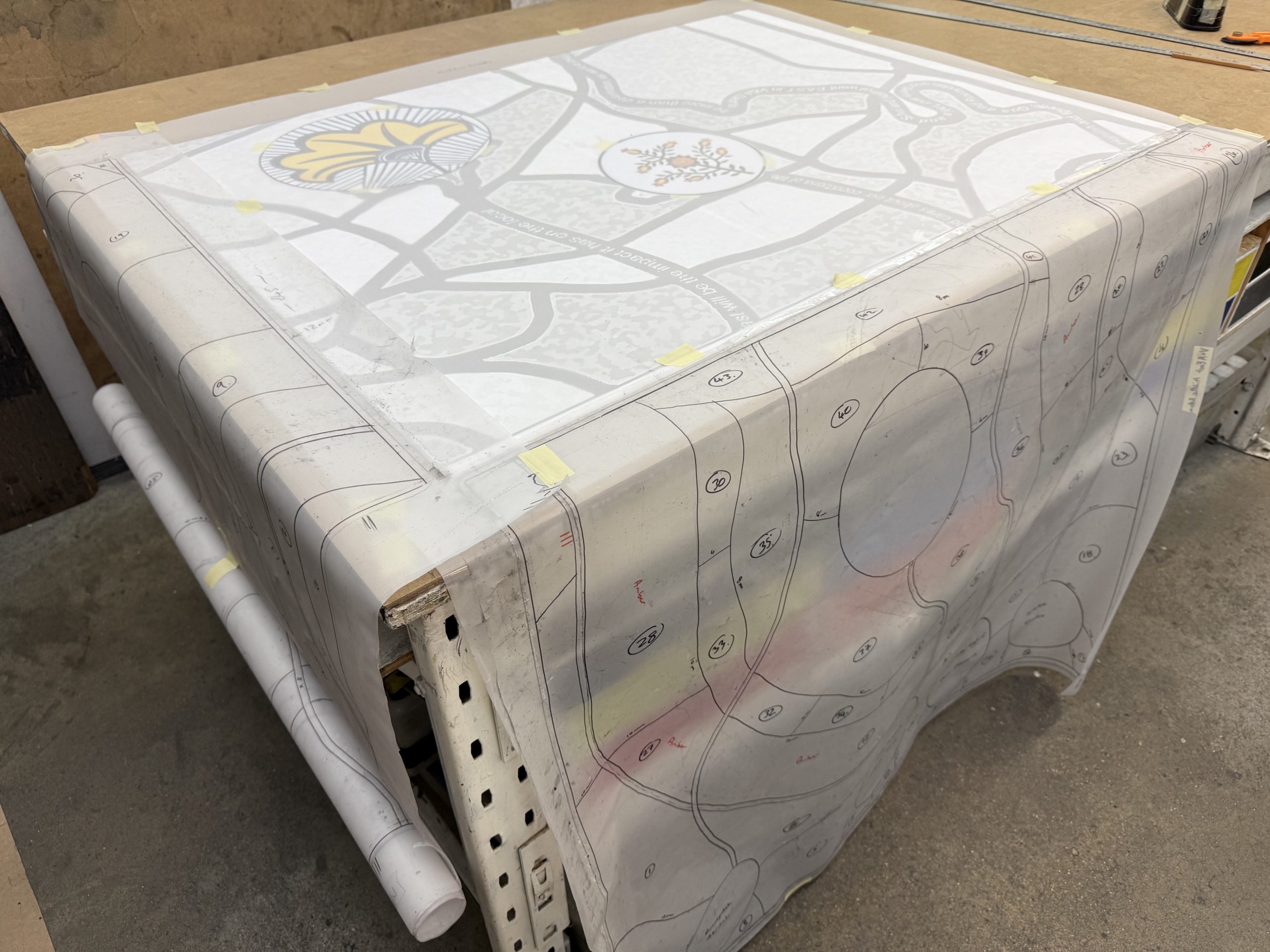
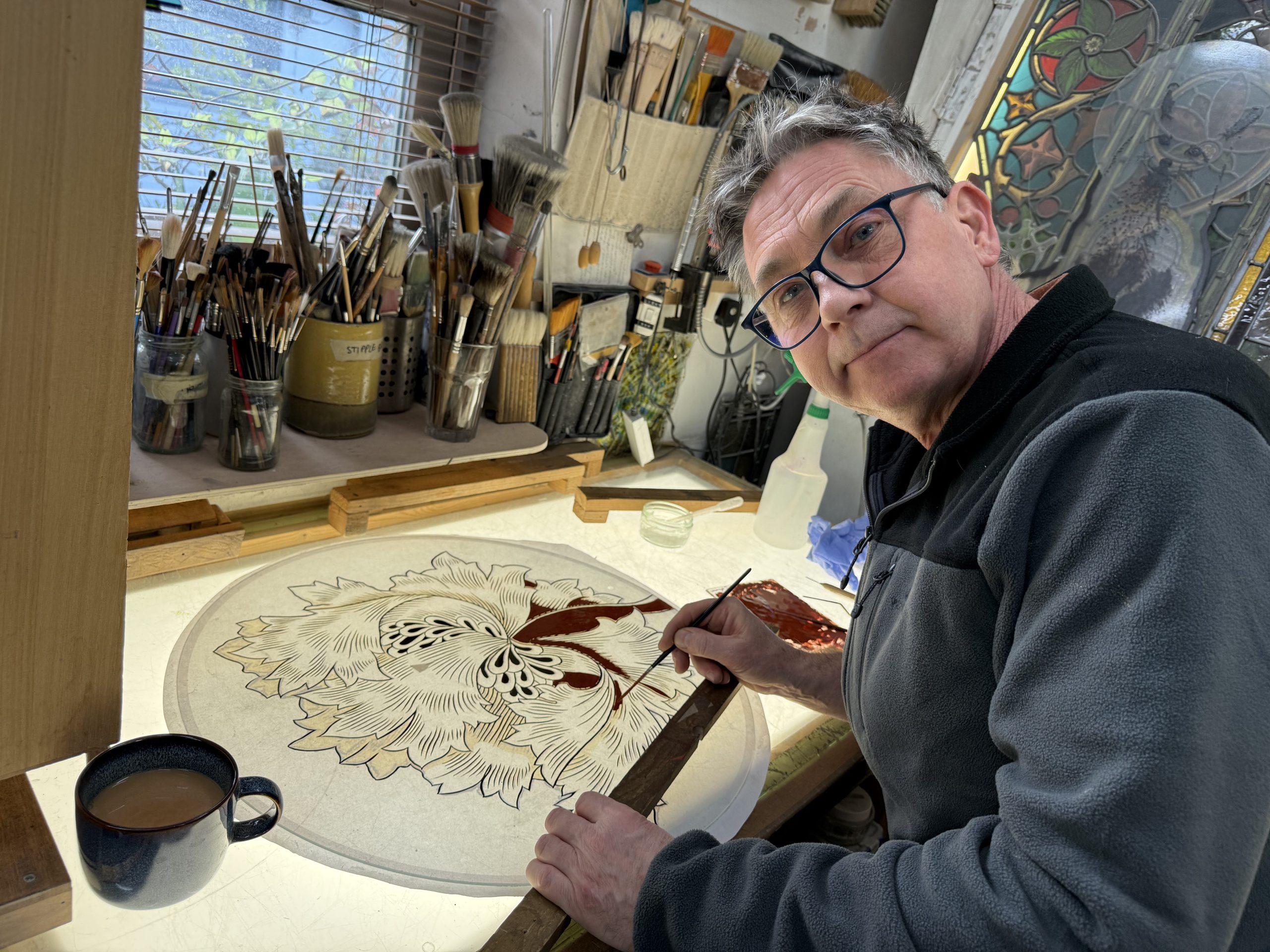
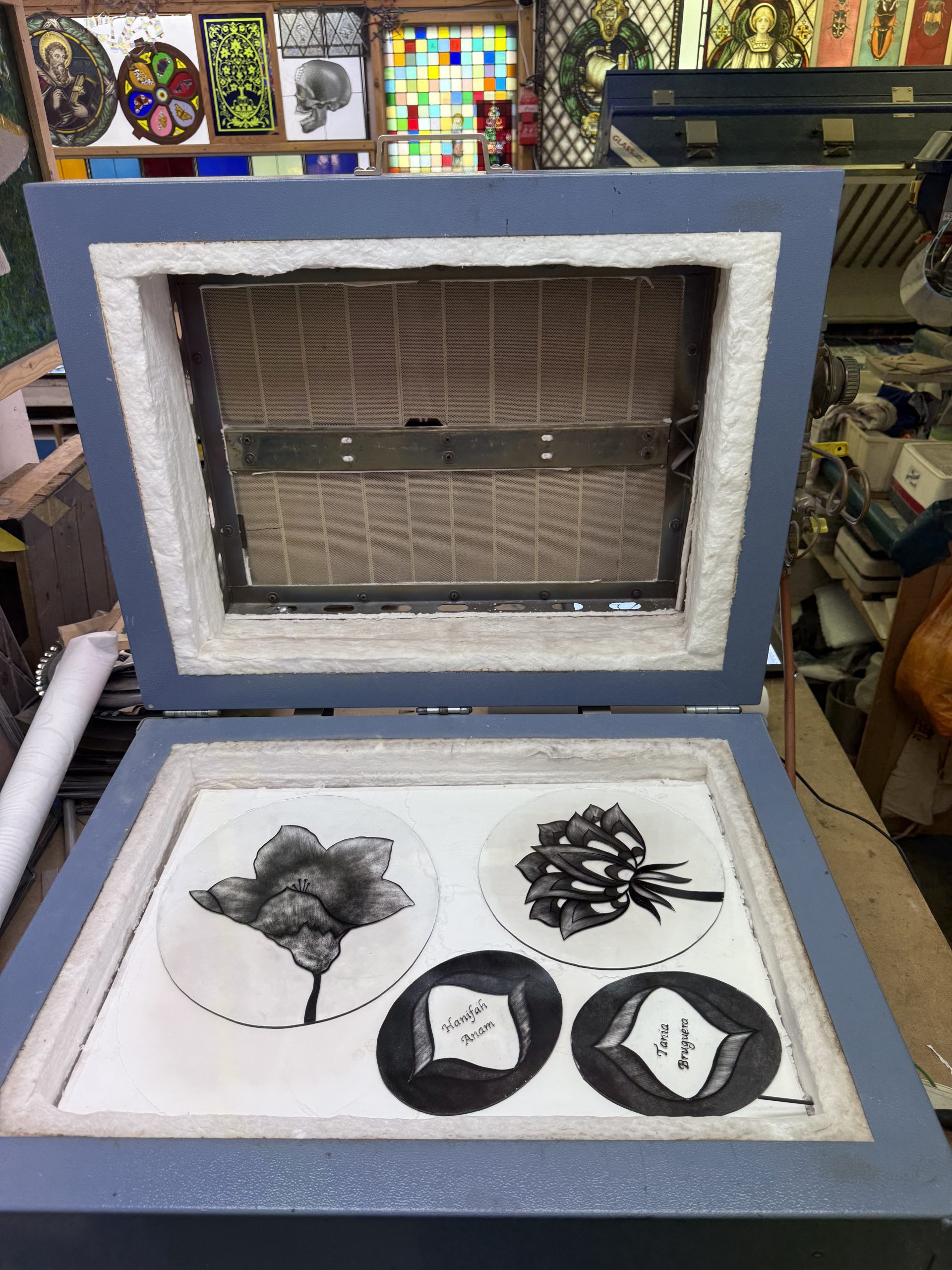

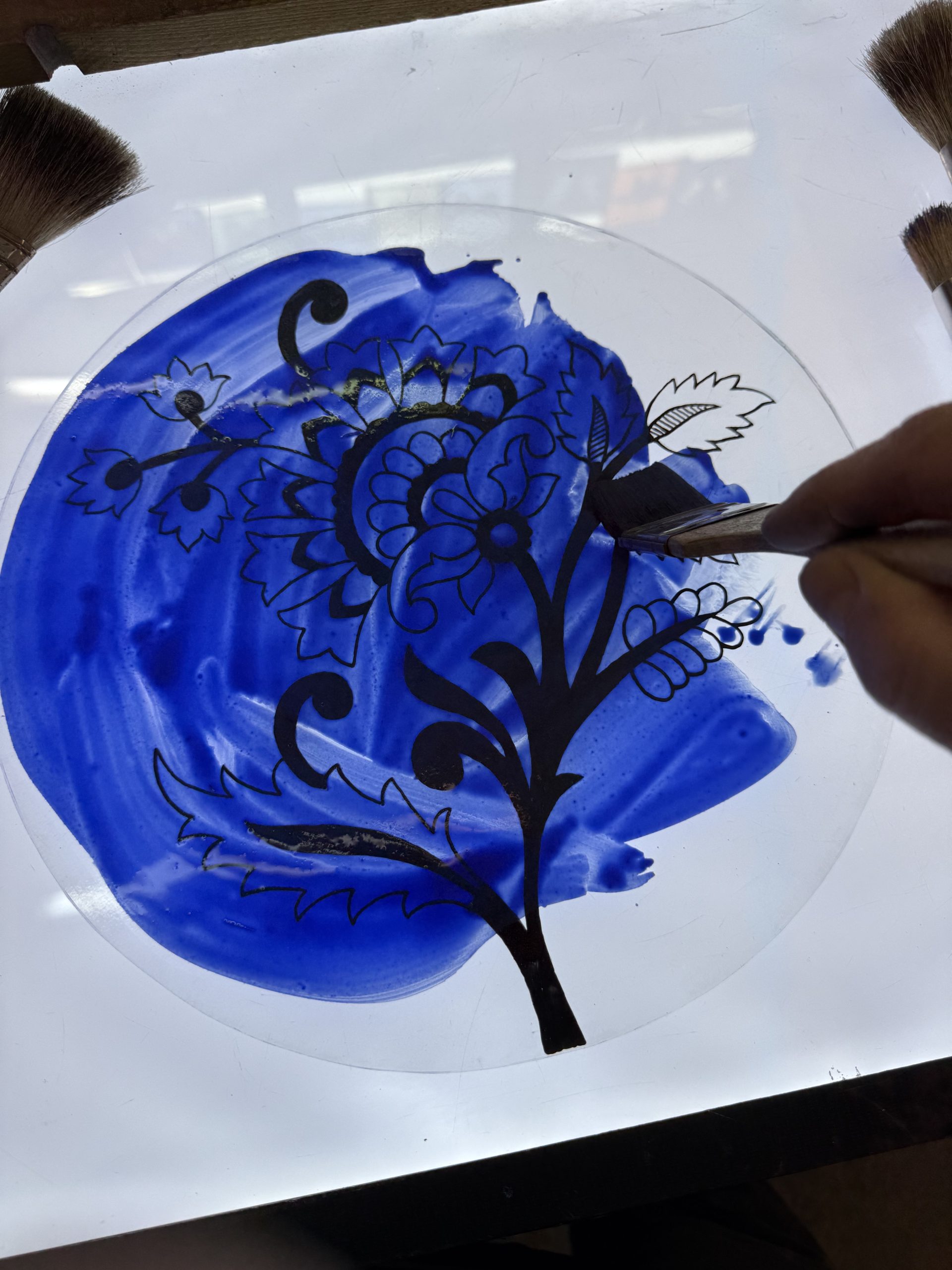
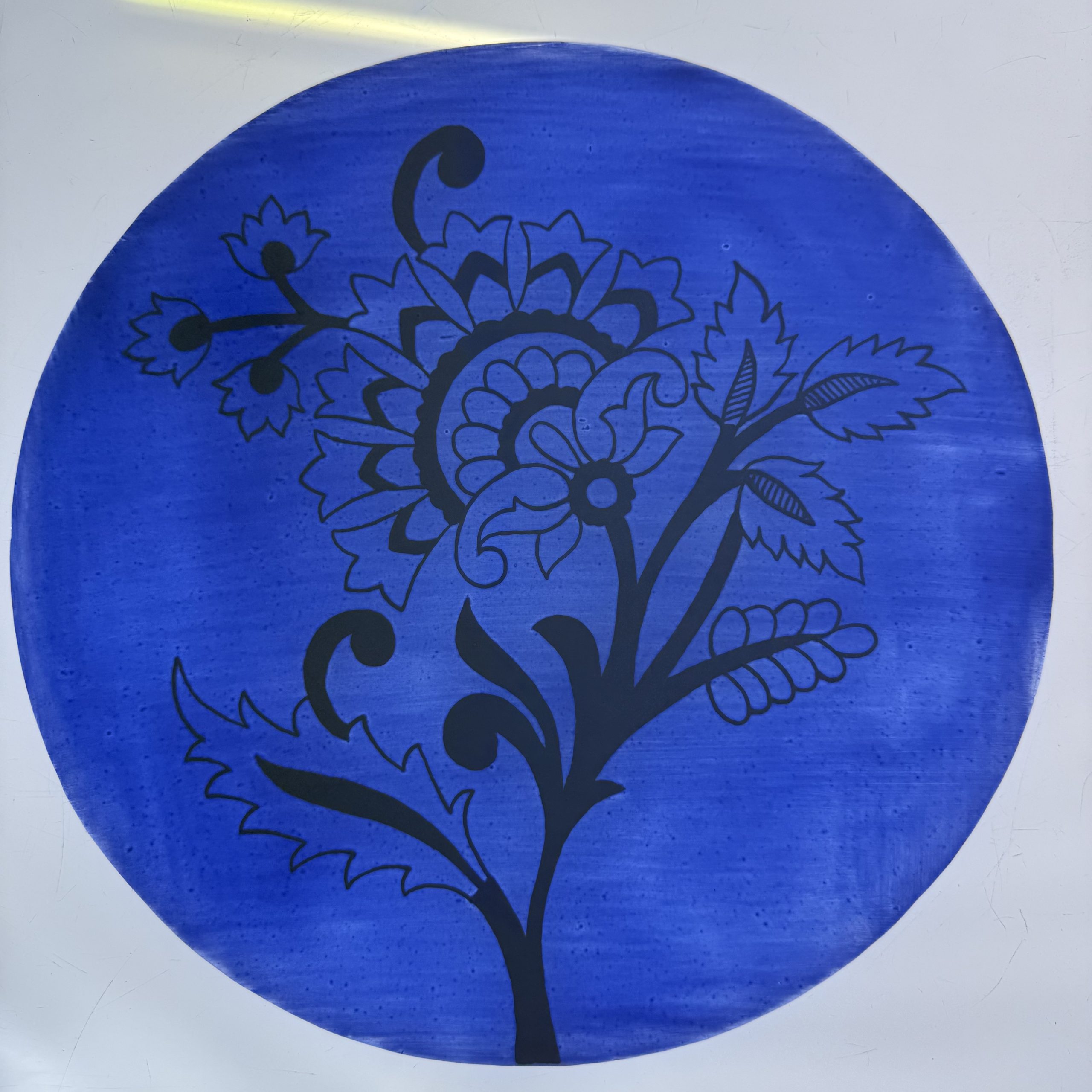
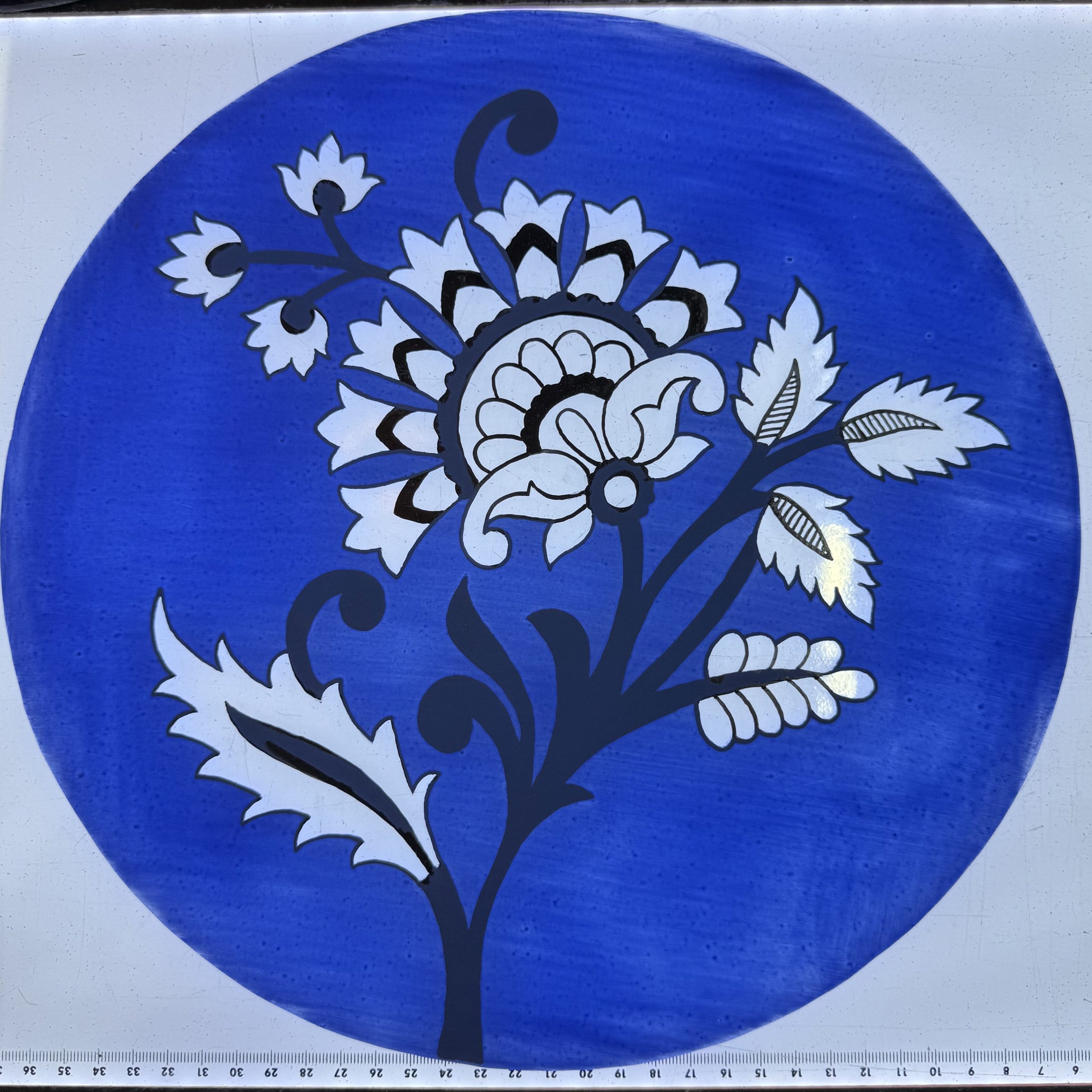
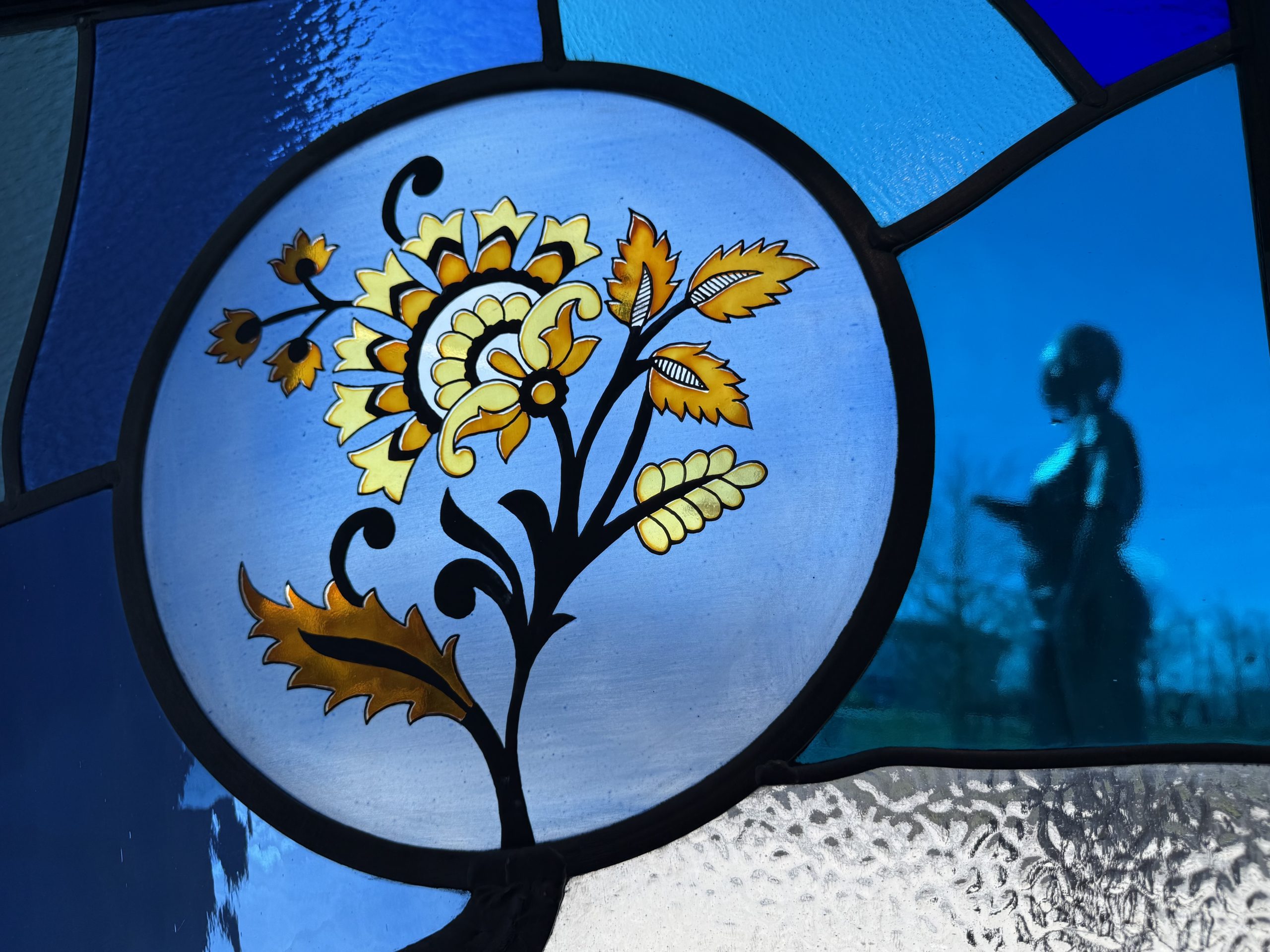
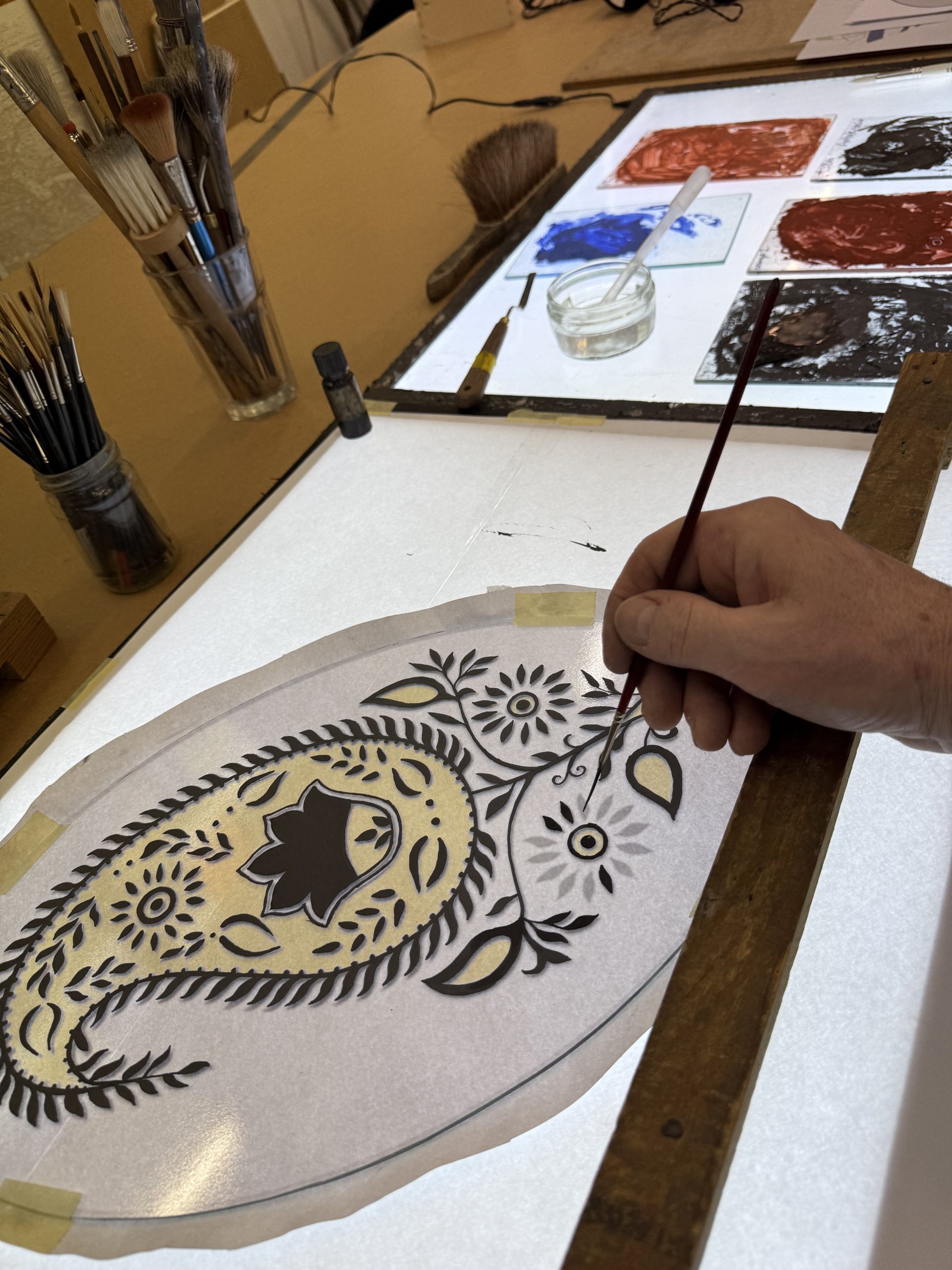


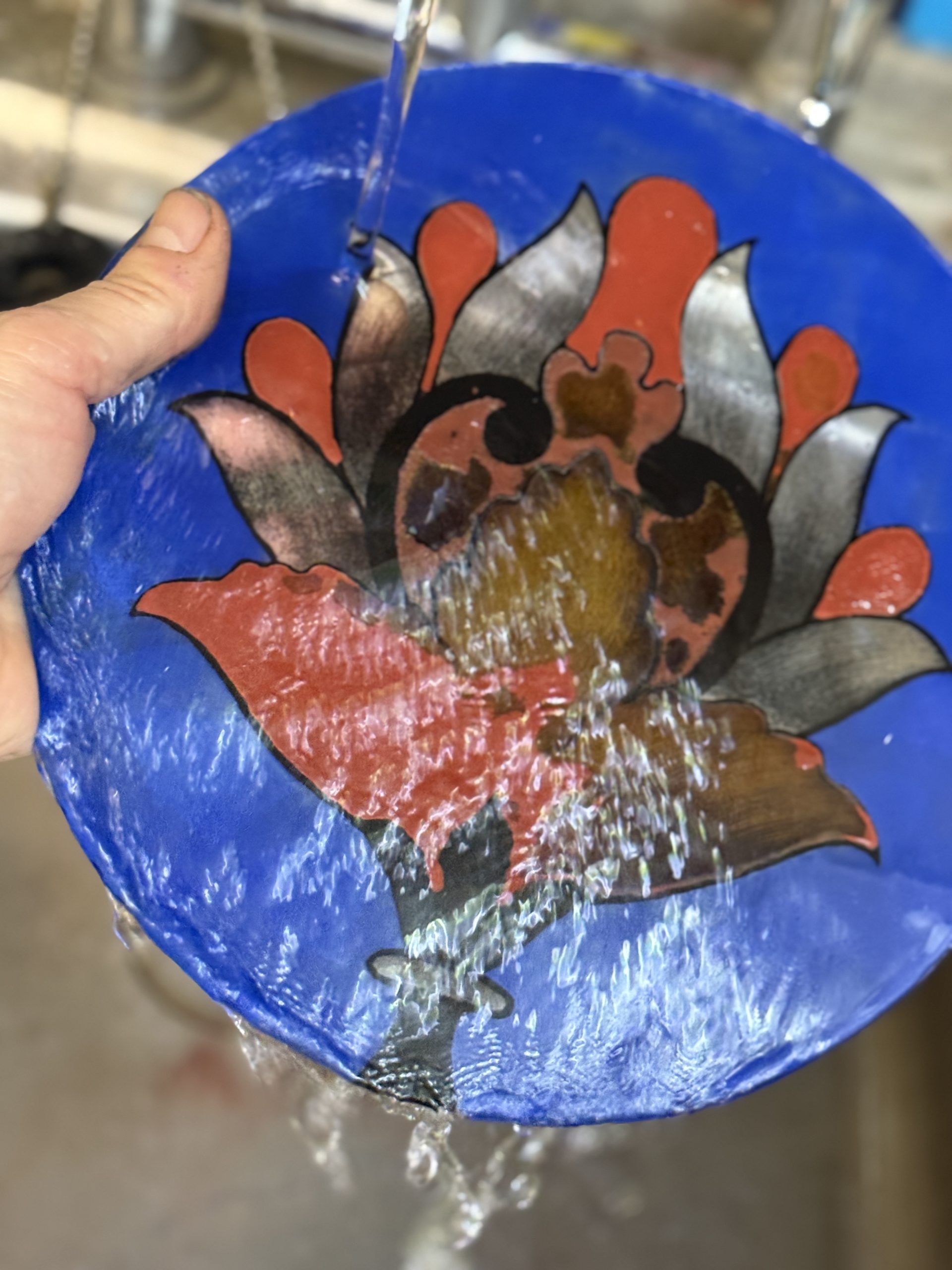
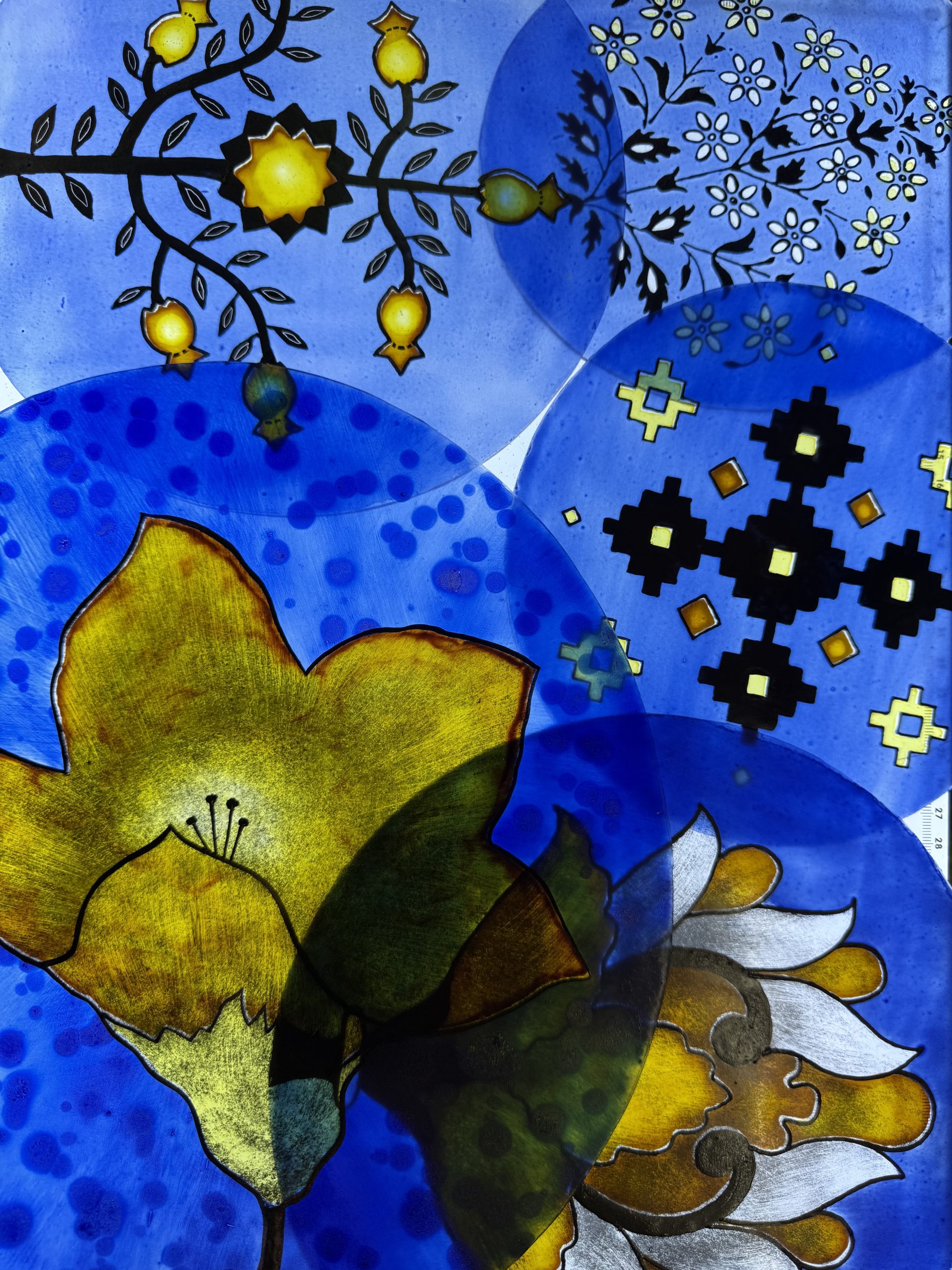

Therefore the following 2 months for Richard at Rainbow Glass Studios were both intense and technical – a total of 650 hours were invested into many techniques. Here is a short summary of the steps in the process of making this window.
- Measurements and templates were made of the V&A space.
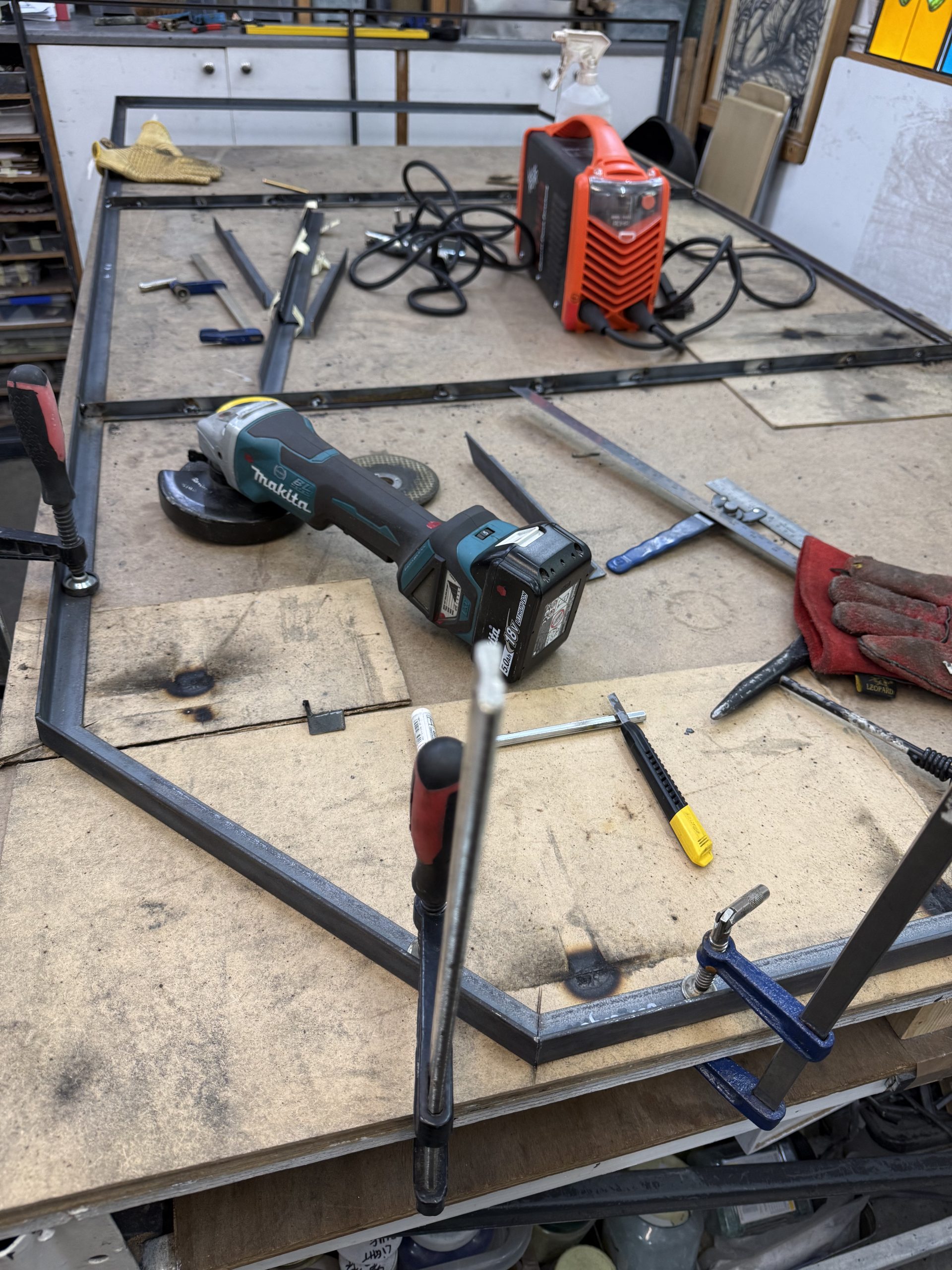
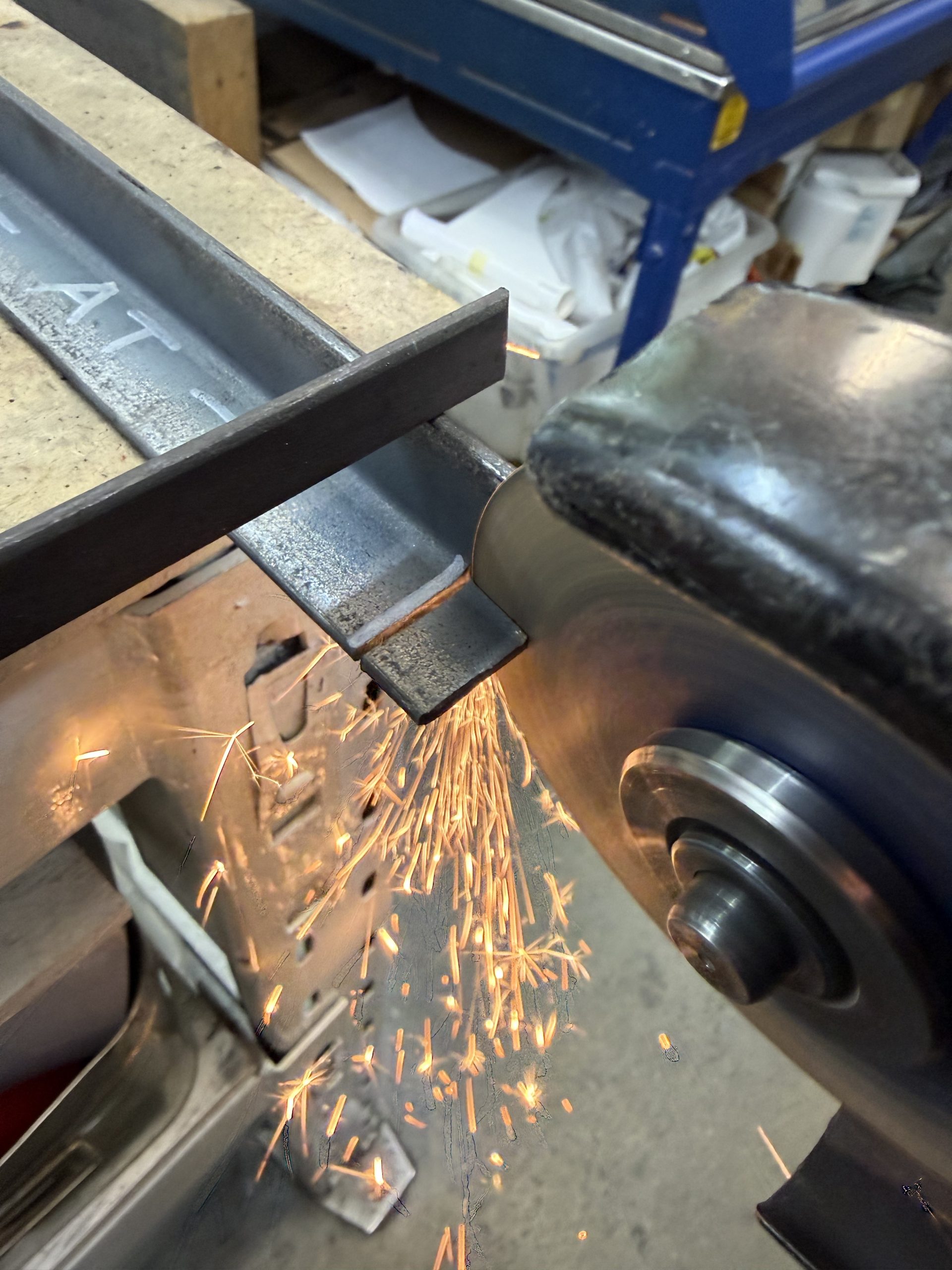
- Three steel sub-frames were welded and painted as the space had to be divided into manageable stained glass panel sizes – nine in total
- The design was then scaled up and glued onto MDF wooden boards cut to fit the apertures
- The design was then re-drawn onto 9 pieces of tracing paper which were then used to cut the glass to fit each shape within each drawing.
- The glass pieces which needed painting were cut first.
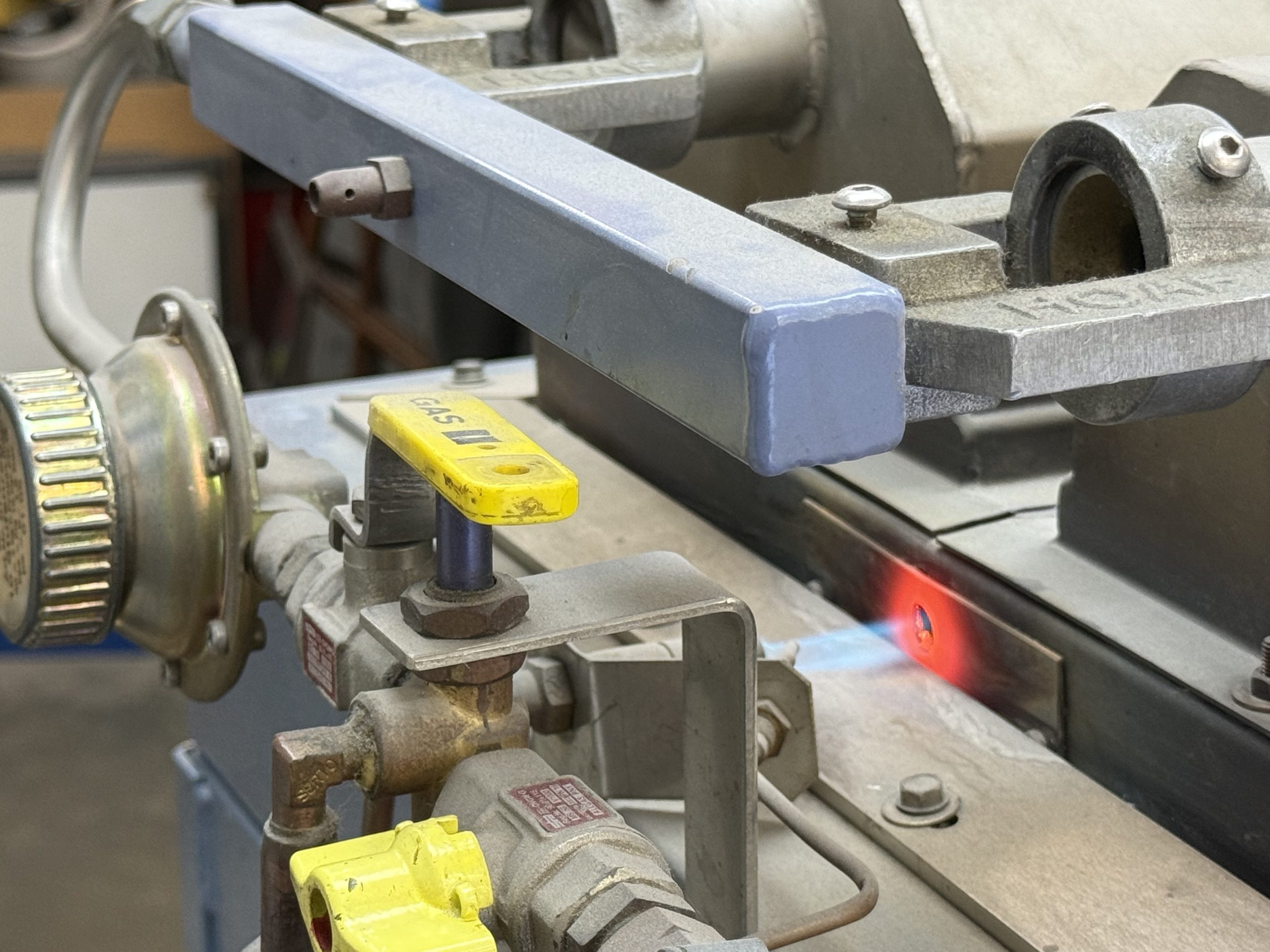
- Each piece was painted and fired three times in a gas kiln. Different enamel paints and silver stains have different firing temperatures.
- Then, from a range of 30 types of stained glass from around the world, the individual pieces of blue glass were cut to size.
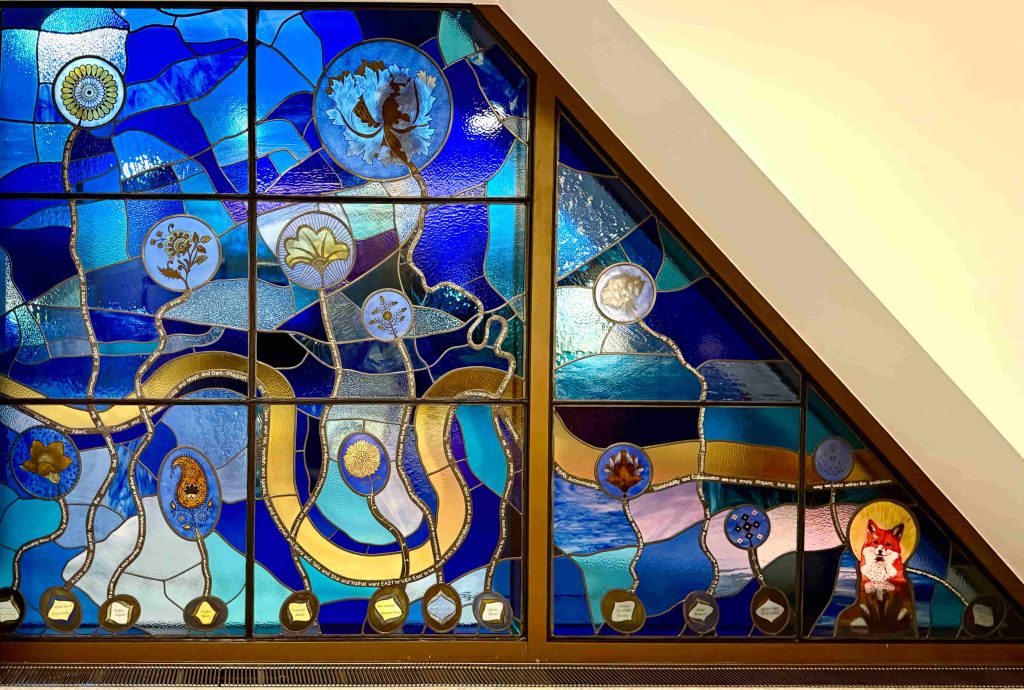
- Each panel was ‘leaded’ together with various widths of lead ‘came’ – ‘H’ shaped lengths of lead – which were cut and then soldered together on both sides of each panel. Some lead was doubled to make a wider width for the stems and river for the engraved text.
- Each panel was then ‘cemented’ – a black putty based mixture – which is thumbed into the lead to seal the glass into the lead.
- Then the panels were polished using a black grate polish and then the glass is cleaned.
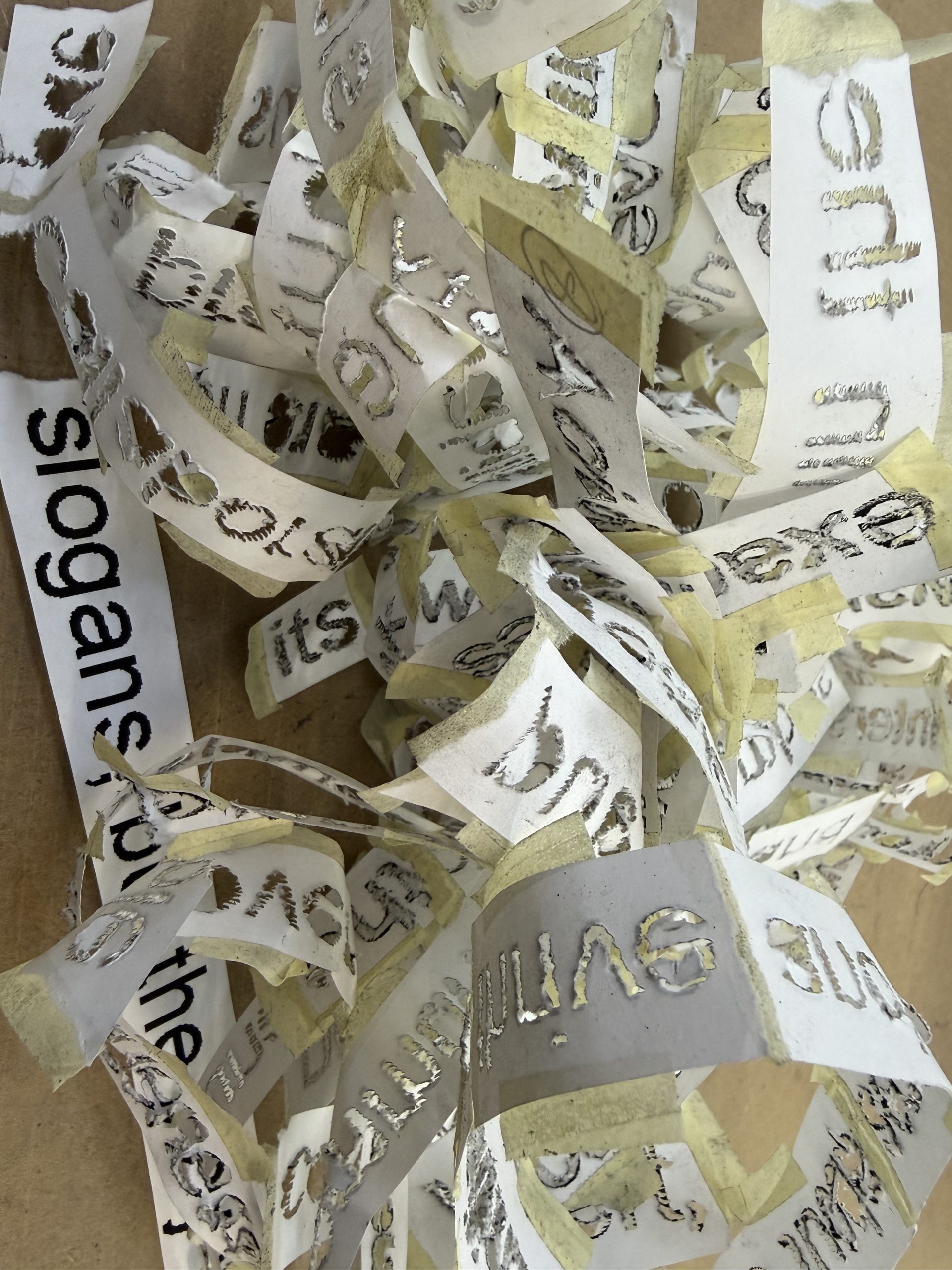
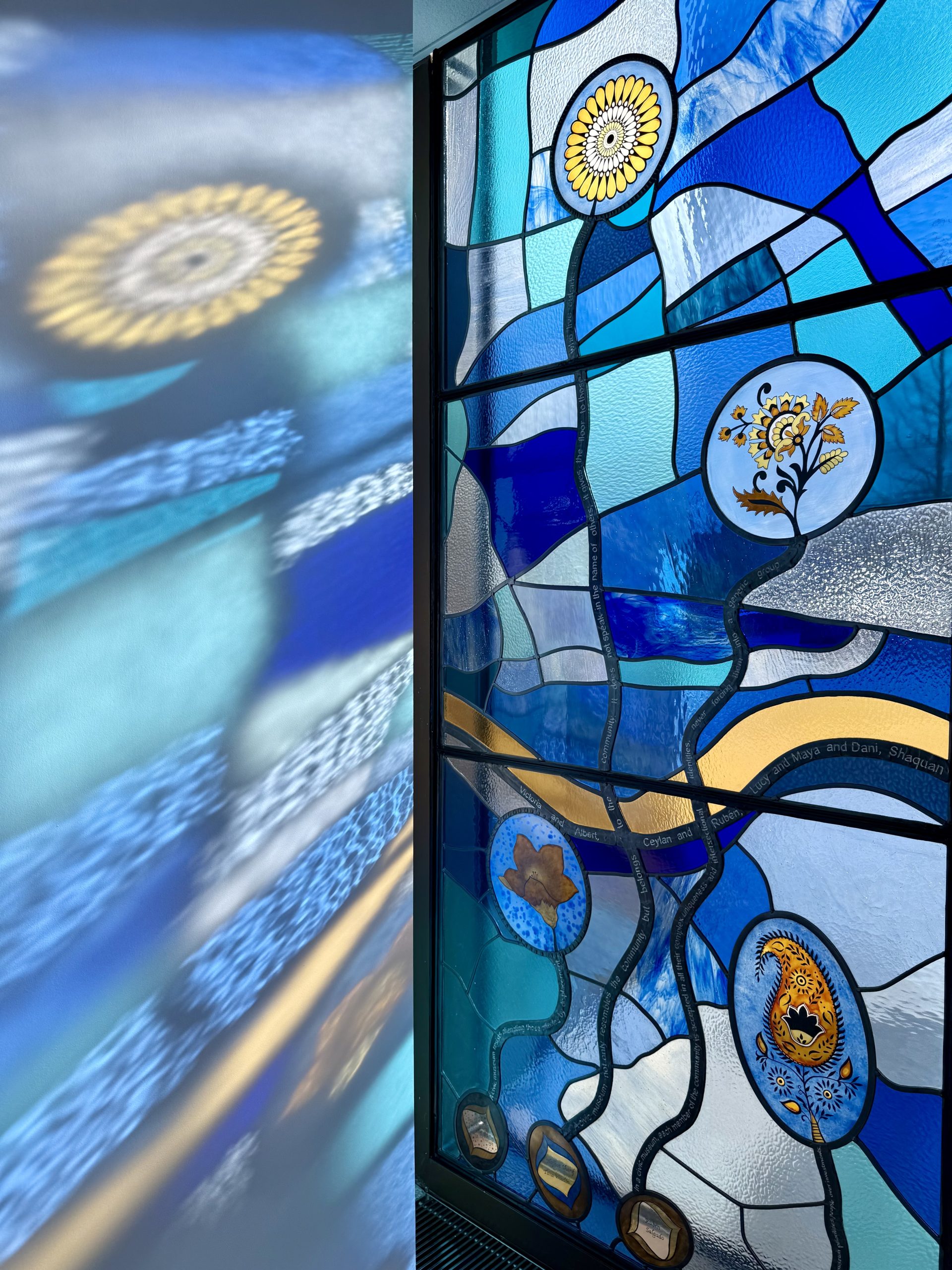
- The text (V&A’s pledge / contract with it’s future users) was then engraved onto the wide lead of the flower stems using a heavy duty engraving drill, similar to that used by dentists. Both sides of each panel were engraved so it could be read from inside and out.
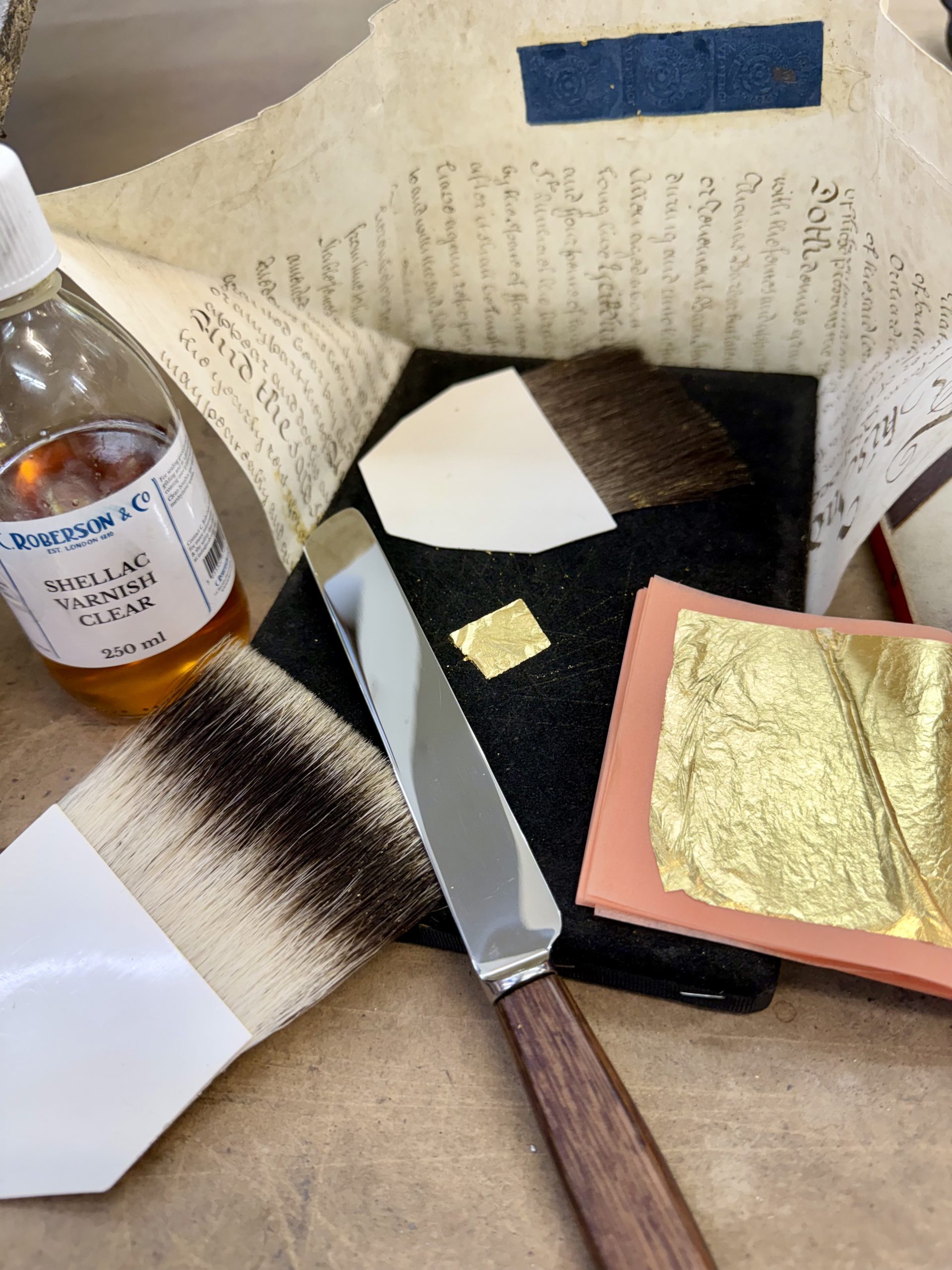
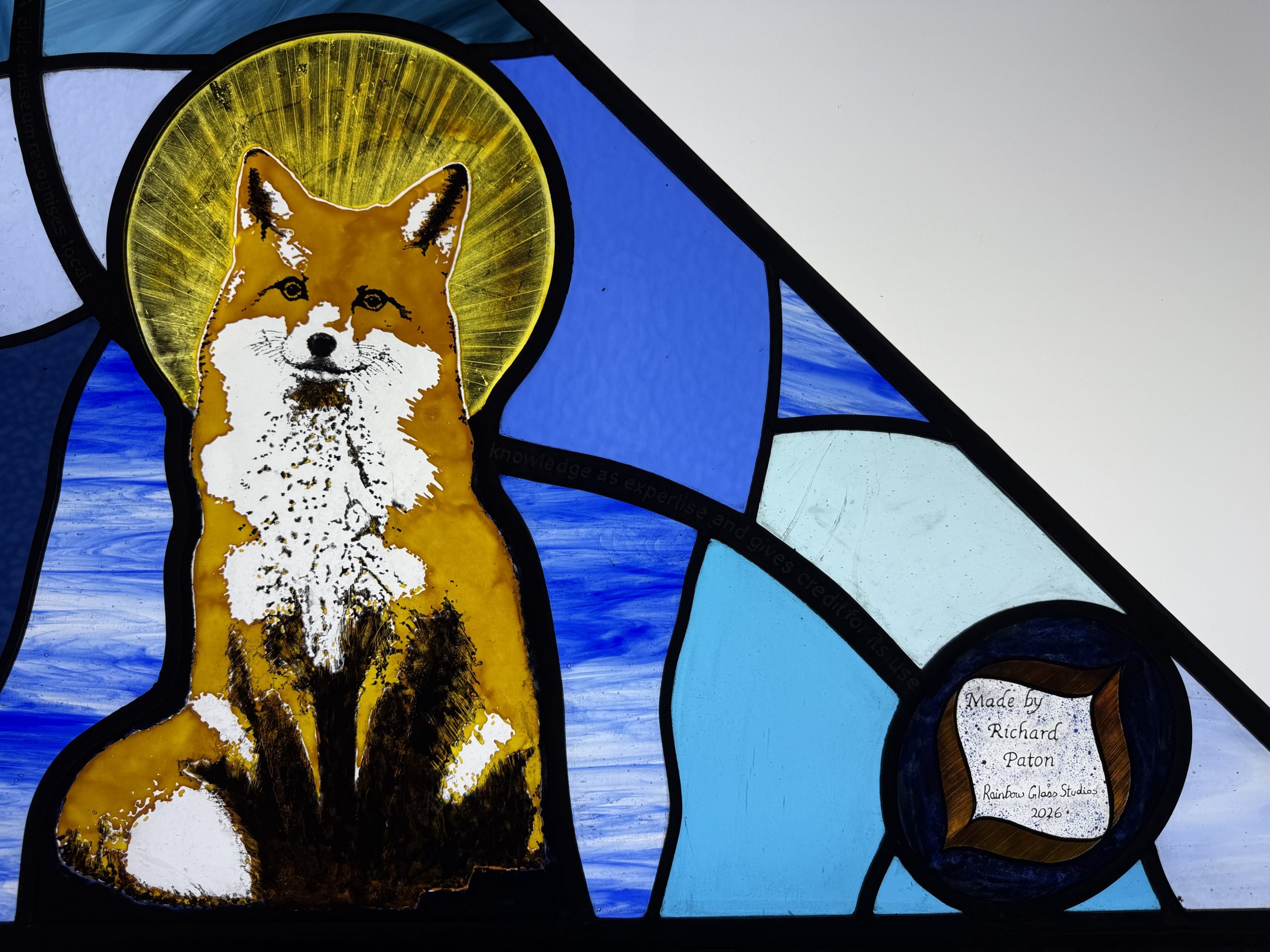
- The fox’s halo was silver stained and then gilded gold, known as verre eglomise.
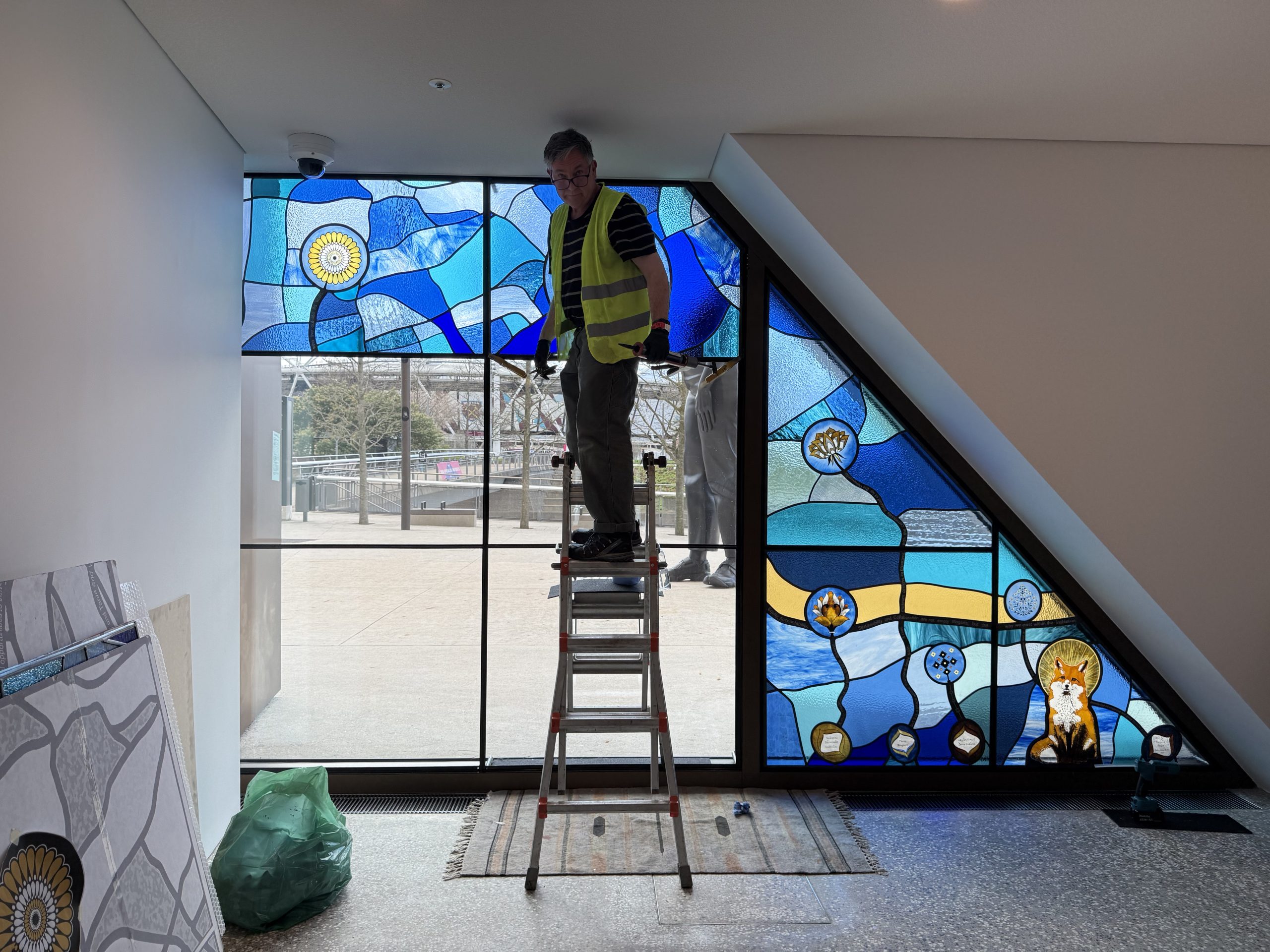
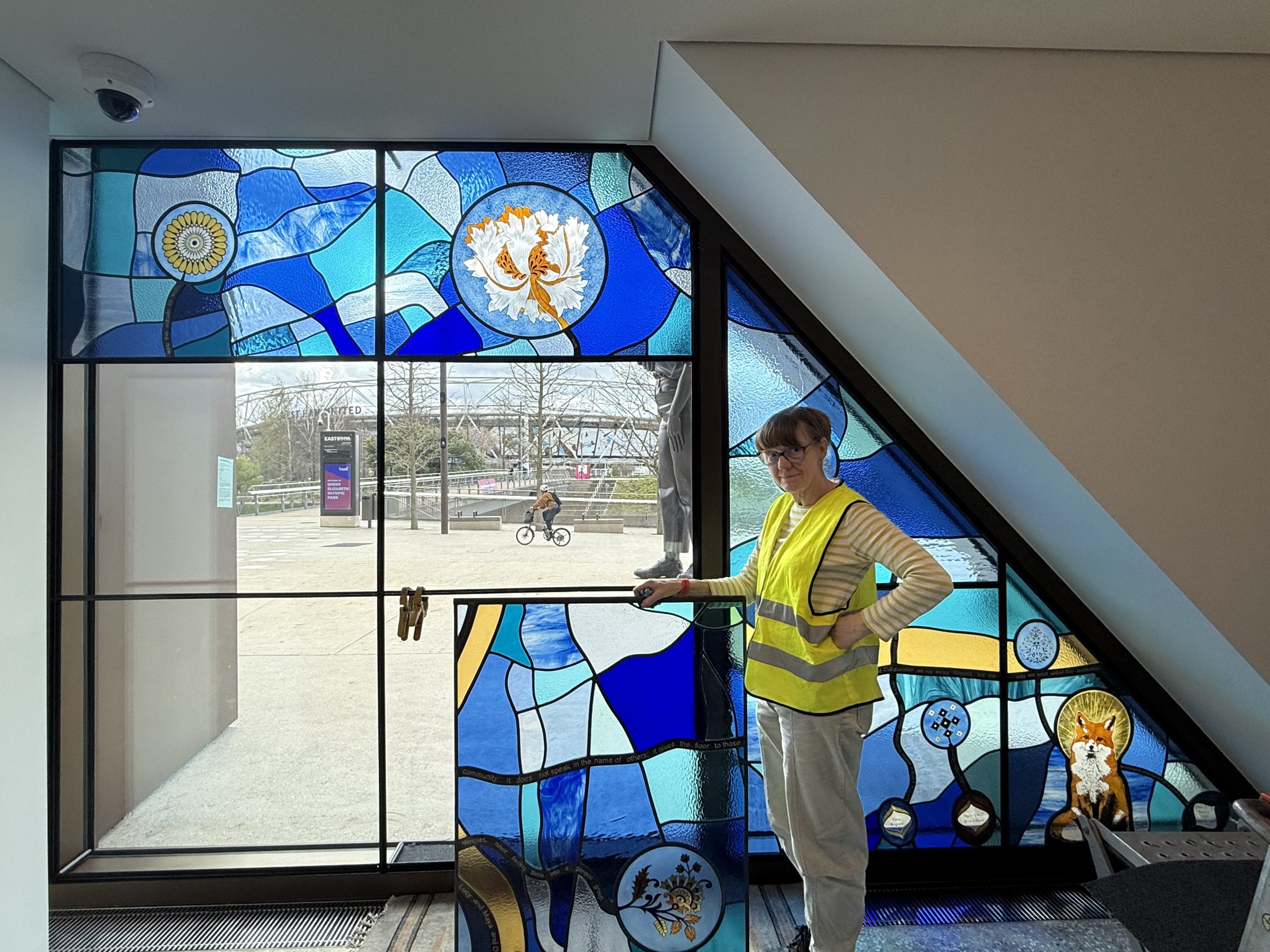
- The metal sub-frames were fitted into the existing building framework. Then the nine stained glass panels were fitted into the metal sub-frames.
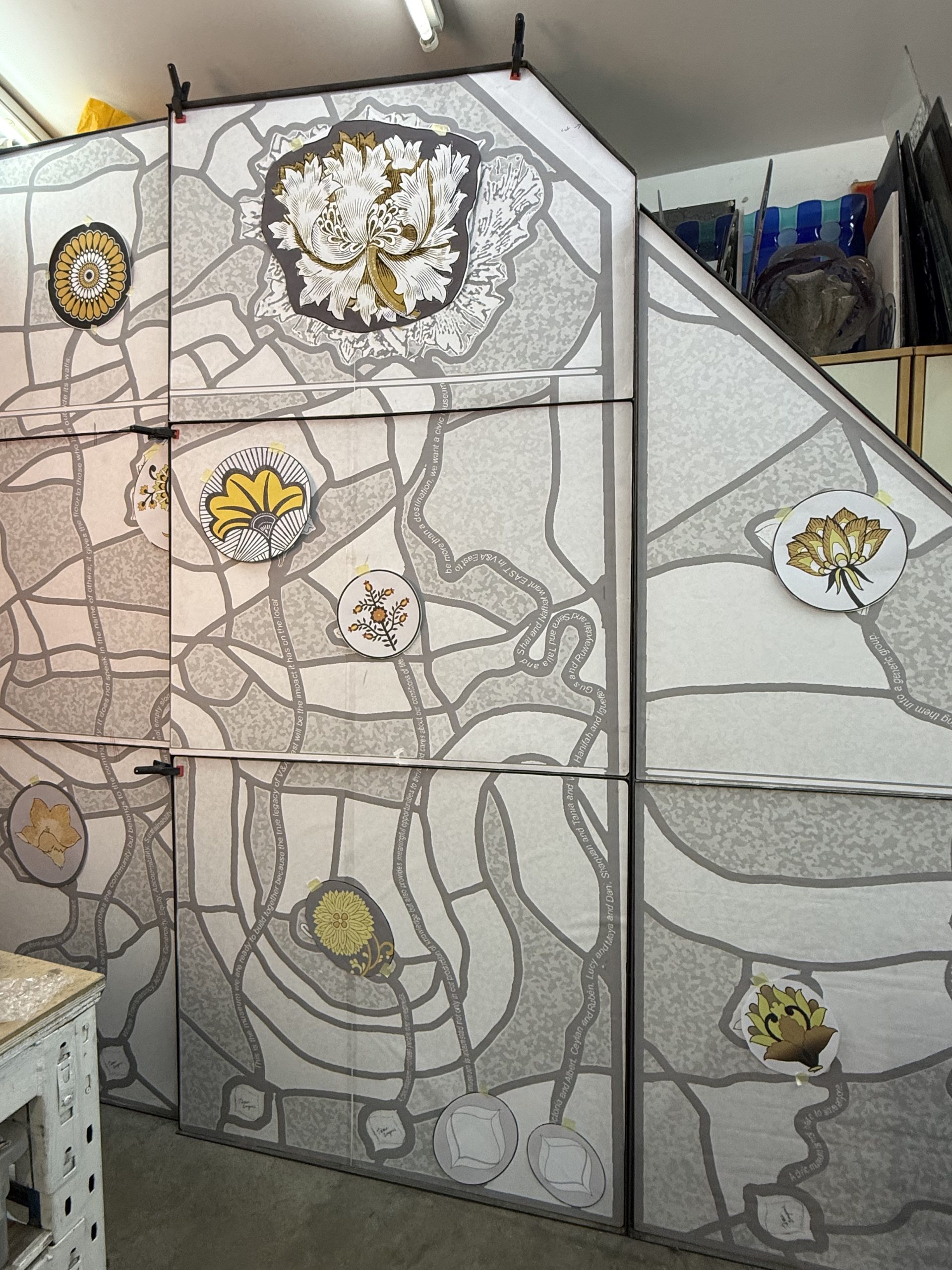
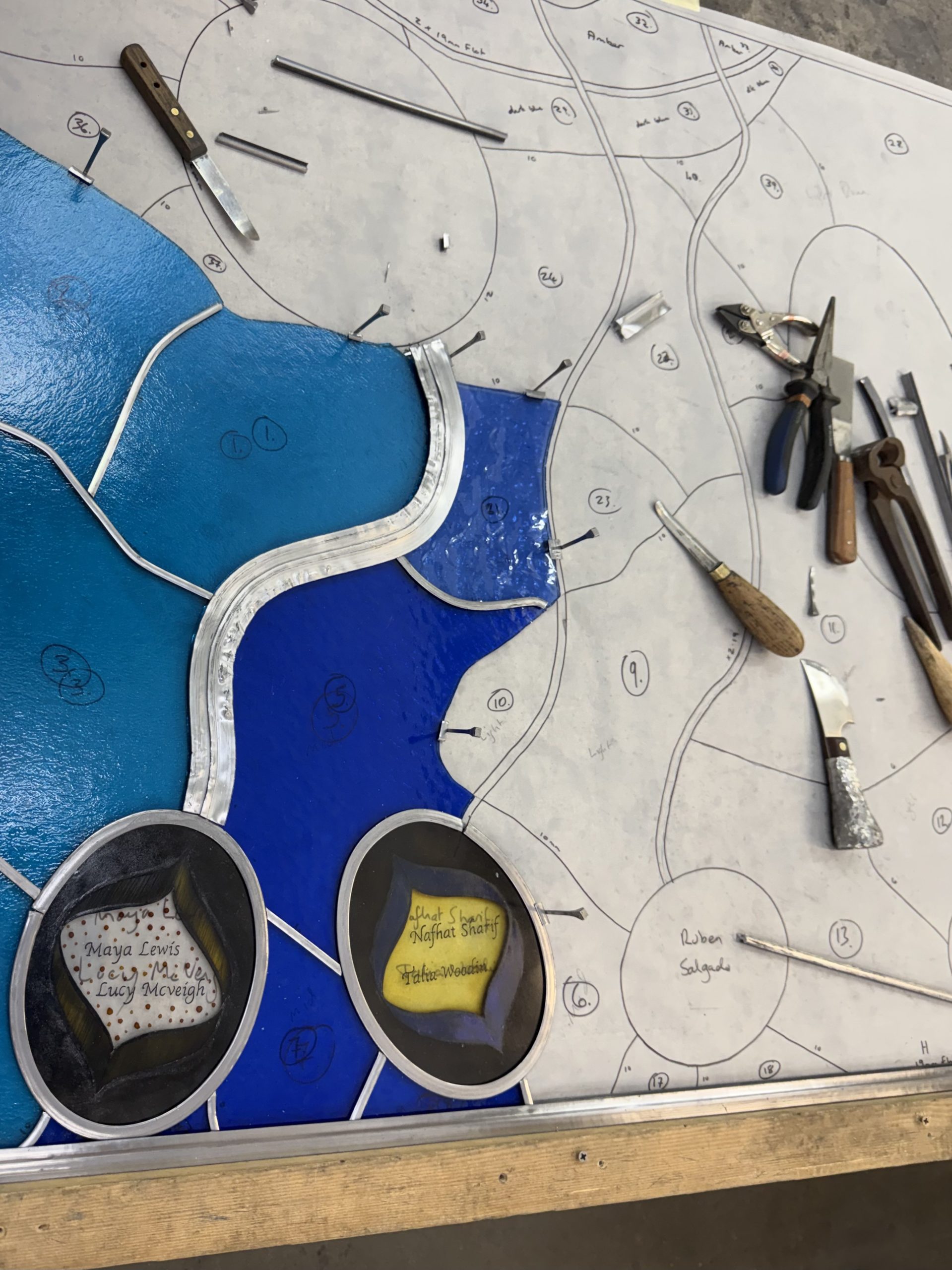

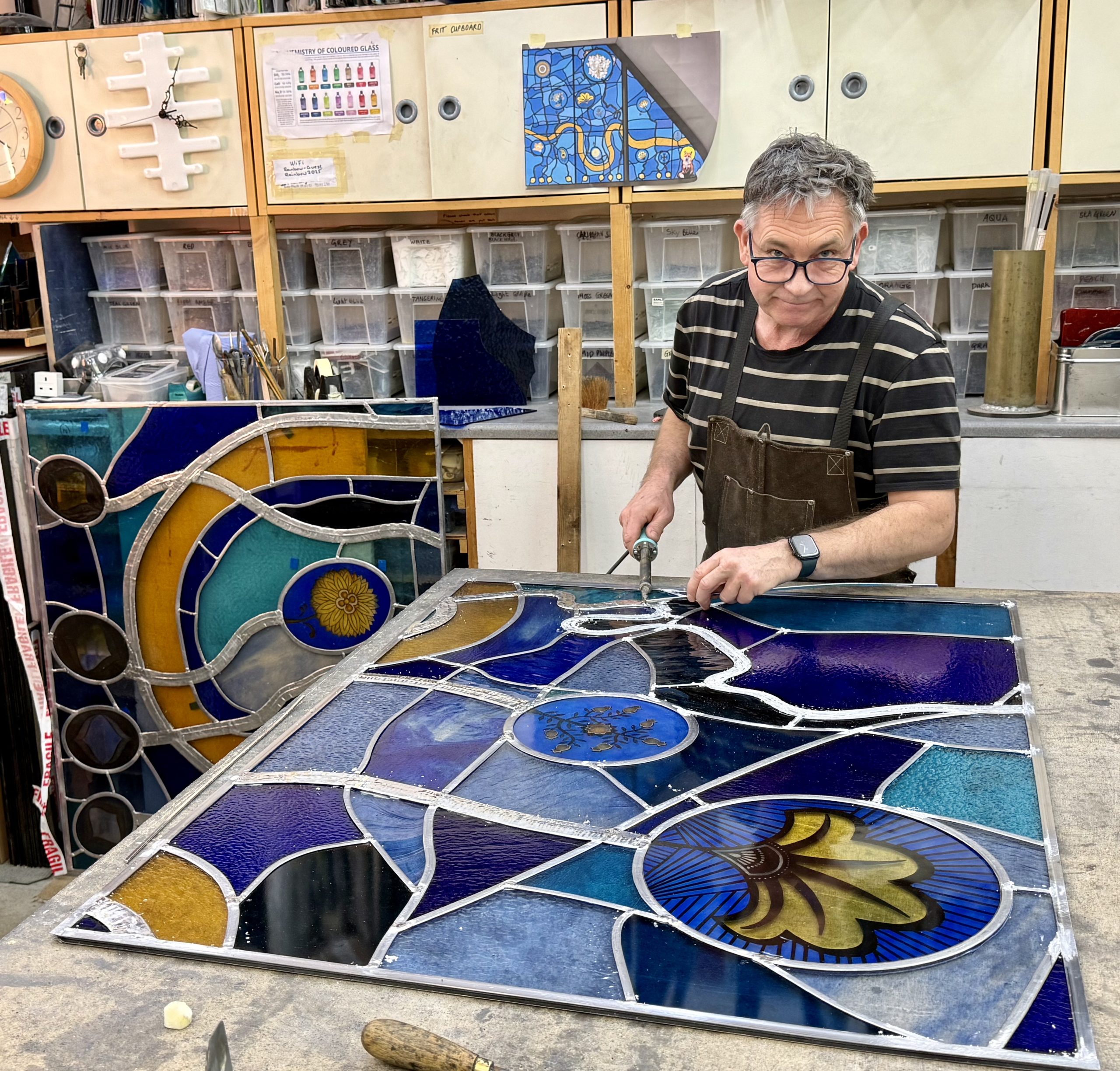
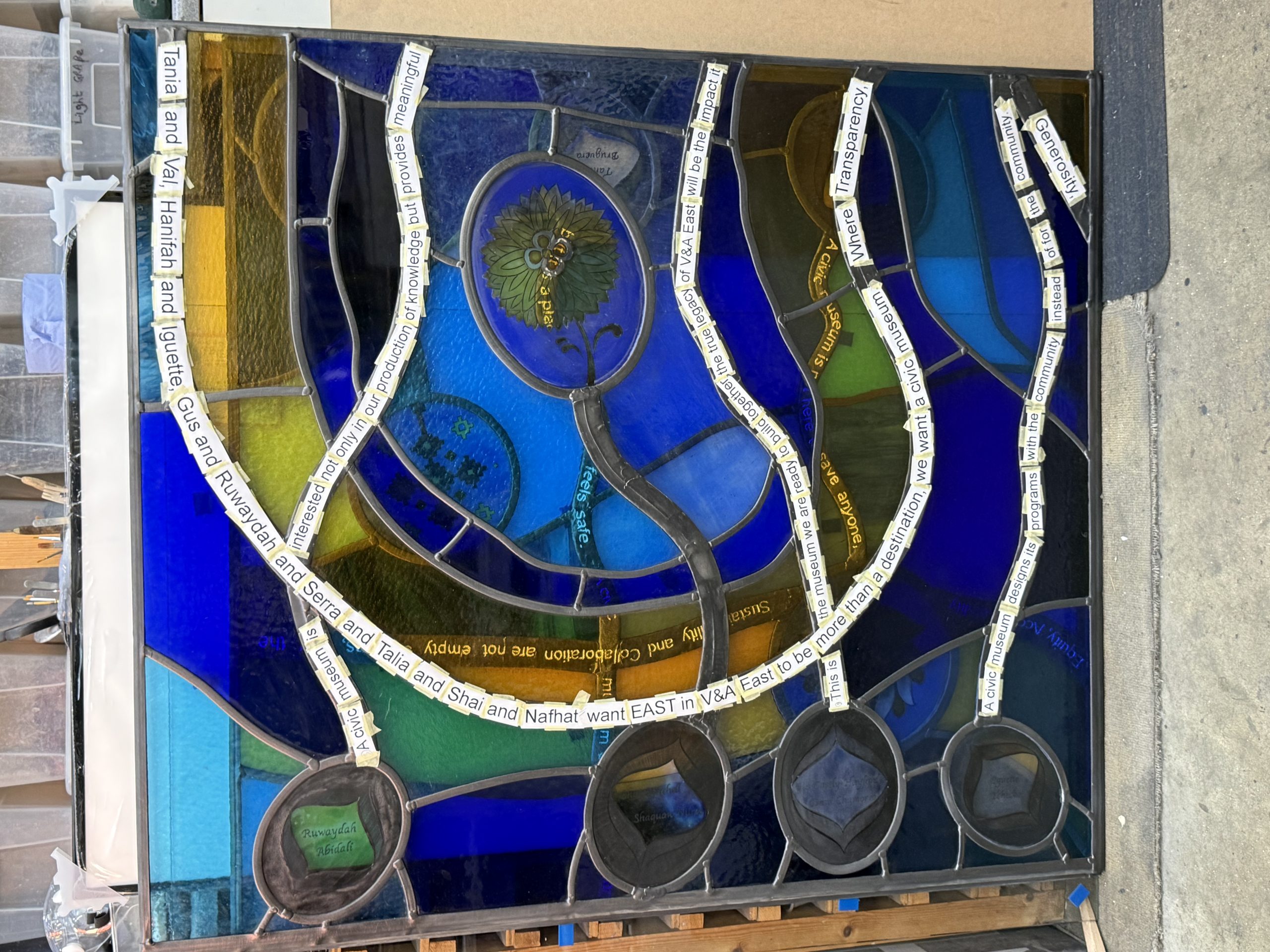
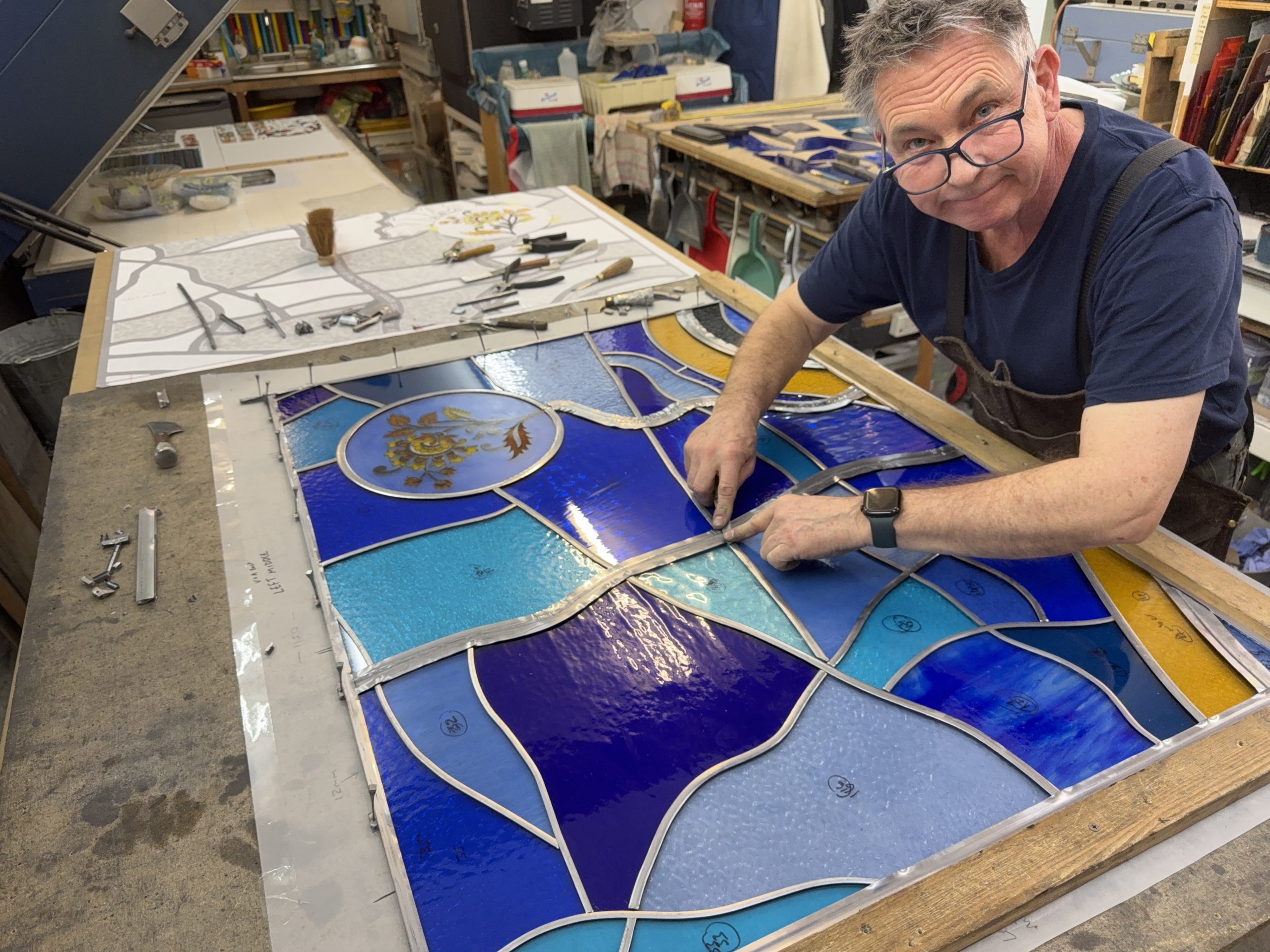
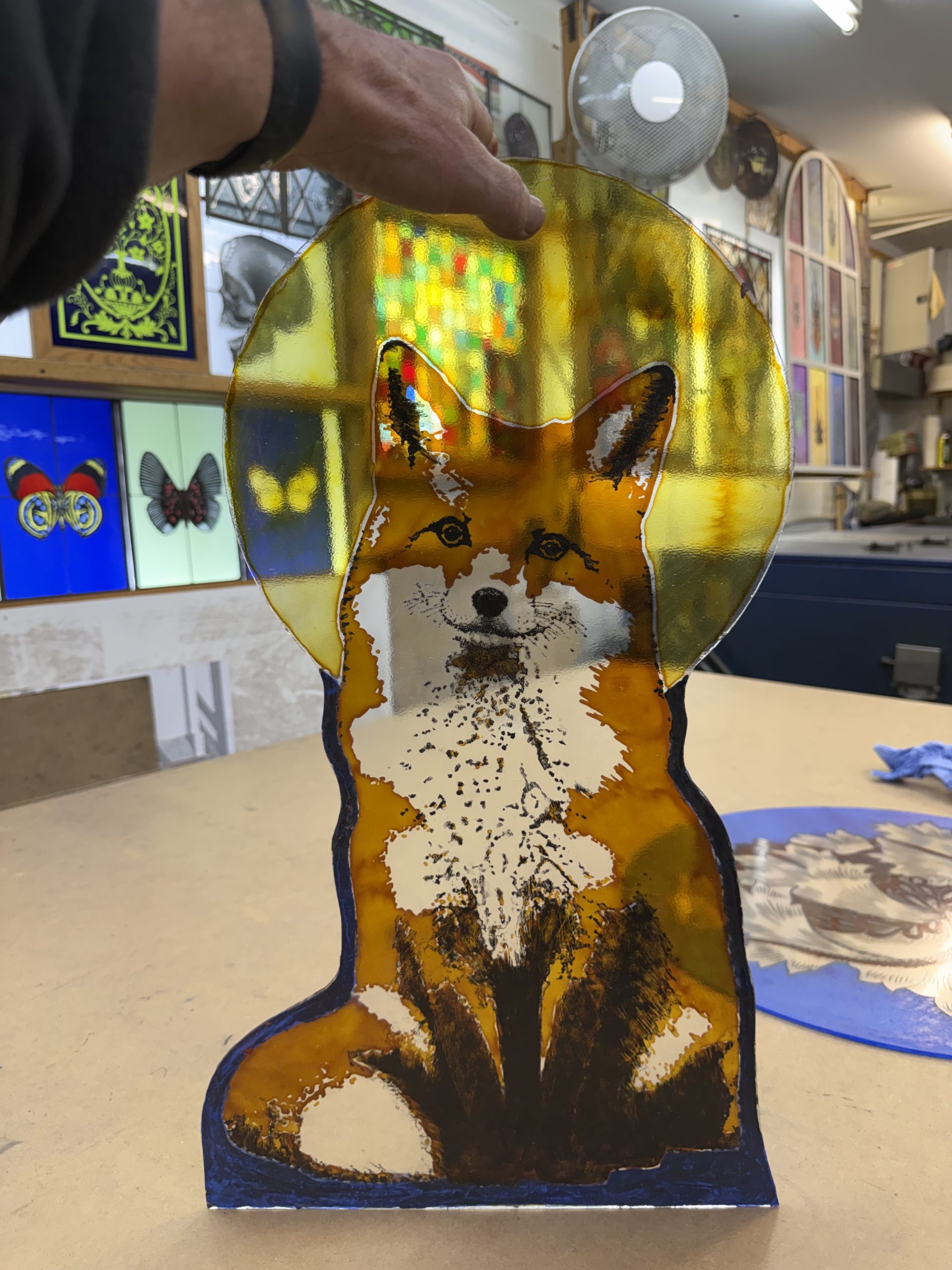


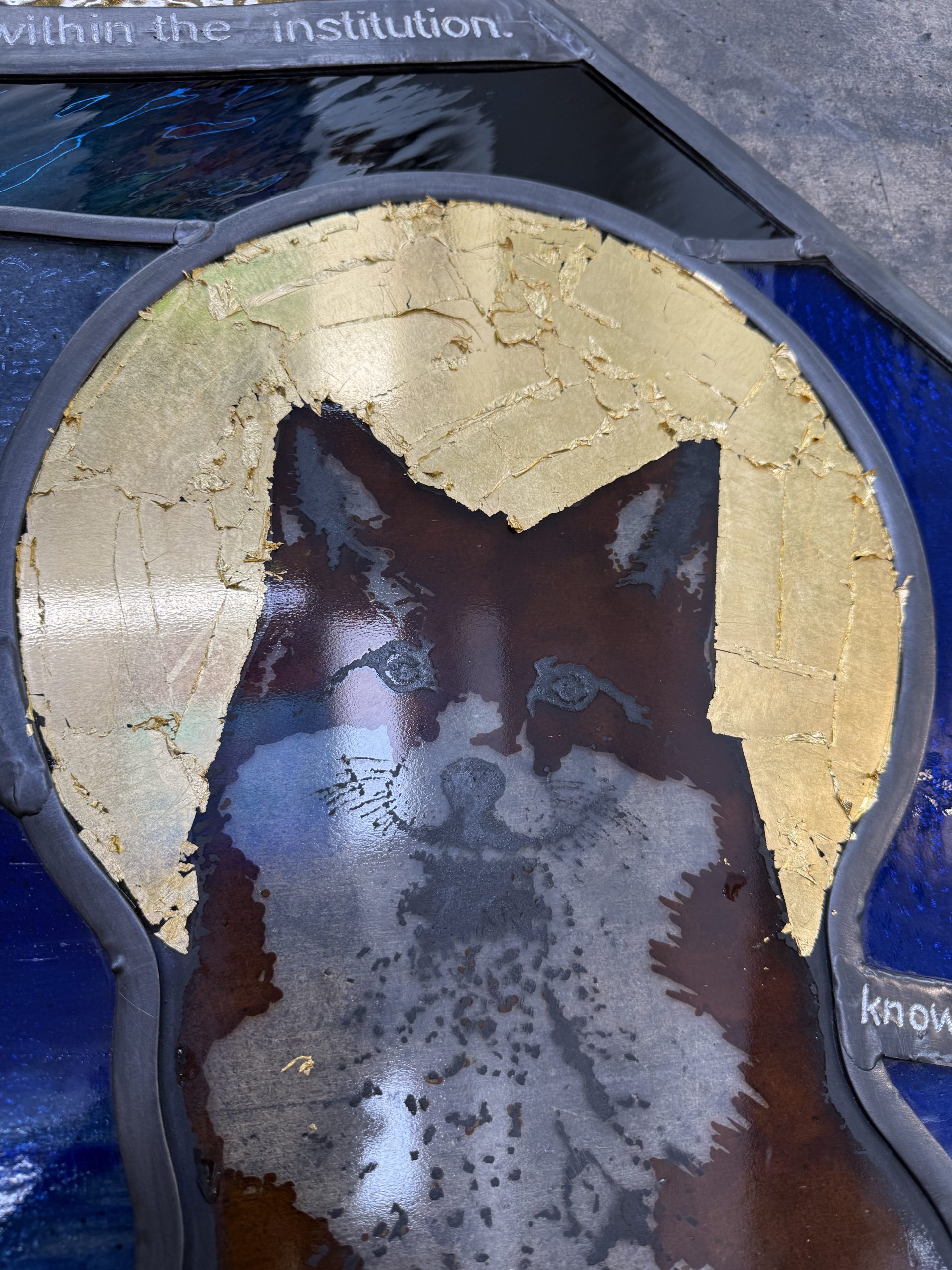
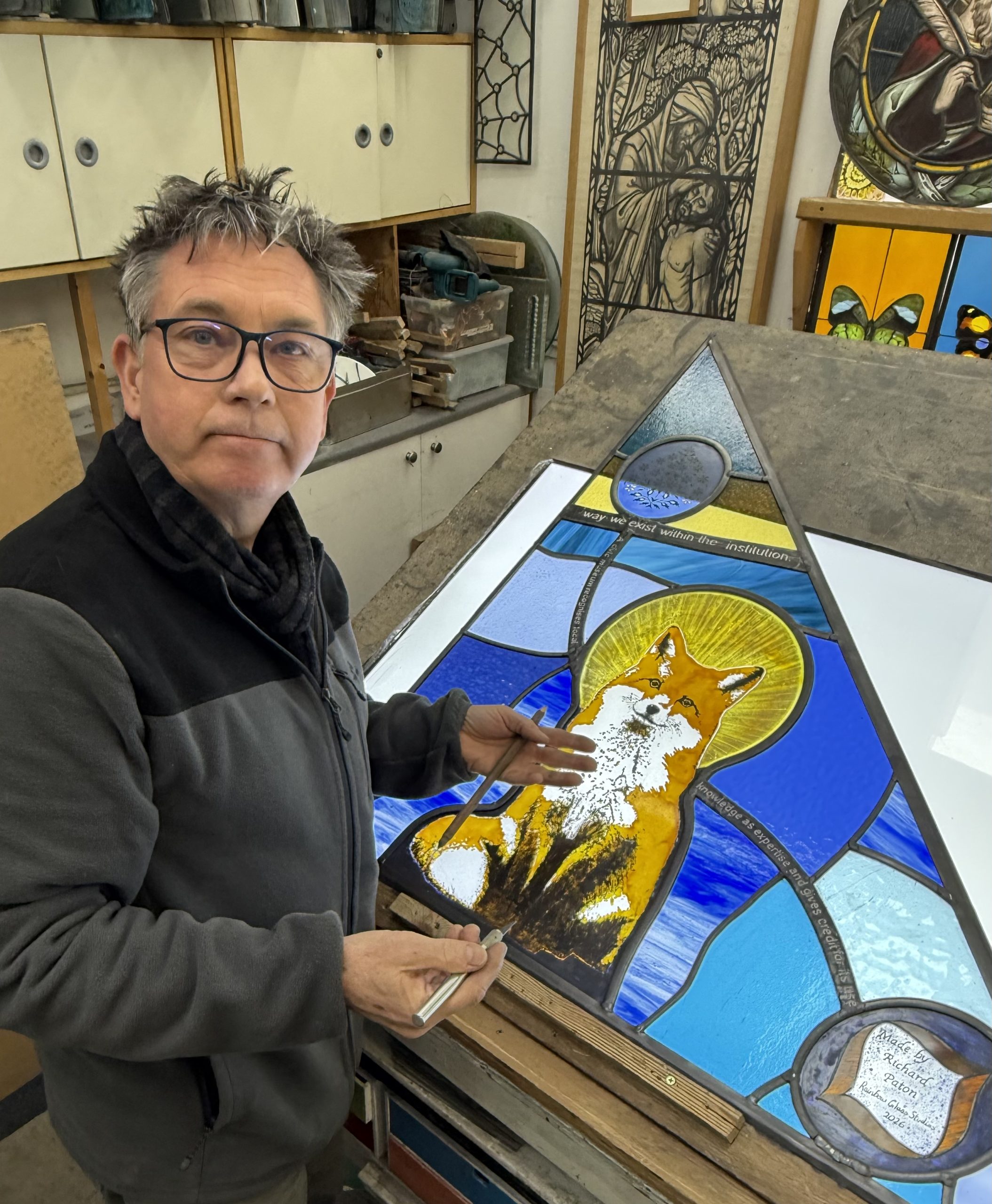
Tania’s idea was to take flower motifs from various textiles from around the world, such as Japan, Europe, South America, Africa. The twelve seeds along the bottom have the names of those involved in the project. The map of London features the east end of London with the River Thames running through it in yellow. The divisions of lead are mainly roads, the stems of flowers are sometimes roads, river or just made up to make the concept cohesive. The largest flower is taken from a William Morris fabric and is sited geographically at the V&A East Museum. The fox is open to interpretation and was a ‘must have’ request from the youth group. The engraved text (on both sides) is a pledge, a contract, a statement of intent, which sets out a number promises that the V&A wishes to make to its users.


The V&A East museum is free and open to the public from the 18th April 2026, the window is next to the main entrance (facing South West) so please go and have a look.
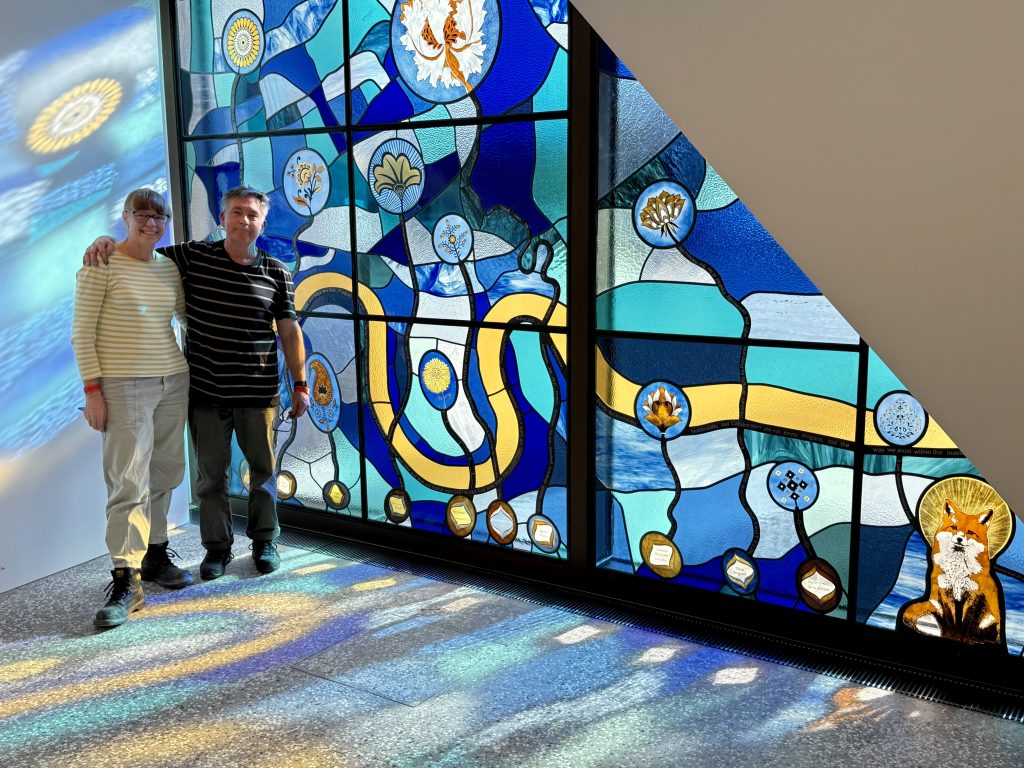
This was the text engraved in the lead on both sides of the window:
Victoria and Albert, Ceylan and Rubén, Lucy and Maya and Dani, Shaquan and Tania and Val, Hanifah and Iguette, Gus and Ruwaydah and Serra and Talia and Shai and Nafhat want EAST in V&A East to be more than a destination, we want a civic museum.
Where Transparency, Advocacy, Generosity, Equity, Accountability, Sustainability and Collaboration are not empty slogans, but the way we exist within the institution.
A civic museum not only resembles the community but belongs to the community. It does not speak in the name of others; it gives the floor to those who live outside its walls.
A civic museum recognises local knowledge as expertise and gives credit for its use.
A civic museum is interested not only in our production of knowledge but also provides meaningful opportunities to thrive and cares about our conditions of life.
A civic museum resists alienating those affected by urban displacement.
A civic museum prioritizes people over investments.
In a civic museum, each member of the community is accepted in all their complex uniqueness and intersectional identities, never forcing them into a generic group.
A civic museum designs its programs with the community instead of for the community.
A civic museum re-examines itself, questions its own goals, and remains accountable over time.
A civic museum is not here to save anyone, but it is a place where everyone feels safe.
This is the museum we are ready to build together because the true legacy of V&A East will be the impact it has on the local community.
These are names of those written in the seeds at the bottom of the window and who were involved in the project: Rubén Salgado, Tania Bruguera, Ruwaydah Abidali, Hanifah Anam, Gus Casely-Hayford, Dani Chamorro, Valentina Hernández Castrillón, Ceylan Ismail, Maya Lewis, Serra Luthena, Lucy Mcveigh, Shai Mitchell, Shaquan Nurse , Nafhat Sharif, Iguette Tchecko, Talia Woodin and myself, Richard Paton.
Here’s a review of the museum by the director in the Guardian: